
Michael Baugh CDBC CPDT-KSA
Dog trainers like to say that coming-when-called is an odds game. If you called your dog right now, what are the odds he’d come? Would you place a bet on it? How much? Now, what if your dog was outside, or playing with another dog, or sniffing a lamp post?
Our job, yours and mine, is to stack the odds in our favor, to make it so we’d be willing to place a big bet that our dog will come when we call him every time anytime. Here are the keys.
- Use a clear and consistent cue. I say “Stella, come!” (My dog’s name is Stella). I call it in a clear-throated voice, loudly. There’s a bit of lilt and lyricism to the call. It’s strong but not intimidating. I think of coming when called as an invitation not a demand. Avoid having a conversation with your dog. Don’t repeat the cue over and over. Don’t give multiple cues.
- Watch to see if your dog moves toward you. As soon as he does, start smiling, and praising him. Cheer him on as he comes to you (but don’t repeat the cue).
- Reinforce generously. Use the highest value reinforcer you can think of and give more than one treat (I recommend 3-4 in sequence). Then, if possible return your dog to play or whatever it was he was enjoying before you called him.
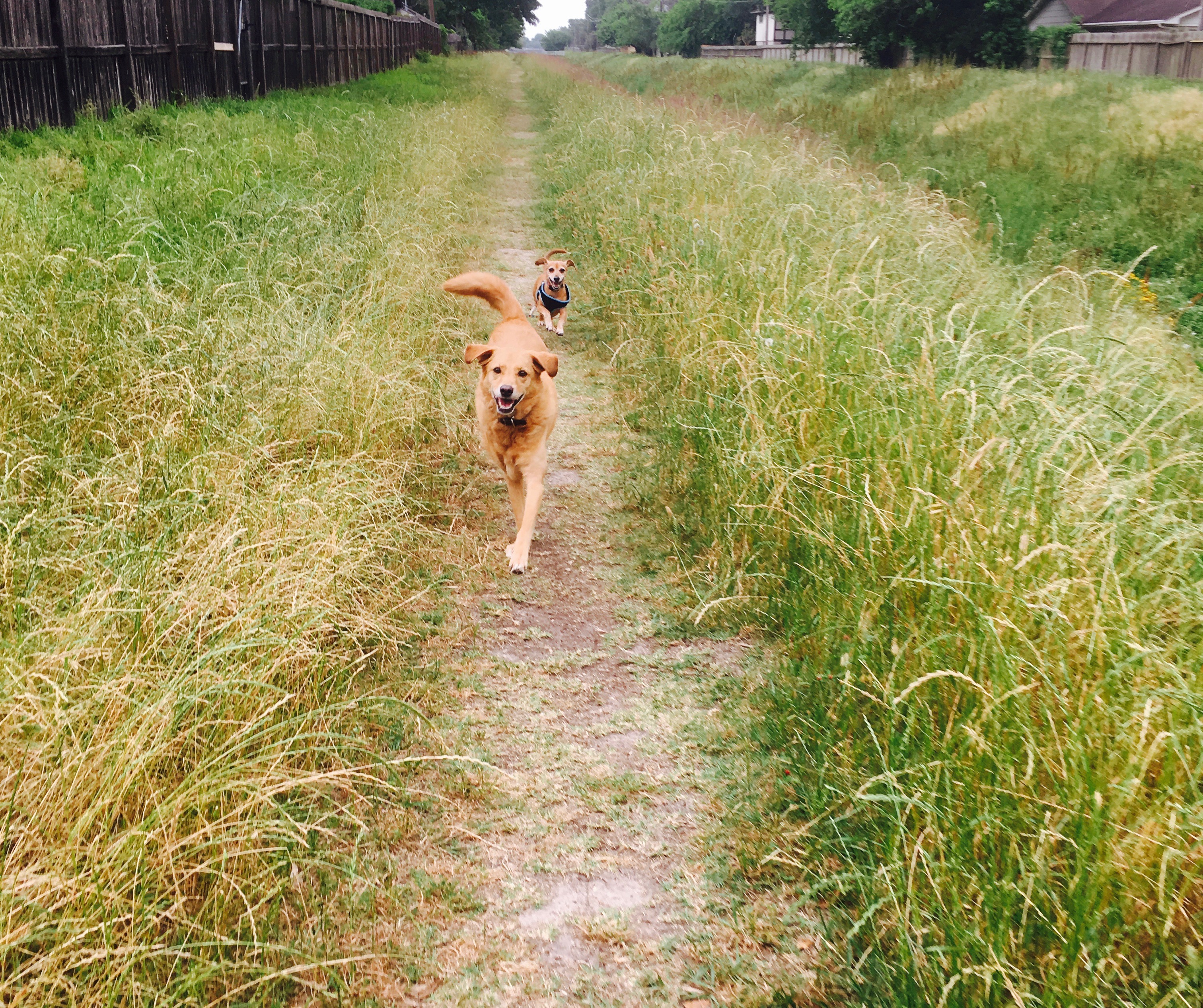 Repeat the process often, at different times, and in different places. In the early stages of training (all stages really) help your dog win the game. Set up your training so that he can succeed. I taught Stella coming-when-called using games. The process was fun for both of us, and easy as a result. We also mixed up the games to keep them interesting. I call Stella to me often when she leasts expects it and I reinforce it with a variety of things: food, play, access to fun activities. (See: Psyching Out Your Dog).
Practice throughout your dog’s lifetime to keep the behavior strong. It’s a powerful skill for keeping your dog safe from harm. But really, it’s nice just to show off that your dog is under some sort of control. How cool, right? My bet is that you’re going to love seeing your dog running towards you with that big goofy grin. Yeah, I’d put my money on that any day.
Michael Baugh CDBC CPDT-KSA teaches dog training in Houston, TX