
Michael Baugh CDBC
I’ve clicker trained for a long time, and I can honestly say it remains one of the most impactful tools I teach my clients. If you have used it yourself, you know what I mean. If you haven’t tried it yet, I can’t wait for you to experience how fast dogs learn with it.
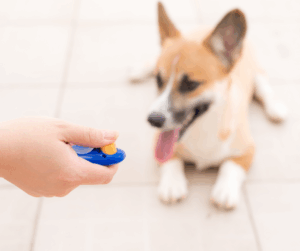 Clicker training works because it gives the dog an immediate, consistent signal that marks exactly the behavior you want them to repeat. The click is not a command, it’s not the treat itself, and it certainly does not make the dog behave on its own. It simply tells the dog, Yes. That was the right behavior and then you follow it with food reinforcement. Dogs learn because that click reliably predicts something great is coming. This kind of immediate feedback dramatically accelerates their understanding of what you’re asking for.
One of the first things clients notice when they pick up a clicker is that it changes their timing and focus. When you are concentrating on clicking at that exact moment you see the correct behavior, it naturally hones your observation skills. Many people find themselves less likely to dive into the treat bag too early. They are watching, clicking, and then treating.
There are some common myths about clicker training that I want to clear up because they often keep people from giving it a real shot. One of the biggest misconceptions is that you have to have the clicker with you all the time, or else your dog will forget everything they learned. That could not be further from the truth. Clickers are tools for the learning phase of a behavior. Once a task becomes fluent and reliable, you can set the clicker aside. Your dog will still perform the behavior; they just don’t need the marker anymore. You might still reinforce with treats or praise periodically, but the clicker itself is retired for that command.
Another myth is that the clicker makes the dog perform. Some people think the sound of the clicker somehow causes the dog to behave. That misinterpretation leads to confusion, especially when a dog doesn’t respond without the clicker in hand. In reality, the clicker teaches the dog to understand exactly what behavior earned reinforcement. It’s a marker. A bridge. A communication shortcut. Nothing more, nothing less.
Some trainers worry that dogs will be dependent on constant clickers and treats forever, but that is also incorrect. Once the behavior is strong, predictable, and reliable, you can begin to thin the rewards. The power of clicker training is that once the learning has happened, the dog remembers the behavior without holding you hostage to the tool.
The bottom line is that clicker training is science-based, positive reinforcement dog training that fosters fast learning, clear communication, and a strong bond between dog and handler. It’s not magic, but it sure feels like it when an “aha” moment clicks for both you and your dog.
Michael Baugh is a dog trainer in Houston, TX. He specializes in aggressive dog training.