Dog Bite Prevention

Michael Baugh CDBC CPDT-KSA

None of us expects our dogs to bite. Even folks who have dogs who’ve bitten before are still sometimes surprised by their dog’s behavior. The reason is simple. Most dogs don’t bite, and those who do tend to do so infrequently and in very specific circumstances. We’ll get to that last part in a bit.

The best way to prevent bites from our own dogs is early intervention. No surprise there. Teaching young puppies important life skills and exposing them to the human world in thoughtful ways can prevent tons of problems, most notably aggression. Puppy classes for young pups (as young as 8 weeks) are an essential start.

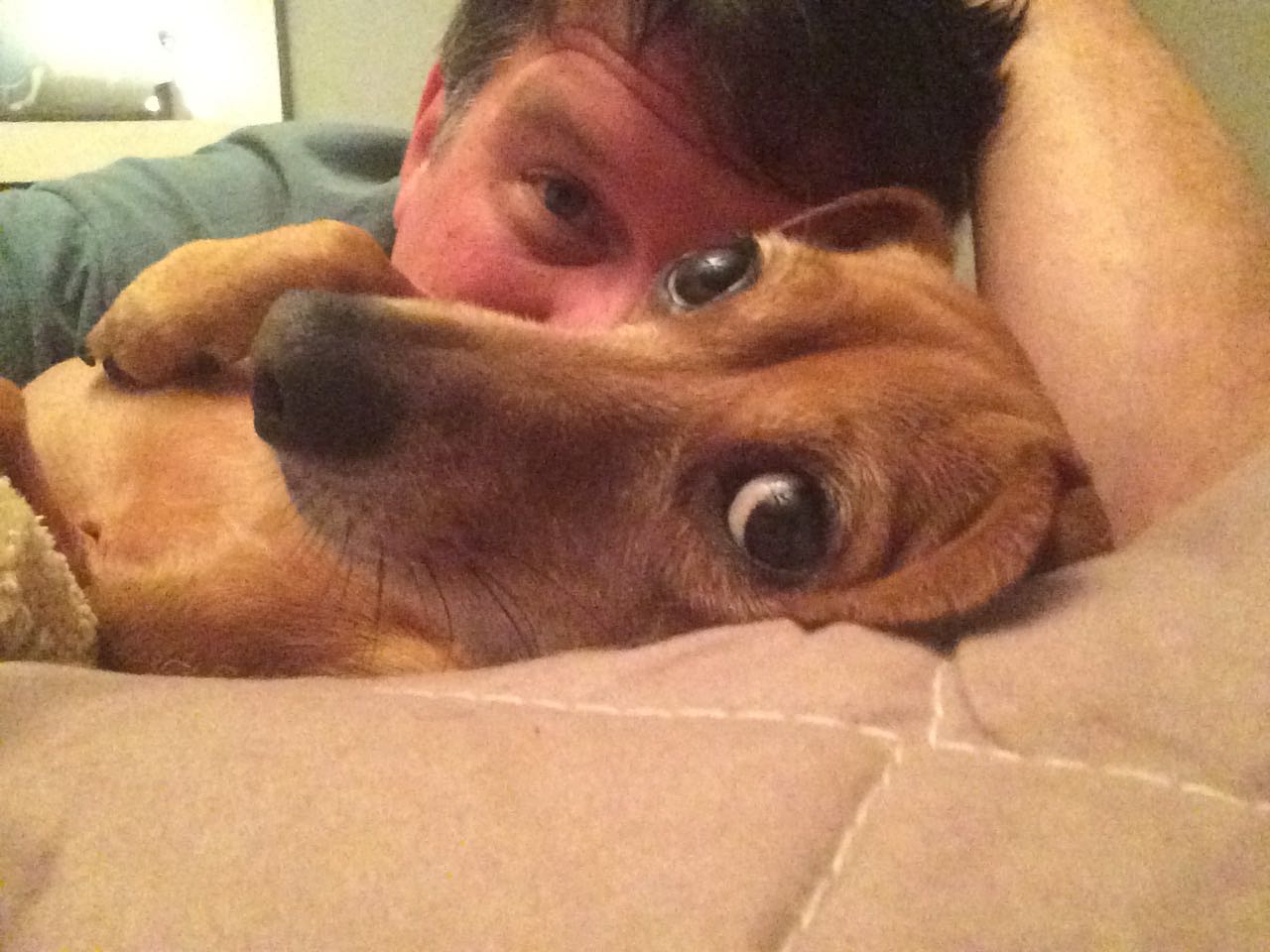
StellaFaceAs your dog matures, the most important bite prevention skill humans should have is awareness. Notice your dog. Specifically, notice what frightens him or makes him uncomfortable. Fear fuels aggression. We can often prevent outbursts (and bites) by simply avoiding situations that scare our dogs. Otherwise, we can help our dogs around those situations. Ideally, we’ll help our dogs though the scary parts of life with some long-term training and behavior help.

Fear is the most common cause of bites, but it’s not the only one. Dogs in pain often bite people (we could argue that that’s fear of escalated pain, but I digress). Dogs who covet or guard food, objects, locations, and sometimes people can also bite (fear of losing those things? – Okay I’ll stop). Even in these cases, our job as dog guardians is still awareness. Avoiding, Working Around, and Working Through still apply. Be your dog’s advocate and help diffuse situations that frighten him.

Avoidance. This one is sometimes controversial. We humans are stuck on the idea of mastering our dogs and making them do things. As a result we have trainers who intentionally expose dogs to things that frighten them so they can show the dog who’s boss. Nonsense. If there’s something that upsets your dog and you can easily avoid it, do so. Keep the dog in another room, behind a solid door, or on a leash – away from the people he’s most likely to bite. That’s prevention.

Work Around. Many dogs can tolerate frightening situations if the scary thing (person) isn’t too close or too active. For short-term bite prevention, moving your dog away from the scary thing is always helpful (leash). Calming the environment (including our own human behavior) is also very helpful. Humans who don’t move, who avoid looking at the dog, and who don’t speak to the dog are doing great work. We teach children to stand like a tree: hold their feet still like roots, wrap their arms around themselves like branches, look down, and remain silent. They’re diffusing the situation and preventing a possible bite.

Work Through. This is training for longer-term bite prevention. We can teach dogs to behave better (not biting) in three ways:

  1. Teaching Tasks – This involves teaching your dog how to respond to situations that used to result in conflict, fear, or anxiety. It’s obedience training. But, some of the tasks are specifically designed to help dogs relax (resist the impulse to lash out). Note: the only way to successfully teach frightened and potentially aggressive dogs is with positive reinforcement training. Using physical punishment or intimidation will likely increase aggressive behavior.
  2. Teaching Confidence – This is about teaching your dog that situations (and people) that were frightening or upsetting are actually not so bad. Because we train with reward-based methods, your dog learns that whenever a new situation presents itself that we humans become joyful, praising and generous with food. This is called “classical conditioning,” and it occurs even as you teach tasks.
  3. Teaching your dog to make good choices (self control) – Our dogs should never be forced to “handle” or “get used to” a situation that is frightening or upsetting (see “Avoidance” and “Work Around” above). We can expose our dogs to situations in a calm setting and at a safe distance. In this way we give our dog the option to make good behavior choices on his own. Because we’ve taught him useful tasks and helped him learn to be less frightened, we are setting him up to make appropriate choices. Trainers of wild and exotic animals have known about the importance of choice in training for a long while. An educated and experienced dog trainer can help you better understand and apply it as well.

During training many dogs learn to wear a muzzle. Muzzles prevent bites by keeping the dog’s teeth away from human flesh. The Muzzle Up Project on Facebook is a great resource for us humans to learn about the use and importance of muzzles.

If your dog has already bitten someone, or many people, please see a veterinary behaviorist or behavior consultant. You can prevent future bites. This blog is a start, but it’s not enough. You’ll need more help. Fortunately, that help is available.

Michael Baugh teaches dog training in Houston TX. He specializes in aggression and other behavior related to fear in dogs.

The Allure of Punishment

Michael Baugh CDBC CPDT-KSA

I’ll start with a bold statement of my opinion. It is normal for us humans to feel compelled to punish our dogs when they do something we don’t like. Normal. Punishment, by definition, makes the behavior stop—even if only for a short while. When our dog’s annoying or upsetting behavior stops—our behavior, by definition, is reinforced. “Effective punishment reinforces the punisher, who is therefore more likely to punish again in the future, even when antecedent arrangements and positive reinforcement would be equally, or more, effective.” (Friedman, 2010).

We punish, or attempt to punish, all the time. And we aim our vitriol all over the place, not just at our dogs. A guy tries to cut us off in traffic and we honk or we flip him off, or both. If he stops, we are reinforced. We may feel better even if he doesn’t. Our dog barks; we yell; he stops. Our behavior is reinforced. Dog pulls; yank the leash; he slows. You see where this is going.

We get hooked on punishment. Sometimes, we can’t even think about how to influence behavior any other way. And as Dr. Susan Friedman (2010) notes, punishment doesn’t help us teach our dog what we want him to do. Stop barking. Stop pulling. Okay, but now what? What do we want the dog to do?

Add to that, our actions may only punish the dog’s misbehavior at the moment or in a certain context. The effect is fleeting. The dog may stop pulling for a moment or two and then resume (same with barking or other doggy crimes). That often leads to chronic yelling, leash yanking, or worse. Our attempts to punish increase in frequency and intensity, true testament they are not having any lasting effect. Before long, it’s simply indiscriminate abuse.

And there are other problems, especially with how fear and pain in the name of training can affect our dog. Studies dating back decades point to the emotional damage fear and pain have on the dog being punished. The data is clear, not only as it relates to dogs but other species, including human children. Using physical violence as a means of training correlates with anxiety related behavior in dogs (Hiby et al., 2004). Specifically, there is a relationship between physical punishment and aggression in dogs (Hsu and Sun, 2010). Many times, using confrontational training techniques can elicit an immediate aggressive response from the dog, putting the human in danger (Herron, Shofer, Riesner, 2009).

But, we still do it. Our punishing behavior is reinforced. No matter that the effects are temporary. They are immediate and we get hooked. Sometimes, nothing beats a quick fix for a human. The cost to the dog takes a back seat to convenience. There are still trainers who sell it, teach it, and never look back. In many places, not to mention TV and the Internet, that’s the norm. Punish. Jerk. Pinch. Hit. Shock. Do what it takes to assert your will and assume dominance. If you care to be more euphemistic, give a correction. It’s all the same to the dog, and the flaws and side effects remain.

So what are we, the punishment addict, to do? Admit to the problem? Make amends? Begin behaving differently? I’m not being cheeky. The answer to all is, “yes.”

The Science of behavior change is unambiguous. It points us clearly and unashamedly toward positive reinforcement training. Like the old and outdated ways, it too yields quick results. But the effects are lasting. Positive reinforcement is also the communication tool we are looking for to teach our dogs what we want them to do. There are no unanswered questions. Instead of barking, come here; lie down; relax. Instead of pulling; walk here; keep an eye on me. And the side effects? They are nothing short of delightful—joy, enthusiasm, and an eagerness in our dogs for learning.

As the cliché goes, it’s up to us. We can learn. We can get hooked on today’s training methods and leave yesterday’s in the dust. We can take on the burden, a light one at that, of learning some new skills. We can take the burden off our dogs. The allure of positive reinforcement training: seeing our dogs behave better, thrive, and succeed. That, too, can be very reinforcing.

Michael is a dog trainer and behavior consultant. He specializes in fearful and aggressive dog behavior in Houston, TX

Correcting Unwanted Behavior with Positive Reinforcement


Michael Baugh KPA-CTP CDBC CPDT-KSA

It seems like a contradiction. How do we eliminate our dog’s misbehavior with positive reinforcement?

The first step is to focus on what you want your dog to do rather than on what you don’t want him to do. This approach works with all misbehavior, but let’s look at one example in particular: the dog who menaces visitors with barking and growling. We know the problem, but let’s not focus on it. Instead let’s ask ourselves what we’d like to see the dog do when visitors come over instead of barking and growling. Quietly lying in his crate might be a good alternative. Great. Let’s use positive reinforcement training (clicker training, perhaps) to teach the dog to go lie in his crate when guests arrive. The misbehavior is eliminated (replaced actually), and we used positive reinforcement to do it.

Old-fashioned trainers will balk at this idea. Why? Dr. Susan Friedman, professor of psychology at Utah State University, says it’s simply “the perennial gap between research and practice.” Trainers, even some on TV, focus heavily on the dog’s misbehavior. They’re constrained by ever-forceful practices aimed at suppressing what they don’t want the dog to do. Here’s the disconnect. Behavior scientists have known for decades that punishment (intimation in the name of training) has its limitations and side effects. Dogs subjected to these methods often withdraw from social interaction, have suppressed responses to training cues, escalate their aggressive responses, or develop generalized fear (Friedman, 2001). Too many trainers have simply failed to keep up with the research.

But what about safety? If we don’t focus on the problem, in this example aggressive behavior, aren’t we putting people at risk of being bitten? Foregoing archaic methods does not mean we are being gratuitous or precarious in our training. Instead, at every step, we block our dog’s access to repeating the unwanted behavior. In the example at hand, we avoid surprise visitors while we build up the behavior of lying in the crate. As needed, we’d use a leash, baby gate, or other barrier to protect visitors while we refine the fluency of the crate-lying behavior. As we progress, we add other pro-active behaviors related to teaching our dog calm confidence when visitors are present. We’re safe and we’re smart about what and how we are teaching our dog.

And there’s a bonus with all this. Just as harsh training has its deleterious side effects (sometimes called “fall out”), positive reinforcement training has it’s emotional benefits. Dogs who are trained with praise, smiles, and well-timed food treats (again, think clicker training) are generally more engaged socially, respond with vigor to training, and respond more reliably with reduced aggression. This is where research and training practices merge.

As always, real behavior change in our dogs starts with human behavior change. We learn and choose modern training methods. We focus on behavior solutions rather than getting mired in behavior problems. We take responsibility for our dogs’ learning, and we take on an advocacy role for them as a result. We step out from under the burden of having to be a master. We step up to the experience of being a companion and a teacher.

Michael Baugh CDBC CPDT-KSA helps families with aggressive dogs in Houston, TX.

The Facts About Punishment, Susan Friedman PhD 2001

Functional Assessment: Hypothesizing Predictors and Purposes of Problem Behavior to Improve Behavior-Change Plans, Susan Friedman PhD 2009