Speed Up Your Training

We want stuff fast: food, coffee (definitely coffee), replies to our emails – the faster the better, right? We want to feel better quickly, advance in our careers quickly, stop being sad and get happy – quickly. We’re in a hurry, zipping, weaving, taking short cuts and cutting people off (not you, I know). But here’s the thing about fast. It’s often sloppy. And a lot of the time it actually slows us down when we hurry up.

Here’s my advice, especially when it comes to working with your dog: Slow down. It will help you speed up your training. That’s a great paradox, isn’t it? It’s sort of like jumbo shrimp but, it’s true. If we dial back the rush and get out of our own way (and our dog’s way) we can actually step up the rate of our success.
IMG_4904We’re all guilty of this (me too). We want to teach a task, let’s say coming when called, and it feels like we’re on some sort of time crunch. So, we do two or three reps with our dog in the house and we get bored. Let’s go to the dog park and practice there. We call and call and call and she doesn’t come. Then we get frustrated. This isn’t working. We blame the dog. But, it’s not her fault. We’re rushing.

Here’s how you really speed things up. Break down all your training goals into small steps. For coming when called we may begin by reinforcing our dog for looking when we call her name – just a look (click/treat). Then we build to her coming short distances inside – then longer distances – then out in the back yard – and so on.

We do this when we teach our dog to lie on a mat. We reinforce her for looking at it, then stepping towards it, then stepping on it, then sitting, then lying. Those are all small steps with clicks and treats along the way. We could actually break down the steps even smaller to progress even quicker. That’s how you can train your dog to lie on mat in a matter of days – sometimes faster.

Breaking the task down may seem cumbersome and even boring. But, don’t be fooled. The key is to keep the process moving forward. As our dog masters each small task, we advance to the next one. Let’s not go too slowly and get stuck reinforcing one step for too long. But, let’s not move too fast and leave our dog in the dust either. Better to stay mindful and keep our dog (and ourselves) engaged and progressing. We can move very quickly that way.

Okay, but what if training falls a part and our dog just isn’t getting it? Tap the breaks. Go back to an earlier easy step at which your dog was successful. Jump start the process. Show her how to win again. Motor forward. Before long you’re building some speed once more.
IMG_4543Breaking things down as a key to winning is not a new concept. Trainer educator Laura Van Arendonk-Baugh (no relation) talks about it a great deal in her book, Fired Up Frantic and Freaked Out.  Clicker training is all about teaching skills quickly (sometimes very quickly) in incremental steps. It works well for us humans too. Psychologist Angela Duckworth researches grit, that human quality that keeps us passionate and persistent in our life goals. She’s found that the grittiest of very successful people split their big goals in to many smaller ones. They thin-slice tasks and push speedily towards their own personal finish lines. I highly recommend Duckworth’s book, Grit: the Power of Passion and Perseverance.

Now a quick note about urgent dog behavior matters, the ones in which people and other dogs might be in danger. Dog who bite need to stop biting, right now. The same is true of dogs who might be a danger to themselves. We can take action to prevent dangerous behavior that can stem the problem right away. Baby gates, closed doors, leashes, and such all play a role. That kind of management of our dog’s environment is, in fact, essential. It’s an quick fix but, still, it’s not sufficient.

Training and behavior change plans complete the story. Can we teach our dogs to behave differently (better)? Yes, of course. Can we do it quickly? Yes, if we’re willing to slow down. When create a plan that breaks our big objective down into smaller ones, we speed up the process – one task at a time – one win at a time. All the while we are narrowing the distance to our goal, faster than we might have ever imagined.

Michael Baugh CDBC CPDT-KSA teaches dog training in Houston, TX. He specializes in behavior problems related to fear and aggression.

Five Training Fouls to Avoid

Michael Baugh CDBC CPDT

We do our best teaching (training) when we set our dogs up to succeed. We make it easy for our dogs to get it right – to perform the tasks we want to reinforce. Once we build some momentum we increase the difficulty, but not before.

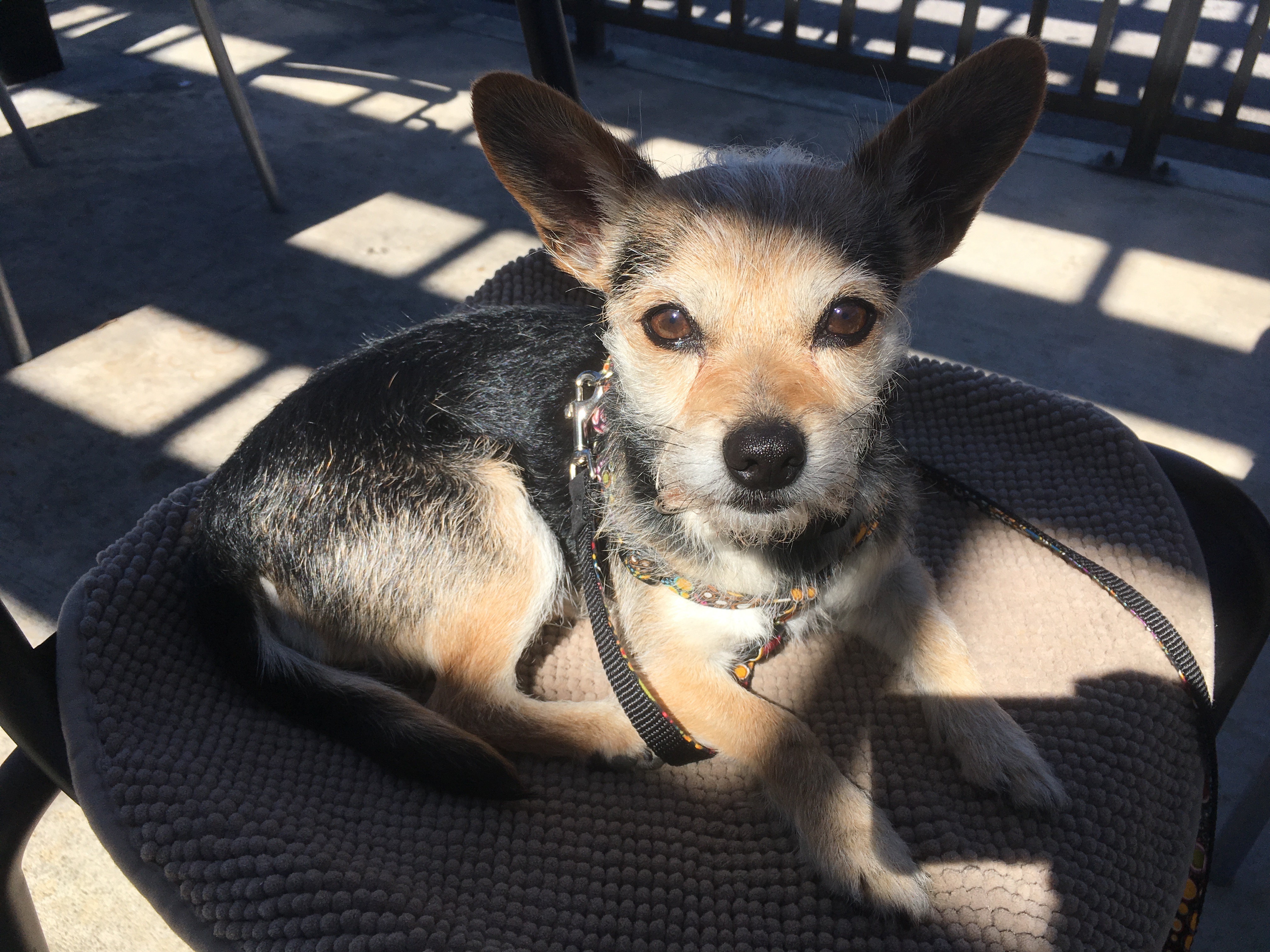
Stella-EyesAs trainers, we want to do the same thing for ourselves. Let’s set ourselves up to succeed by eliminating the stuff that get in the way of good solid learning. They are the distractions and interference that slow us down or even derail our teaching efforts. I call them training fouls. Here’s my short (but not exhaustive) list of the worst culprits of training fouls. Don’t fall victim and, please, don’t get flagged for a training foul yourself.

The Session Thief. This is perhaps one of the most common fouls. A trainer is in a session with her dog. Perhaps the dog is a bit slow to respond to a cue. Then, another well-meaning person jumps in with another cue and steals the session. You can see how this would confuse our dog and frustrate the first trainer. Don’t be that person. And, don’t let others foul you in this way.

The Dog Shamer. Nothing kills training like someone making you feel bad about how you are raising your dog. This foul may come as a surprise. After all, it’s my job to help get folks back on course with teaching their dogs. But, giving professional advice and guidance isn’t the same as making someone feel like an idiot. Don’t shame your fellow dog lovers – they are doing the best they can with the information they currently have. And if you want to be helpful to someone else, be helpful. Leave the criticism and same on the other side of the foul line.

Whispering Uncle Buddy. We all have a friend or relative like this. Our dog is sensitive to new people he doesn’t know well. Maybe he’s even bitten before. But our kind-hearted (but bumbling) friend or relative is certain our dog will love him anyway. “I have a way with dogs.” “All dogs love me.” “I’ve had dogs all my life.” Sigh. These are most often the folks who get bitten. They feel bad. We feel bad. They are walking, talking, smiling, training fouls. Certainly don’t be that person. And keep that person away from your dog.

The Alpha “Expert”. This guy (and it’s usually a guy, sorry) might also be an Uncle Buddy (see above). He may not a dog trainer by profession, but he’s seen lots of TV shows on dog training and maybe a few YouTube videos. He knows how to show a dog who is boss – how to make him mind – and he certainly knows more that the trainer you’re working with. Foul. I already know you are not that person. Don’t let The Alpha “Expert” confuse you about how to teach your dog. And please, don’t let him hurt your dog in the name of training.

The One-More-Timer. This is a training foul we most often do to ourselves. A learning session is going exceptionally well. Our dog seems to be grasping the concept and that last rep was perfect. We’re so proud we want to see it just “one more time.” Stop. Record the win and take a break. “One more time” is the curse of great trainers worldwide. Don’t foul your dog (or yourself). Celebrate the success and end on that note for the time being.

Most of these folks are just humans, like you and me, trying their best. Be firm with them, but kind. Help them become better teachers and dog lovers, just as you have become. We are all learning. And we all know the learning comes faster and easier when the humans involved are patient, relaxed, and clear thinking.

Learn. Smile. Breathe. Teach. Repeat.

Michael Baugh teaches dog training in Houston, TX. He specializes in behavior related to fear and aggression in dogs.

Human Centered Dog Training

Michael Baugh CDBC CPDT-KSA

Yes, good dog training is mostly about teaching the human. And, there’s absolutely no shame in that.

All the stuff our dogs do, their behavior, is largely influenced by their external environment. Some would say behavior is driven exclusively by the dog’s external environment. Sure, our dogs have internal experiences, like pain, hunger, illness, etc. and those play a role in behavior.

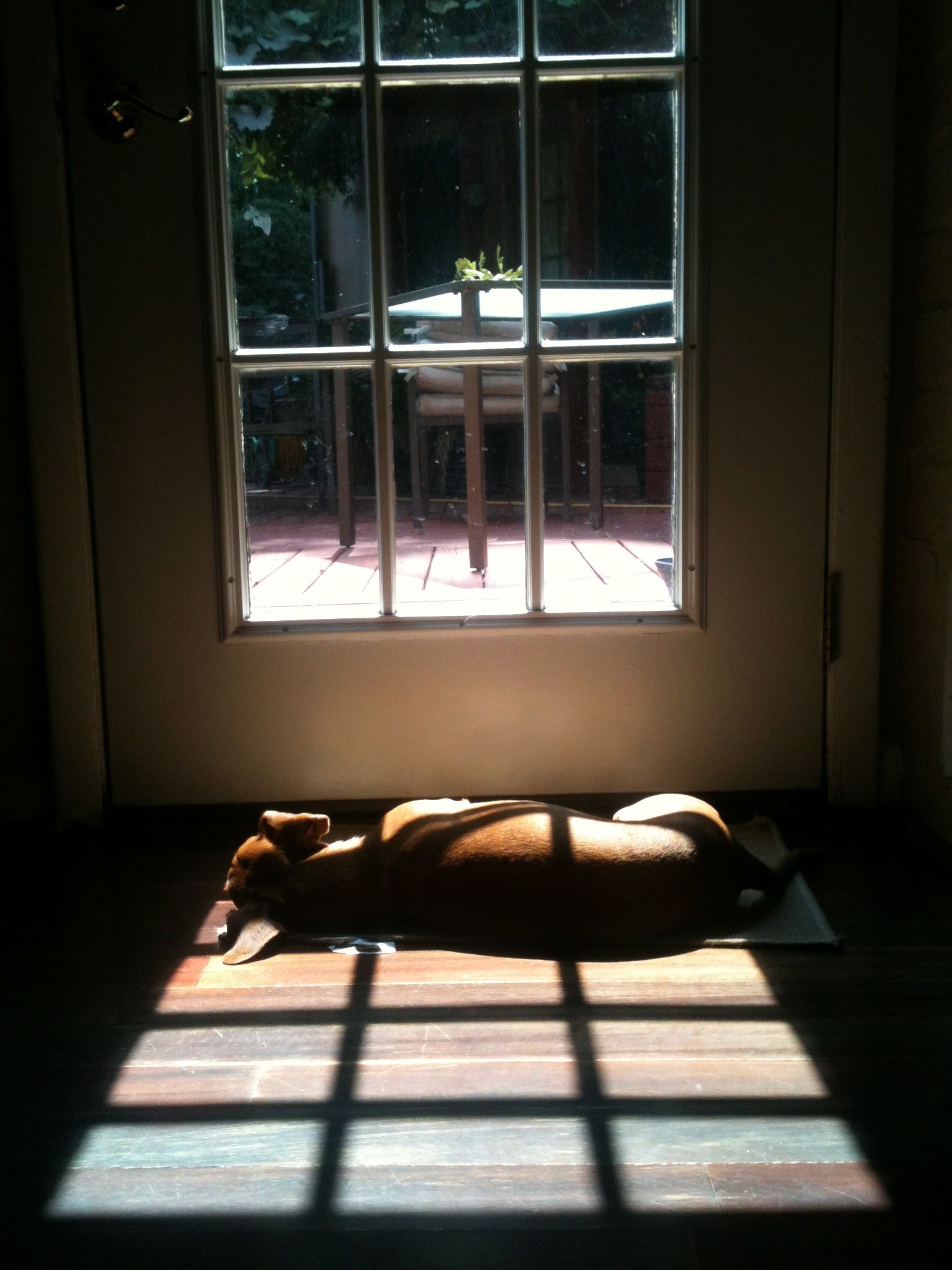
stewie-houston-sun-dogStill, our dog’s external experience is key. Dogs walk, run, lie down, chew, poop, pee, bark, and jump – all in their in the physical world, our homes and neighborhoods. How the environment responds to those behaviors determines if the dog keeps doing that stuff, and if so where, when, and how. Here’s one example. My dog lies down and stretches out. He’s learned over time that areas in which the sun is shining provide him warmth. He seeks those areas out more often. The environment (angle of the sun) has influenced when and where he lies down. The world is always teaching our dogs which behavior is reinforcing and which is punishing. Right?

What does all this have to do with us humans? Everything. No doubt we are the most important players in our dogs’ environment. Every day we determine when they eat, where they sleep, when they are let inside or outside, what opportunities they have for social interaction (with humans and nonhumans), and how they live their physical, mental and emotional lives in general. Nothing influences our dog’s behavior more than we humans do. Nothing.

Of course our dogs think (and feel). They may not muse and contemplate. Those processes involve verbal language. But our dogs are expert observers, constantly assessing the world around them for potential danger or sources of pleasure. Our job is to line up the feedback we give our dogs (when they eat and when they have access to other pleasurable activities) with what they are doing. That’s called reinforcement. Our dogs remember, and memories of reinforcement (and punishment) guide their behavior. We call that learning. Harnessing this process is the most natural way to train dogs. It’s the natural way all animals learn.

We humans are the most important player in our dog’s world. But, there’s a down side to this. Whether we intend it or not our dogs are always learning from us. The only question is are they learning what we want them to or are our actions teaching them the wrong lesson? Here’s my short list of stuff we should avoid doing around our dogs (this is not an exhaustive list).

  • Yelling, Hitting, Choking, Shocking: teaches the dog that we are dangerous – may lead to them avoiding us or aggressing against us.
  • Lying to our dog with our actions (being inconsistent): teaches the dog that we are an unreliable actor in their environment – will lead to unreliable/ inconsistent behavior from the dog.
  • Misusing food / bribing / giving food at the wrong time: teaches the dog that they get food for doing wrong things (like begging at the table) – can lead to the dog only responding to us when we have food.

Noticing the mistakes we’ve made with our dogs is actually a good thing. Don’t ever let anyone shame you about the choices you’ve made. Just use the information to make better choices from here on out. Our dogs can learn. But, so can we. We learn which of our actions work and don’t work just like our dogs (learning by doing). We also learn by watching others model behavior (imitation), by listening, and by reading. So we’re actually in really good shape. We can learn to:

  • Be better observers of our dogs – notice when our dog gets stuff right and how to reinforce behavior we want him to do more.
  • Set our dogs up to succeed – creating opportunities to do the things we want them to do more and then providing reinforcement that strengthen those good choices.
  • Put those great behaviors “on cue” – teaching our dogs to do what we want when we ask it.
  • Be consistent – making training a lifestyle of good behavior and reinforcing experiences throughout the day and not just when we have a treat bag on.

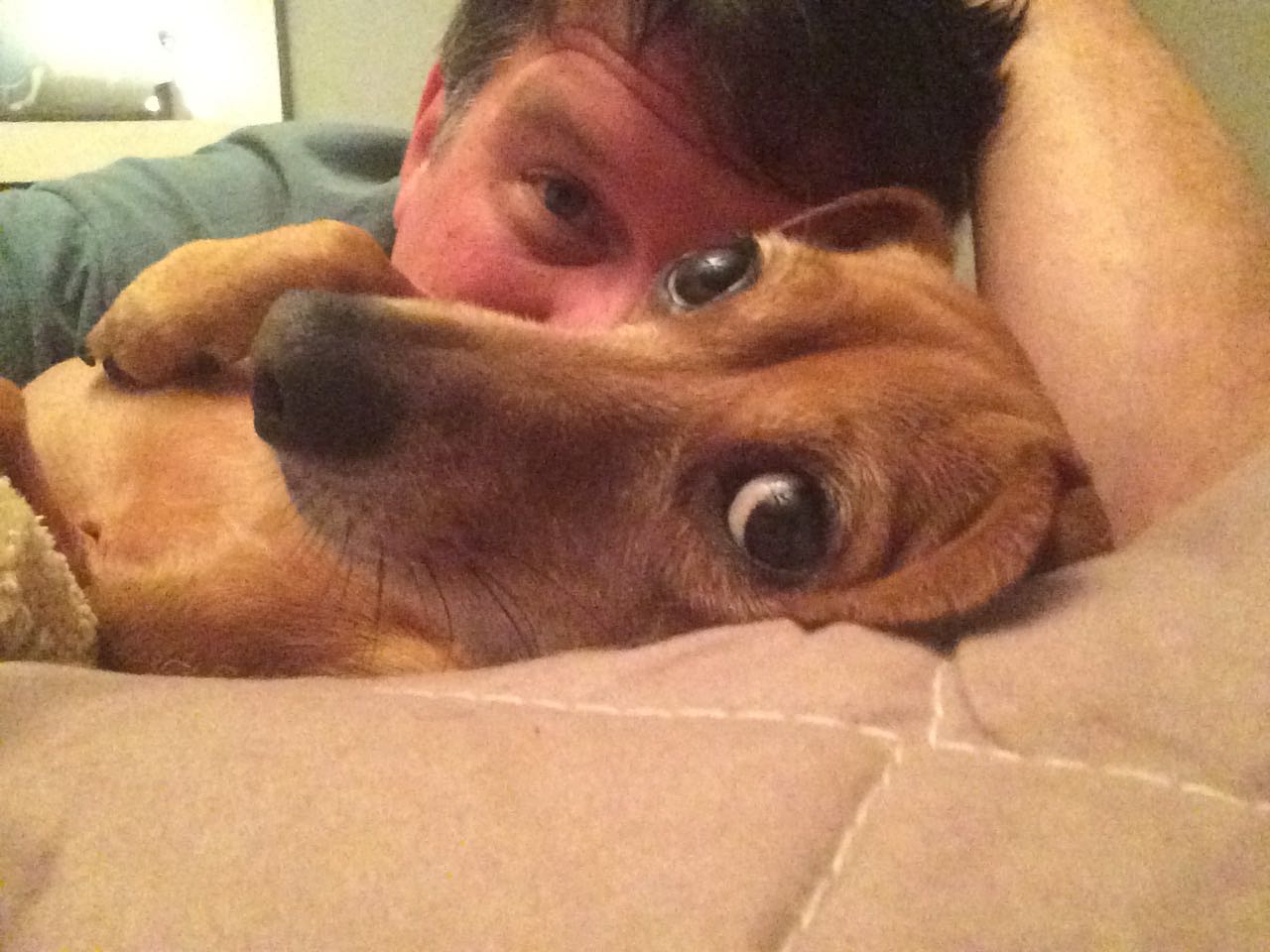
Houston-Dog-Trainer-Stewie-CuddleSuccessful dog training hinges on our human behavior. That’s big, maybe even a little scary. But it’s empowering too. I call it human-centered dog training – teaching humans how to teach their dogs. It’s a two species process – always. That’s a lot of brainpower and lots of heart working toward changing behavior, even reversing the most troubling behavior problems. We are learning together with our dogs, learning cooperation – humans and dogs not in conflict but on the same team – making choices with each other – finding better ways to live with each other – looking together for that warm spot in the sun.

Dog Trainer Michael Baugh specializes in behavior related to fear and aggressive dog behavior in Houston, TX.