
Dog Training is Experiential

Michael Baugh CDBC

I can show you dog training techniques, the timing, the mechanics, the way your hands and body move. That part matters. You can learn a lot from dog training books, from articles, even from watching good trainers online. Those things help. But nothing replaces the experience of doing the work yourself.

Dog training is experiential. It isn’t something we do to our dogs. It’s something we do with them. We learn it in the same way they do: by trying, adjusting, and feeling it out as we go.
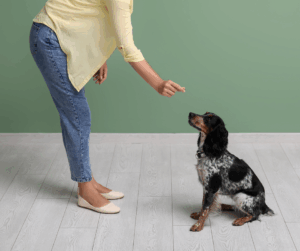
Mechanical Skills: Learning Through Movement

Effective dog training is physical. How we reach for the treat bag matters. The direction we turn our shoulders matters. Even whether we’re sitting, standing, or walking matters. Dogs see all of it.

Humans are natural imitators, so watching a skilled trainer can give you a great head start. But the learning really begins when you try it.

Your dog will teach you, too. Pay attention to how they respond to your movements, your posture, your facial expressions, even a small shift of your weight. These subtle cues shape the conversation between you and your dog.

There’s no perfecting this by reading alone. You only learn the dance by dancing.

Timing: The Art of Seeing the Moment

Good timing is all about the eyes. We reinforce as the behavior happens or just after, not minutes later, not even several seconds later.

That doesn’t mean you need to deliver the treat quickly. In fact, reaching for the treat bag too soon often distracts the dog. Instead, we use a marker like a clicker, or a consistent word that tells the dog, “Yes, you got it right, and your reward is coming.”

You can absolutely watch an experienced trainer do this. But great timing comes from practice. You build that skill rep by rep, moment by moment, until your marker feels almost automatic.

What About Board and Train?

People ask this a lot: “Can’t someone just train my dog for me?” We’ve all heard about the neighbor’s dog who went to “boot camp.” Some programs help; some cause real harm.

A positive-reinforcement board and train can give your dog a solid foundation. The most reputable programs require follow-up sessions so you learn how to continue the work at home. Take those seriously. Ask the trainer to coach you while you practice. Their expertise gets things started, but your involvement keeps it going.

Avoid trainers who rely on physical corrections, shock collars, or verbal intimidation. These so-called balanced dog training methods can damage a dog’s emotional well-being. And if you stayed with that approach, you’d be learning how to hurt your own dog. None of us brings a dog into our life to do that.

Training Together: The Real Reward

Training with your dog is a beautiful experience. It’s fun, sometimes messy, sometimes awkward, always deeply connecting. You’re learning about your dog while your dog is learning with you.

You’ve heard me say it before: training is communication. It’s one of the most meaningful conversations you’ll ever have with your dog.

So get in there. Try the thing. Allow yourself to feel uncoordinated at first. Work it out together. Keep going.

This is how great relationships form — through presence, effort, and shared experience. You bring your whole self, your dog brings theirs, and something remarkable grows between you.


Michael Baugh CDBC teaches dog training in Houston TX and online. He specializes in aggressive dog training.


How to Prepare For Your Dog Training Session

Michael Baugh CDBC

Dog training on-the-fly can look too much like testing and not enough like teaching. Sure, there are some circumstances where a properly reinforced single-event training moment is acceptable, even preferred (example: randomly calling your dog to you for a click and treat). Most of the time, though, I recommend well-planned brief sessions for training with your dog, seven to ten minutes in duration, one to three times per day.

What Should You do Before Starting a Dog Training Session?

✅ Make sure you have all the props you’ll need nearby. (for example, your dog’s mat, or target stick)

✅ Have treats and your clicker if you are using one. (Carry your treat bag around for an hour before a session so your dog doesn’t automatically flip into “training mode.”)

✅ Create a low-stress, minimally distracting place to train.

✅ Imagine what a successful session will look like. Visualization works.

✅ Take a breath. Relax. I like to do a brief meditation before training. It helps me focus and pay attention.

Begin.

When we set ourselves and our dogs up for success, training is fun. It’s not always easy, but the challenges are easier to solve. Enjoy this moment. Keep in mind how your session connects to your larger dog training goals without getting lost in the future, or getting frustrated because you’re not there yet. Teach in the here and now. The days with your dog are passing, and this is all part of the joy you share with each other.


Michael Baugh teaches dog training in Houston TX. He specializes in aggressive dog training.

The First 3 Things You Need to Teach Your Puppy

Michael Baugh CDBC CPDT-KSA CSAT

These are not the only things you need to teach your puppy. They are, however, the fist things I think we should be teaching young dogs.

#3 Come When I Call. This one takes priority for me because it’s so easy. Our little puppies are already following us around, curious about our every movement. Let’s use that to our advantage. Call them often and give a small bit of food every time they come. To make it even more effective, choose a word or phrase (also called a cue) that you will use every time, and every time they come you be sure to give that little morsel of food. Your dog will grow up having learned that coming when called is always good news. They’ll run to you every time you call.

#2 Potty Here Not There. Young puppies learn this pretty quickly too. And, let’s be honest, no one wants a dog of any size pooping and peeing in the house. My clients follow these simple dog potty training instructions and enjoy great success. Follow the link for some relieve. (haha).

#1 You are Safe. This is my number one pick of the top three because it’s so vitally important. More than anything we should be teaching our young puppies how to safely navigate the human world. You’ve probably heard this called puppy socialization. That’s a well-known term that’s often misunderstood as just exposing the puppy to a bunch of experiences. I like to think of it, instead, as thoughtfully introducing the puppy to the sights, sounds, and experiences of the human world that they will encounter throughout their lives. Let’s set our puppies up to have new experiences, yes, but to also learn these encounters are safe. We don’t flood the puppy with an overdose of stimulation by taking him to a huge family cookout. That can backfire and cause long-lasting fear. Instead we let him meet new people and process new stimuli at his own pace one or two at a time. Giving the puppy choices, rather than forcing him to “handle” new and potentially overwhelming situations is key. This this is how we teach our young dog behavioral flexibility. Follow the link to learn more about that. I also recommend the book Life Skills for Puppies.

Learning is a lifelong process for dogs, just like it is for humans. These first 3 things are a great starting point. But, let’s keep going. The possibilities are nearly limitless.

Michael Baugh teaches dog training in Houston, TX. He specializes in fearful and aggressive dog behavior.