
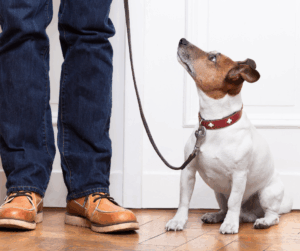
National Train Your Dog Month: A Celebration of Connection

Every January, dog trainers across the country come together to celebrate National Train Your Dog Month, a campaign created by the Association of Professional Dog Trainers (APDT). It started back in 2010 with a simple goal: to remind people that training and socialization are essential to every dog’s well-being.

The APDT put it beautifully: “Training isn’t just about obedience; it’s about building a relationship.” We are creating connection, communication, and compassion between people and their dogs.

Why January? A Fresh Start for You and Your Dog.

January is a season of new beginnings, fresh goals, and a chance to start again. The APDT chose this month to encourage dog owners to start training early in the year, when routines are still being built and possibilities are wide open.

For many families, training often feels like something they’ll “get to later.” But training is not just a box to check. It’s the foundation of your relationship with your dog. It’s how we help them understand our world, feel safe, and make good choices.

“When we teach with kindness, we create understanding instead of fear.” APDT.

The Mission: Build Trust, Not Tension

The official mission of National Train Your Dog Month is to promote reward-based, positive training methods that strengthen the human–animal bond. The goal isn’t perfection. It’s a partnership. It’s about seeing the world through your dog’s eyes and teaching them how to navigate it with confidence.

My Perspective: Training Is a Lifeline for Fearful and Aggressive Dogs

In my work with fearful and aggressive dogs, training isn’t just about teaching skills. We are building safety. Many of our dogs are scared, and react out of self-protection. Training, when done with compassion, gives them a sense of control in a world that often feels unpredictable.

When a fearful dog learns how to pause and look to their person for guidance instead of panicking, that’s training. When an aggressive dog learns that calm behavior makes scary things go away, that’s training too.

Those moments are quiet victories. They build trust one choice at a time.

That’s why I love the spirit of National Train Your Dog Month. It’s not just tricks or obedience titles. We are helping dogs, especially the challenging ones, find calm, confidence, and connection.

Small Steps, Big Change.

If you’d like to celebrate this month with your own dog, start small. Pick one simple skill or routine that builds trust.

Use reinforcement generously. Speak softly. Notice what your dog gets right. The real magic of training is in those small, shared moments: eye contact, a tail wag, a soft sigh of relief.

If you’re working with fear or aggressive dog behavior, reach out for help. Positive reinforcement–based trainers can guide you safely, without punishment or intimidation. You and your dog deserve a relationship built on safety and respect.

A Month for Connection.

So this January, as trainers across the U.S. celebrate National Train Your Dog Month, let’s all take a moment to remember what training truly is: an act of connection.

Every cue, every treat, every quiet moment says to your dog, “You’re safe. You belong. We’re in this together.”

That’s something worth celebrating — this month, and every month after.


Michael Baugh CDBC teaches dog training in Sedona Arizona and Houston Texas. He specializes in aggressive dog training. 
Dog Training is Experiential

Michael Baugh CDBC

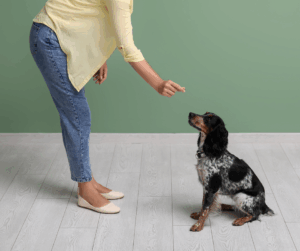
I can show you dog training techniques, the timing, the mechanics, the way your hands and body move. That part matters. You can learn a lot from dog training books, from articles, even from watching good trainers online. Those things help. But nothing replaces the experience of doing the work yourself.

Dog training is experiential. It isn’t something we do to our dogs. It’s something we do with them. We learn it in the same way they do: by trying, adjusting, and feeling it out as we go.

Mechanical Skills: Learning Through Movement

Effective dog training is physical. How we reach for the treat bag matters. The direction we turn our shoulders matters. Even whether we’re sitting, standing, or walking matters. Dogs see all of it.

Humans are natural imitators, so watching a skilled trainer can give you a great head start. But the learning really begins when you try it.

Your dog will teach you, too. Pay attention to how they respond to your movements, your posture, your facial expressions, even a small shift of your weight. These subtle cues shape the conversation between you and your dog.

There’s no perfecting this by reading alone. You only learn the dance by dancing.

Timing: The Art of Seeing the Moment

Good timing is all about the eyes. We reinforce as the behavior happens or just after, not minutes later, not even several seconds later.

That doesn’t mean you need to deliver the treat quickly. In fact, reaching for the treat bag too soon often distracts the dog. Instead, we use a marker like a clicker, or a consistent word that tells the dog, “Yes, you got it right, and your reward is coming.”

You can absolutely watch an experienced trainer do this. But great timing comes from practice. You build that skill rep by rep, moment by moment, until your marker feels almost automatic.

What About Board and Train?

People ask this a lot: “Can’t someone just train my dog for me?” We’ve all heard about the neighbor’s dog who went to “boot camp.” Some programs help; some cause real harm.

A positive-reinforcement board and train can give your dog a solid foundation. The most reputable programs require follow-up sessions so you learn how to continue the work at home. Take those seriously. Ask the trainer to coach you while you practice. Their expertise gets things started, but your involvement keeps it going.

Avoid trainers who rely on physical corrections, shock collars, or verbal intimidation. These so-called balanced dog training methods can damage a dog’s emotional well-being. And if you stayed with that approach, you’d be learning how to hurt your own dog. None of us brings a dog into our life to do that.

Training Together: The Real Reward

Training with your dog is a beautiful experience. It’s fun, sometimes messy, sometimes awkward, always deeply connecting. You’re learning about your dog while your dog is learning with you.

You’ve heard me say it before: training is communication. It’s one of the most meaningful conversations you’ll ever have with your dog.

So get in there. Try the thing. Allow yourself to feel uncoordinated at first. Work it out together. Keep going.

This is how great relationships form — through presence, effort, and shared experience. You bring your whole self, your dog brings theirs, and something remarkable grows between you.


Michael Baugh CDBC teaches dog training in Houston TX and online. He specializes in aggressive dog training.
Aggressive Dog Training – What Philosophers and Saints Teach us about Trust

Michael Baugh CDBC

We want to trust our dogs. It’s hard when they have a history of aggressive outbursts, though. Many of my clients tell me, “I don’t want to worry all the time.” I understand that. Our trust returns as our dog’s behavior changes.

I think our dogs want to trust us, too. We control so much of their lives, the people they encounter, the sights and sounds, and the spaces they have to navigate. How our dogs make choices depends on how we set up their environment.

Can our dog trust us?

St. Francis of Assisi, the patron saint of animals, teaches us that we build trust with actions. “Start by doing what is necessary; then do what is possible; and suddenly you are doing the impossible.” St. Francis echoes the philosophers Aristotle and the Buddha, who also taught compassionate action to build and nurture trust.

When we are helping fearful and aggressive dogs, we are teaching them they are safe. This is sometimes hard. Many dogs have a history of being betrayed or hurt. The world and the humans in it have not been safe for them. If we follow the wisdom of ancient philosophers and saints, we begin with simple, patient acts, and transformation follows naturally. Trainers and dog guardians don’t change a dog’s behavior. Our compassion creates a space for them to change themselves.

Here are some dos and don’ts.

🚫 Don’t punish your dog for having feelings. Be safe and limit your dog’s ability to hurt someone or himself. But scolding or physically hurting your dog never helps.

🚫 Don’t bribe your dog into a scary situation using food. I see this most often when people use treats to lure their dogs closer to new people, or worse yet, the veterinarian.

🚫 Don’t rush. Avoid demanding behaviors you haven’t taught yet or that are too hard to perform in stressful situations. This can make your dog’s fear and aggressive displays worse.

✅ Use food to teach reliable, calm behavior. Dogs love patterns for navigating tough situations.

✅ Gently support your dog through challenges. It helps.

✅ Practice routines in low-stress situations and build the difficulty level gradually. (see “Don’t Rush” above).

“Not to hurt our humble brethren [the animals] is our first duty to them; but to stop there is not enough. We have a higher mission: to be of service to them whenever they require it.” – St. Francis of Assisi

You are your dog’s safe place. Keep that in mind as you go. Yes, living with a dog who has big feelings is stressful. I walk that path with my clients every day. But here is what else is true. Our dogs, especially our dogs with emotional challenges, have so much to teach us. They make us better people, more patient, more compassionate. Smarter. They teach us how to walk the earth more lightly, more lovingly. With them. With each other.

Michael Baugh specializes in aggressive dog training. He is an avid student of dogs and the human condition.