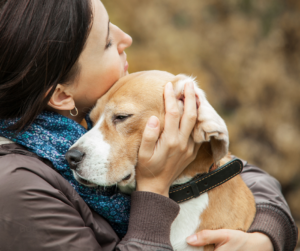
Jealousy and Dog on Dog Aggression

Michael Baugh CDBC

Jealousy is a complex cluster of emotions: anger, fear, uncertainty, and insecurity. If you ask a jealous person what they are feeling, they might have a hard time telling you because they aren’t sure themselves. There’s too much to unpack.

So, what about our dogs? Well, they can’t talk at all. Most of us can tell when a dog is angry. We can see fearful behavior. There are even visible signs of uncertainly and insecurity. Is that jealousy? I think the label is a hard fit for dogs. And I’m not a fan of labels in the first place.

Behavior, in this case dog behavior, is all about verbs. That dog lunged. One dog bit the other. My dog tucked his tail and lowered his head. We observe behavior, identify when it occurs, and then work to change it. Feelings change when behavior changes. We know that for a fact. Is my dog jealous? I don’t know. Regardless, let’s teach him a new pattern of behavior and hope that he feels better.

Most dog fights start over food or food-relate objects. I’ve seen it in street dogs around the world. My dog has guarded treats and bones. Hundreds of clients’ dogs have clashed this way. It’s commonly called resource guarding.

Resource guarding can spread. A dog might aggress toward a housemate dog over a prized sleeping spot, a crate, or a sofa. One’s dog might guard a caregiver and not let another dog approach. Some dogs become sensitive to another dog approaching their own personal space, no matter where they are.

After two dogs have fought a few times, there is a chance they will become so agitated that they fight on sight. The history becomes thick with anger and pain. They simply don’t like each other.

These cases are hard to resolve, not impossible.

Keep the dogs separate unless in a controlled training exposure. We want to protect them from their own unacceptable behavior. When they fight again, they just get better at fighting. It’s up to us to prevent fights at all costs.

Teach calm behavior. A dog who is physically relaxed (example: lying comfortably on a mat) is less likely to behave aggressively.

Safely expose the dogs to each other at a distance while reinforcing relaxed behavior. Progress incrementally.

This is a very abbreviated description of the process. Work with a qualified trainer to do it correctly and to get support along the way. The process is straightforward, but it is certainly not easy. Get help.

Do I think dogs get jealous? Gosh, that’s a hard one. I really focus on the more basic emotions that are linked to observable behavior. Keep it simple.

If using the word jealousy plays a role, maybe it is this. We humans can all relate to feeling threatened. We may fear that another person is going to take what is ours (money, status, a lover). It’s an unsettling feeling. We may become angry. It’s likely we will feel some enmity toward that person. When we share our feelings with a friend, they may say, “You’re jealous.” It’s possible that defining our dog’s behaviors as jealousy opens the door to empathy. We get it. We’ve felt that terror, that confusion, that rage.

Here we stand on common ground with our dog. “You’re having some big complicated feelings, dog. I’ve had those, too. Let me help you.” If a flimsy label (jealousy) leads to empathy, I’m all for it. Stand tall on that common ground. Step up and help you dog, because you know how awful it feels and how unnecessary that behavior is. Who better than you to help? You understand. You’re smart. And you got this.


Michael Baugh teaches dog training in Arizona and Texas. He specializes in aggressive dog training

Change (The Nature of Dog Behavior)

Michael Baugh CDBC CPDT-KSA

Our dogs’ behavior changes. That’s good news, and it is bad news. Behavior changes in ways we want it to. Think: training. Our dogs’ behavior changes in ways we don’t want it to as well. Think: why is he suddenly barking at visitors?

Our dogs are always learning from us, from others, and from their environment. Changing behavior is inevitable. It is part of nature, like gravity and the rising sun.

One of my favorite authors, Octavia Butler, wrote: “The only lasting truth is change. God is change.” (Parable of the Sower). That might not set well with some of my readers. So, think of it metaphorically. Change is the one constant, from animals to plants to the landscape itself. Everything changes. For believers, it would be hard to ignore the hand of God in all that. For nonbelievers, it is awe-inspiring nonetheless.

Change, specifically the promise of changing behavior, inspires my work with you and your dogs. Of course, change is frightening sometimes. (Why is this happening? It hasn’t happened before.) I choose to look at change with wonder. (Look at what is happening now. This is new. How cool.)

“All that you touch, you change. All that you change changes you.” That’s Octavia Butler, too. We influence change because we are part of this living world. We certainly influence changes in our dogs’ behavior. I see that every day in my work and in my own home. It’s a marvel if you think about it.

My dog Charlie is a champ at coming when called and he loves lying on his mat. He’s also taking on air travel, long road trips, and hikes up desert rocks (no small challenge for a three-legged dog).

On the surface, it looks like nothing more than cues and treats. That’s part of dog training, yes. But zoom out. Change begets change. The little ways we set up our dogs’ world can have huge positive effects. How can we change the settings we create for them? What slight changes can we make in our own behavior to make learning easier for our dogs? Where can we change things to ensure our dogs’ success?

Join me this new year in embracing change. Some of it is scary. I get it. Much of it, most certainly the behavior change work we do with our dogs, is waiting with joy and surprise. Teach. Love. Teach again. Love some more. Marvel at the change. Our dogs are changing. We, too, are changing.

“God is Change — Seed to tree, tree to forest; Rain to river, river to sea; Grubs to bees, bees to swarm. From one, many; from many, one; Forever uniting, growing, dissolving — forever changing. The universe is God’s self-portrait.” Octavia Butler.


Michael Baugh specializes in aggressive dog training in Houston, Texas.

Stress Crisis: Dogs and Humans Under Pressure


Michael Baugh CDBC CPDT-KSA

The biggest challenge in dog training these days is us.

We humans are stressed out. Life is coming at us (coming for us) from all directions. Work pressure is endemic. Social media is a constant mirror to our perceived inadequacies. It’s an election year.

This summer the U.S. Surgeon General actually issued a mental health advisory. Let’s not take that lightly. The Surgeon General reserves health advisories for big stuff, like warnings about smoking or AIDS. This advisory sounded the alarm about the mental health of parents. Forty-eight percent of parents say their stress is “completely overwhelming.” They’re worried about money, safety, their children’s future. And they’re worried about time. They’ve maxed out their schedules. They simply don’t have enough time in a day to do everything they need to do.

One of the more popular theories is that our brain’s evolution hasn’t been able to keep up with all of our technological advancements. We’ve made the world too complicated and fast-paced for our own good. That might be true.

We humans crave joy. I think more than that even; we crave peace. We just want some relief from the cacophony of daily life. So, we get a dog to help.

The trouble is (this is my opinion), our dog’s brain evolution hasn’t been able to keep up with all the changes either. Dogs evolved with us. Nature tied their lives inextricably to ours. The joke online these days is “I got a dog for my anxiety and ended up with a dog with anxiety.” It’s not funny, probably because the truth of the matter is so stark. We are under pressure and, inadvertently or otherwise, we put our dogs under a great deal of pressure, too. Dogs who traditionally hunted, guarded, or herded are now our surrogate children (or, worse, our mental health caretakers). Most do well. They walk tethered to us, wait patiently under tables at our favorite ice house, pass the hours with the mob at daycare.

Some, the ones I meet, succumb to the pressure. They growl, snarl, snap, and bite. We balk. Dogs are supposed to be good. We should know better, though. Dogs are doing the best they can, just like we are.

I can’t address the pressure we humans are under. At a minimum, we all need a good friend to talk to. We’d all probably do well with some therapy, or at least a nice group hug. But your dog’s stress, that I can help with.

Here are some ideas you can start today that take very little extra time out of your schedule. I think you’ll enjoy some of them, too.

Notice your dog. Observe. Watch what your dog does when they don’t know you’re looking. It’s fun. I think it’s fascinating and relaxing at the same time. It can also be downright entertaining.

Spend some quiet time with your dog together every day in physical contact, petting, or cuddling. It’s good for you. It’s good for your dog.

Play. This is how social animals bond. It’s how we can bond with our dog. Every human-dog pairing is different. My last dog played fetch. My current dog loves to play tug. Find the interactive game that works best for you and your dog.

Train. Don’t think of dog training as a chore. Think of it as a way of starting a dialogue with your dog. Communication helps us feel less isolated, more connected. I suspect it feels that way to our dogs as well.

There is good news. Again, this is my opinion. It might be true that our legacy brains (and those of our dogs) are struggling to keep up with the world we’ve created. It sure feels like that most days. But here’s what else is true: we humans are amazing learners. We adapt. Humans can tap into ancient wisdom for comfort and insight. We are rich in philosophy and faith. And, there’s more good news. Our dogs are amazing learners alongside us. We’ve co-evolved navigating change and learning together.

There’s hope for us, I think.

If the pressure feels like too much some days (every day?), that’s okay. I feel it. I think we’re normal. Reach out for help. Reach out to a friend, trusted clergy, a therapist. We are social creatures. Human existence was never meant to be a solo endeavor.

If you see your dog is having a hard time, well, that happens too. There’s help for both of y’all. I’m here for you. At the very least, I can connect you to help for your dog.

The romantic in me wants to shout out: “we can get through this together.” The truth is we are already, day by day. Evolution be damned. You, me, our dogs – we’ve got this.


Michael Baugh teaches dog training in Houston, TX. He specializes in aggressive dog training.