Changing Your Dog’s Behavior

Michael Baugh CPDT-KA, CDBC

Changing behavior is all about verbs, actions.  We can observe behavior in real space and time because it is physical and often includes movement.  We describe behavior with verbs.  He sits.  She runs.  They eat.  Remembering that helps us steer away from the labels we put on dogs, like dominant, dumb and stubborn.  Those are adjectives, and the only real way to change them is to stop using them.  Actions, on the other hand, we can change.

I didn’t invent the science of behavior change (I wish I had).  In fact, there isn’t a dog trainer in Houston or anywhere else for that matter who can make such a claim.  The truth is, the core concepts of animal training (including the human animal) are more than a century old.   And they are among the most tested and verified bits of knowledge in the field of psychology.  That’s a good thing really.  We dog trainers don’t have to reinvent the process.  Be careful of those who claim to.  I wrote about the science of dog training in the March 2011 issue of Houston PetTalk.  While we are always refining the way we apply the science of behavior change in dogs, the fundamentals remain the same.

Ah science.  There seems to be a collective yawn when the topic comes up.  Maybe our concept of science reminds us of boring afternoons in the classroom.  That’s not what I’m talking about here.  Using behavior science in dog training is cool, very cool.  In fact, every trick you have ever taught your dog is an example of applied behavior science.  Dolphin shows are excellent examples of it.  Behavior science is actually happening all around us.  Dog trainers use it all the time in some form or other, even if they don’t fully understand it.
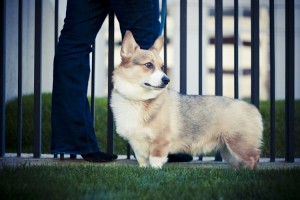
Photo Courtesy: Robyn Arouty

Here’s how it breaks down.  A behavior is repeated (and becomes habit) when there’s a history of favorable consequences following the action.  How about an example?  Put on a sweater – enjoy warmth and avoid being cold.  Nice!  Here’s a doggie example.  Knock over the garbage can – enjoy snacking on the spilled food scraps.  The actions of putting on a sweater and raiding garbage cans will increase over time because of the consequences.  Changes in the environment set these learned behaviors into action.  Let’s look at the human example again.  The temperature drops when the sun goes down – put on a sweater – avoid the cold.  The temperature drop didn’t cause the action of putting on a sweater, but it did set the stage.  Perhaps the sight of a garbage can and the absence of people set the stage for the action of knocking the can over.  In both examples, it’s the consequence which keeps these actions going time and time again.

You’re on your way to understanding how to change behavior (your dogs’ actions).  Cues from the environment (we are part of our dogs’ environment, by the way) and consequences in the environment influence our dogs’ actions.  That’s very good news for those of us who live with dogs.  Why?  Because we can change their environment.  We can remove garbage cans as a potential trigger of destructive behavior.  We can also provide food-delivery toys like Kongs and Bob-a-Lots for better behavior when the dog is left alone.  Now we have the tools we need to change behavior.  We actually had them all along.

Think of anything your dog does that you’d like to change.  Remember to use verbs.  Then think of what happens right before the action, and right after.  Those are the trigger and the consequence.  Can you change either of those, or maybe both of them?   When a visitor comes to the house (trigger), and your dog jumps on her (action), does she pet him (consequence)?  How many of those environmental pieces can you influence?  Better yet, could you teach your dog that when the visitor comes (trigger), he sits politely (action), and she gives him a snack and some petting (consequence)?  I bet you could.

The best part is we’re focusing on our dog’s actions and things in the world around him we can control.  We’re not worried at all about labels.  Those are adjectives and they are not of use in changing behavior.  We’re all about verbs (like sit, and come, and look at me).  And we’re not just looking at our dog’s actions either.  The best way to change an animal’s behavior is to make a few little changes to the environment, and this often means changing our own behavior.

Now we’re talking about a wonderful noun:  Relationship.

(originally published on the Houston Pet Talk blog site)
 

Meeting Tad

Michael Baugh CPDT-KA, CDBC

I love a good story of redemption.  That’s probably why I’m drawn to dogs we commonly call fearful or aggressive.  They’re the barkers and growlers and lungers and biters.  They walk a hard path and are often misunderstood. They are the hard cases with no guarantees for anyone involved.   Few have walked a path more difficult than Tad, my newest client.  A young woman named Tiffany found him along the side of a country road in Montgomery, Texas late last March.   Tad was eaten away by mange and malnourishment, weak and wounded.  The veterinarian at the clinic where Tiffany works wondered if Tad would survive the night.  He did.  As he grew stronger, though, his behavior grew worse.  Tad started barking and growling at visitors to the clinic.  Then he bit Tiffany’s father who had the double misfortune of falling and frightening Tad in the process.  That would have been the end of the line for some dogs.  But not Tad.

It turns out Tiffany is a storyteller, and a good one at that.  She began blogging about her Abandoned Dog the day she found him.  She posted  pictures and videos of Tad, and before too long he had a worldwide following (nearly 5,000 fans on Facebook as of this writing).  When Tad needed money for expensive veterinary care, hundreds of people responded.  And when word came that he needed a trainer, more help rolled in.  It only took a phone call for one of his followers to find me.

I liked Tad the minute I saw him.  He’s smaller than he looks in pictures and video (about 55 lbs).  He’s also loose and wiggly most of the time, a young dog coming into his prime.  We met outside of The Fundamental Dog near The Woodlands.  I like to meet dogs like Tad on neutral territory, outdoors if possible.  The idea is to make it easy for the dog to make the best choice possible.  If Tad didn’t like me, he had plenty of room to move away, an easier choice than barking or lunging.  This wasn’t his place, so there was no pressure on him to make me go away if I looked like bad news.  Fortunately, he trotted right up to me.  He seemed pleasantly surprised when I pulled out my “secret weapon:”  Cheeze Whiz (Tad’s favorite).  It wasn’t a bribe.  If you come to my house, and I want us to be friends, I’ll offer you a snack.  It’s good manners.  Of course, there’s good behavior science behind it too.

I won’t take too much time talking about the science of dog training.  Most people already know I depend exclusively on well tested and verified behavior science in my practice.  Very little (if anything) of what I teach is based on folk wisdom or popular consensus.  That’s my bias.  If there isn’t a body of data to support a training protocol, then I’m not teaching it.  More importantly, I don’t use any methods that frighten or hurt a dog.  Tad’s been frightened and hurt enough.  What he needs now is to learn that people are safe, and that good things happen for him when new people show up on the scene.  I got to be one of the first to teach him that.  Tad liked me and my colleague Marie.  It made my day.

This is about as geeky as I’ll get.  Tad is learning that every time he sees a new person (or even an unfamiliar person he’s seen before) tasty bits of food soon follow.  Some of these people may actually choose to hand Tad the food themselves.  This is called Classical Conditioning.  Person predicts Yummy food.  In addition, we’re pairing up the sound of the door chime at the veterinary clinic with lovely snacks as well, because the chime is also associated with new people coming in.  Chime predicts Yummy food.  Right now chimes and people are  associated with increased heart rate, shallow respiration, dilated pupils, elevated cortisol (most likely), and piloerection (hackles up) – in other words, fear.  In order to change the association, we’ll need to be careful to protect Tad from repeated full-on exposure to the scary stuff (new people).  He’s going to meet his new friends much the same way he met me, in a controlled and calm setting.  The rest of the time he’ll be away from the hustle bustle.  Tad never has to be afraid again.

Was Tad abused?  The physical evidence clearly points to that.  The behavioral evidence, interestingly enough, is less clear.  Many dogs display behavior similar to Tad’s without any history of abuse.  Lack of experience with a wide variety of human beings can lead to what we call “socialization deficit.”  Dogs who behave in ways related to fear and aggression often didn’t have enough positive exposure to human beings early in life (5-16 weeks of age).   That lack of experience is enough to create serious problems down the line.  We trainers see it a lot in puppy mill dogs, and even in some dogs who come from  so-called reputable breeders.  This is precisely why well-designed classes for young puppies are so important.  A lot of street dogs, like Tad, have a very mixed bag of early socialization.  Regardless, remedial socialization in canine adolescence and early adulthood can help turn things around.  That’s what I’m hoping for with Tad.

Tad’s not all that unlike a lot of the dogs I see day-in-day out.  Maybe that’s what  makes him special.  Being a dog is quite enough, thank you.  He doesn’t have titles or ribbons, and his coat is still pocked with mange.  He’s just a dog from a country road in rural Texas.  But His story of survival against great odds touched us nonetheless, thousands of us.  Tad is one dog who stands for so many other dogs, too many who are left to suffer and die young.  Perhaps that’s what gave so many of us pause, and made us reflect on the better measures of being human.  People failed Tad, but it was also people who lifted him up, thousands of people.  There’s a story of redemption being told here – not just his, but our own.

Travels with Dogs

Michael Baugh CPDT-KA, CDBC

I’ve set off across the country a few times now.  I gathered up my things, and packed them with my sense of self.  It was always for a job; that’s the way it was working in TV news.  I’d rent a truck, cram everything in and tear out. It was always a quick move with a bunch of stuff cast aside, stuff I wanted to forget, emotional stuff.  I set off on my own, again and again, leaving home, looking for home.  Of course I wasn’t really on my own.  I left people behind.  The dog always came with.

Juno made the last two moves with me, the delicate blond golden retriever I first met

Juno in puppy agility class

in the front seat of my car.  My partner at the time came into the newsroom in St. Louis to tell me he’d found the “most perfect golden retriever ever.”  He was more right than either of us knew.   He’d left her in the parking lot, in the car, balled up on the front seat, nose tucked to tail, fast asleep.  When I saw her I let out a long sigh, and smiled.  She looked up at me, bleary eyed, just 8 weeks old.  Two years later we’d leave the partner who brought me Juno.  He’d follow us to Cleveland and four years after that we’d leave him again.  I’m sorry for that, for the pain we caused.  My heart belonged to a dog, and a life I would never find except in the journey with her.

I’ve thought about Juno and St. Louis a lot recently.  My colleague from those days, Jean Whatley, is traveling across the country with her dog, Libby.  She’s writing, snapping photos and rolling video of the adventure for her blog

Jean's dog Libby

(www.offtheleashroadstories.com).  She tells her own story much better than I ever could.  Still, there are themes:  regret, reflection, the seeking and hope for redemption.  These things resonate so deeply and wake me at night.  What now?  What’s all this about?  Why this time, these people? Why me?  I’ve got to get out of here.  I have to go.  Now.  Don’t forget the dog.

I worked with Jean in St. Louis at a TV station that would eventually shut down its news department.  I was in the first round of layoffs.  The news director invited me to sit.  I refused and stood stone-faced.  He told me my contract was not being renewed but that I could finish out the remaining 6 months. It was an easy sentence compared to today’s layoffs.  It was still the worst thing that had happened to my fragile ego thus far in my life.  I went home to Juno and cried, deep wracking gasp-for-breath sobbing.  She looked at me like I was an idiot, but in my state I saw it as love.  In the movie version I say this next line aloud to Juno.  In real life I just thought it.  I will never again depend on a company or a boss for my sense of self worth or our survival.  I promise. That was the moment I decided to become a professional dog trainer.  “And, damn it Juno, you’re going to help me.”  That part I really said.

We loaded up the truck and moved to Cleveland, me and Juno rolling across the Mississippi River Bridge.  It may have been the same route Jean took to Chicago when she set off with Libby.  I don’t know.  I was on my way to another TV job and to start a dog training company.  Jean – I think she’s got a book in her.  I wonder if maybe it’s mine.  It’s funny how good stories work out like that.  We all have a share of them, the big questions, and the epic quests for self and how we fit in.  What’s it about and why me?  If you’re a traveler, you load up a car and go.  The answer’s down the road, I suppose.

Juno did help me become a dog trainer, a pretty good one.  We moved again together, this time to Houston for another TV job.  The best tales have little twists like that, don’t they?  We met Tim, my partner.  Then, a short time later I came to my senses and decided to leave TV again.

That was right before Juno left us.  It was cancer.  We laid her down on the cool wood floor under the piano where she loved to listen to Tim play.  The vet had come to our house to help her along.  She relaxed and looked up at me, bleary eyed, 11 ½ years old.  I let out a sigh.  You really are the most perfect golden retriever ever.

Juno shortly after moving to HoustonJuno and I logged a lot of miles together, lots of cities, and adventures.  But our real journey wasn’t about travel at all.  I wonder if that’s what it’s like for Jean and Libby out finding themselves in America.  For me, it turns out the journey was about where Juno was taking us without ever leaving my side.  It was about finding my better self in the reflection of her eyes, the one worthy of love even when I was acting like an idiot.   It was about learning to stay put, to draw people near and dare to love them the way Juno loved me.   Yes, it was about big questions, but it was about the little questions too.  Who are you?  What’s your story?  Do you want to share the path for a while?  And, by the way, have you met my dog?