Correcting Unwanted Behavior with Positive Reinforcement


Michael Baugh KPA-CTP CDBC CPDT-KSA

It seems like a contradiction. How do we eliminate our dog’s misbehavior with positive reinforcement?

The first step is to focus on what you want your dog to do rather than on what you don’t want him to do. This approach works with all misbehavior, but let’s look at one example in particular: the dog who menaces visitors with barking and growling. We know the problem, but let’s not focus on it. Instead let’s ask ourselves what we’d like to see the dog do when visitors come over instead of barking and growling. Quietly lying in his crate might be a good alternative. Great. Let’s use positive reinforcement training (clicker training, perhaps) to teach the dog to go lie in his crate when guests arrive. The misbehavior is eliminated (replaced actually), and we used positive reinforcement to do it.

Old-fashioned trainers will balk at this idea. Why? Dr. Susan Friedman, professor of psychology at Utah State University, says it’s simply “the perennial gap between research and practice.” Trainers, even some on TV, focus heavily on the dog’s misbehavior. They’re constrained by ever-forceful practices aimed at suppressing what they don’t want the dog to do. Here’s the disconnect. Behavior scientists have known for decades that punishment (intimation in the name of training) has its limitations and side effects. Dogs subjected to these methods often withdraw from social interaction, have suppressed responses to training cues, escalate their aggressive responses, or develop generalized fear (Friedman, 2001). Too many trainers have simply failed to keep up with the research.

But what about safety? If we don’t focus on the problem, in this example aggressive behavior, aren’t we putting people at risk of being bitten? Foregoing archaic methods does not mean we are being gratuitous or precarious in our training. Instead, at every step, we block our dog’s access to repeating the unwanted behavior. In the example at hand, we avoid surprise visitors while we build up the behavior of lying in the crate. As needed, we’d use a leash, baby gate, or other barrier to protect visitors while we refine the fluency of the crate-lying behavior. As we progress, we add other pro-active behaviors related to teaching our dog calm confidence when visitors are present. We’re safe and we’re smart about what and how we are teaching our dog.

And there’s a bonus with all this. Just as harsh training has its deleterious side effects (sometimes called “fall out”), positive reinforcement training has it’s emotional benefits. Dogs who are trained with praise, smiles, and well-timed food treats (again, think clicker training) are generally more engaged socially, respond with vigor to training, and respond more reliably with reduced aggression. This is where research and training practices merge.

As always, real behavior change in our dogs starts with human behavior change. We learn and choose modern training methods. We focus on behavior solutions rather than getting mired in behavior problems. We take responsibility for our dogs’ learning, and we take on an advocacy role for them as a result. We step out from under the burden of having to be a master. We step up to the experience of being a companion and a teacher.

Michael Baugh CDBC CPDT-KSA helps families with aggressive dogs in Houston, TX.

The Facts About Punishment, Susan Friedman PhD 2001

Functional Assessment: Hypothesizing Predictors and Purposes of Problem Behavior to Improve Behavior-Change Plans, Susan Friedman PhD 2009
10 Practical Reasons to Teach Your Dog “Sit”

Michael Baugh CDBC CPDT-KSA

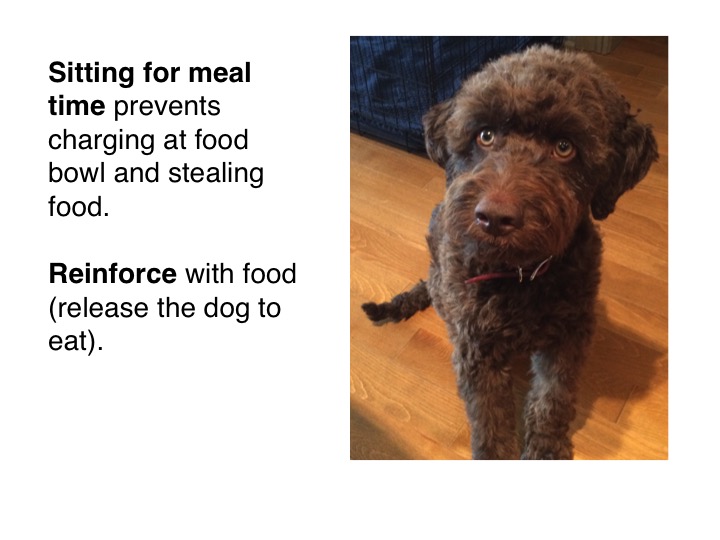
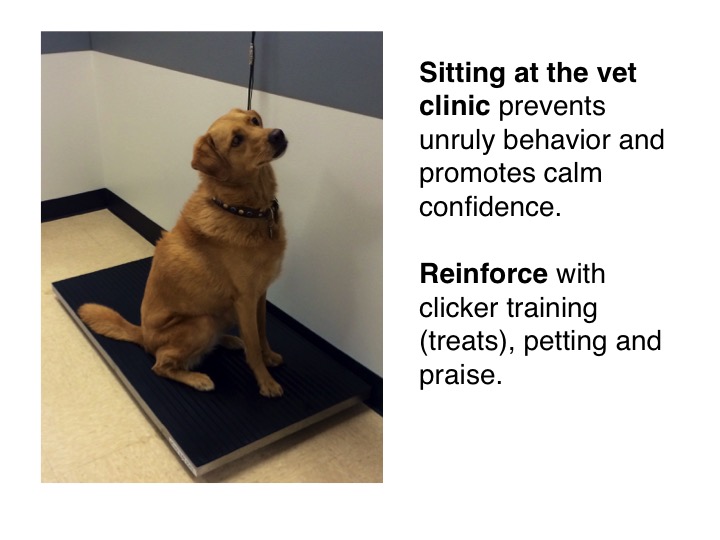
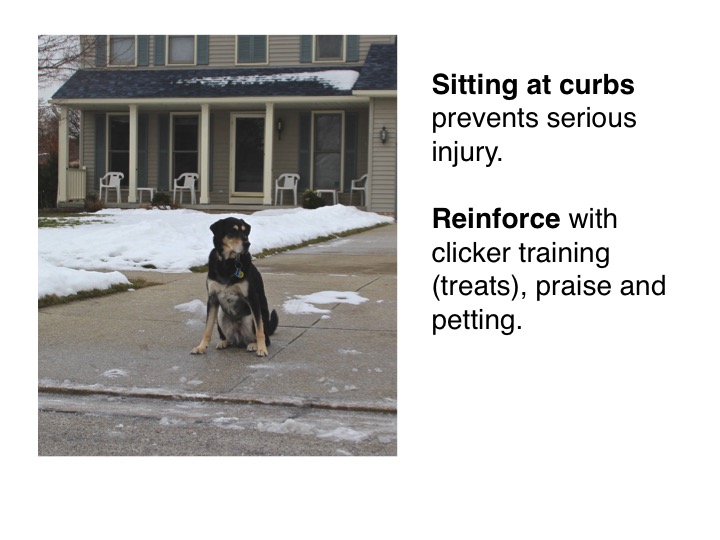
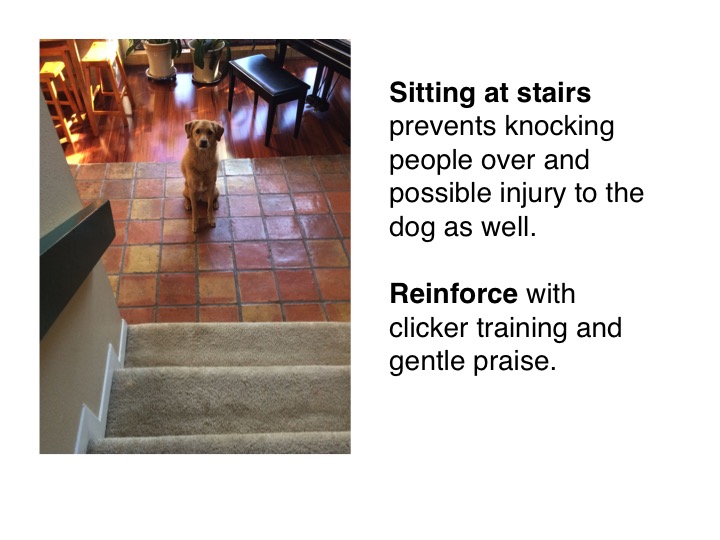
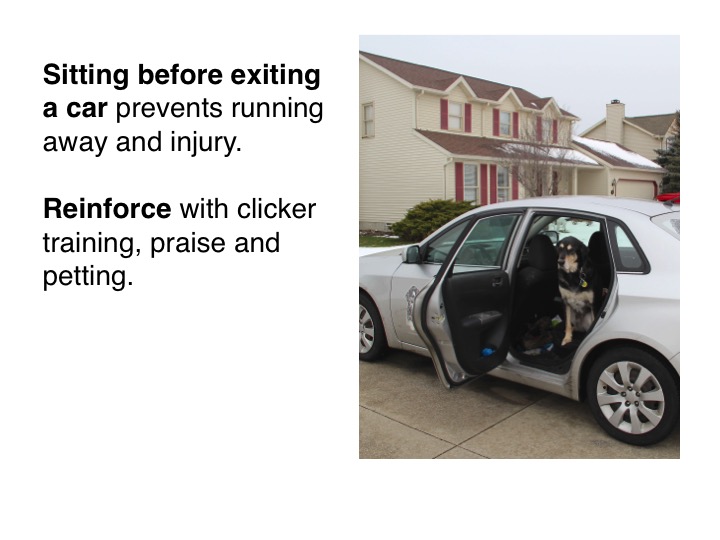
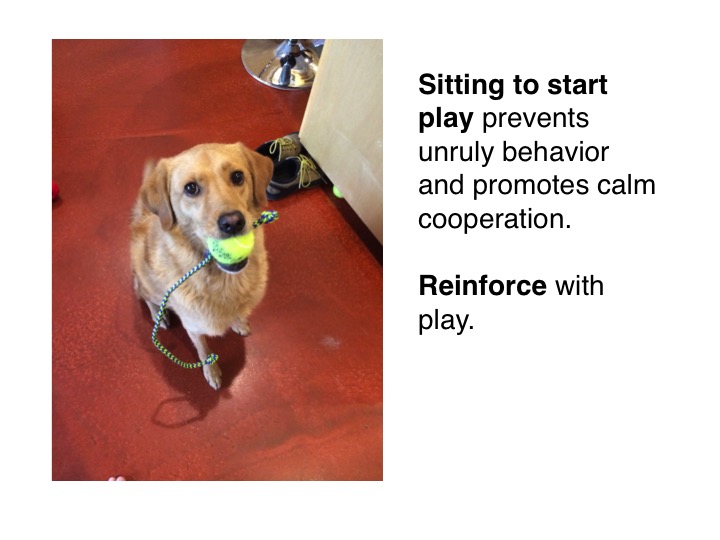
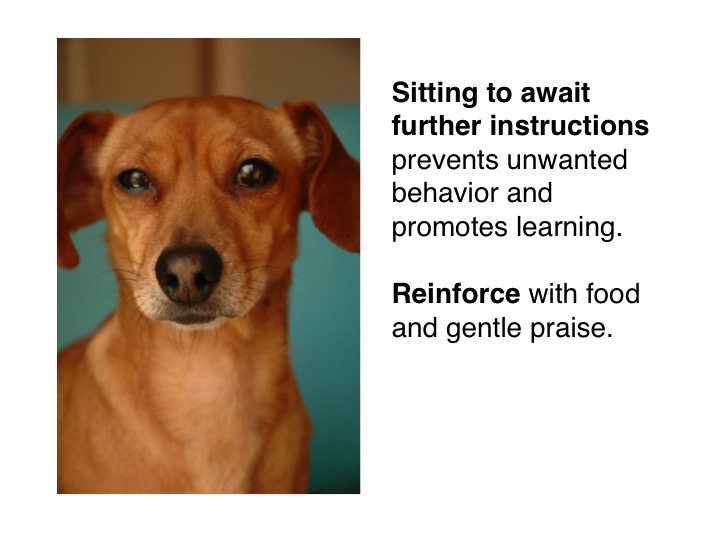
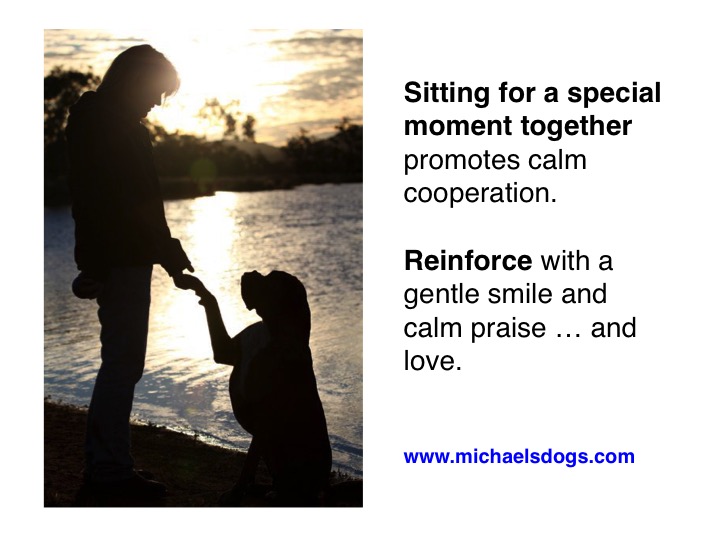
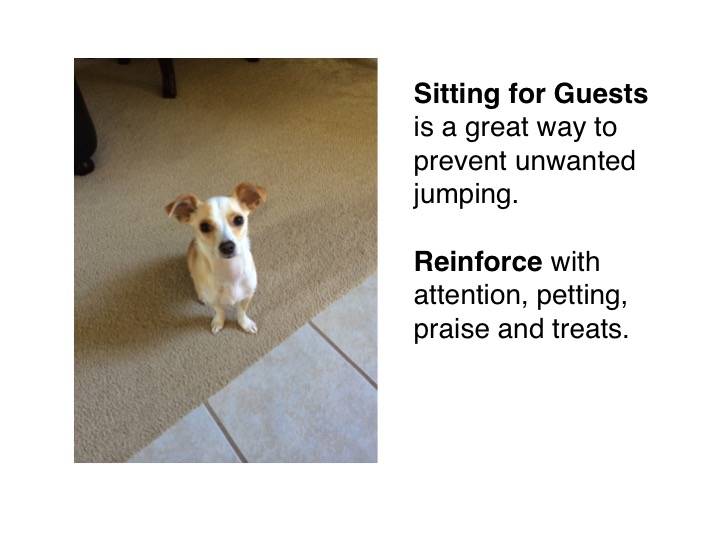
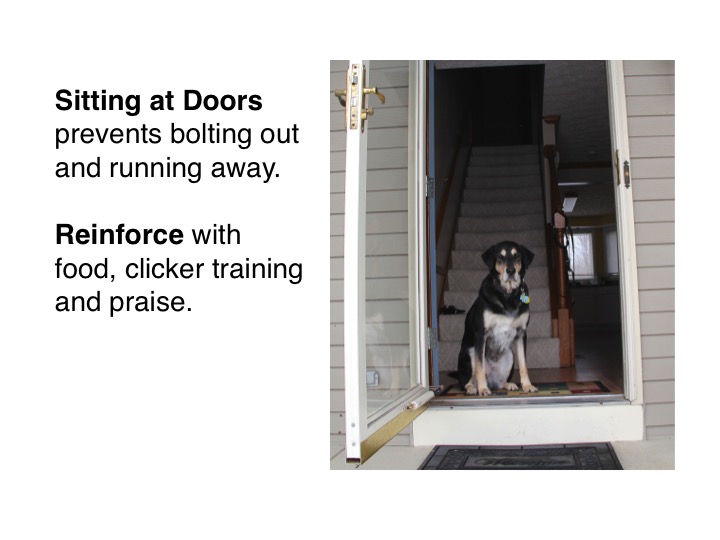
“Sit” may be one of the most undervalued things we teach our dog. Everyone teaches it, and just about every dog can get really good at it. So, let’s start applying it in situations that count. This one simple life skill can prevent a whole bunch of problem behaviors while promoting good manners at the same time.

10

Teach-Your-Dog-Sit-19

Kent-OH-Dog-Trainer-28

Katy-TX-Dog-Training-37

dog-training-houston-46

Dog-Training-cleveland-55

Dog-Trainer-Houston-64

Cleveland-dog-trainer-73

Houston-dog-trainer-8

2Dog-Training-Houston-9

1

Houston-Dog-Training-Sit10

Michael Baugh CDBC CPDT-KSA teaches dog training in Houston TX. Special thanks to Cleveland dog trainer Kevin Duggan CPDT-KA for contributing to this post. Thanks also to Peta Clarke for the final photograph.

Food is not a Four Letter Word

Michael Baugh CPDT-KSA, CDBC

IMG_9994The question isn’t whether or not you can train your dog with food.  That’s pretty much a no-brainer.  Author and long-time animal trainer Dr. Grey Stafford put it best.  “If you’ve ever fed your dog, you’ve trained with food.”  Dogs have learned to do all sorts of things for their food bowl, including beg, spin in circles and jump on people.  What seems strange is that so many people would sooner give their dog a bowl of food for all that annoying behavior, than use small bits of food to teach desired behavior.  There seems to be a disconnect.  Feeding is good.  Food in training is bad.  Even some self-professed trainers advertise that they don’t use food in training.  Why?  Dr. Stafford inspired the title of this article when he made the claim that should be common sense to all of us.  Food is not a four-letter word.

Here’s how positive reinforcement training works.   If your dog spins in circles and barks, and the result is that you give him a heaping bowl of food, then he’s going to do more spinning and barking in the future.  It’s that simple.  Our dogs will keep doing the stuff we pay for.  In fact, it’s science (See “The Science of Dog Training”).  Dr. Susan Friedman PhD is a behavior analyst.   She cuts right to the meat of the matter.  “If behavior has no effect, what are we behaving for?”  So why not use the effect to our advantage?   Dog sits – food – more sitting.  Dog comes when called – food – more coming when called.  The list goes on.

Do you always have to have food with you?  No.  But (there’s always a “but”), it doesn’t hurt.  As your dog learns good manners, he may only get food every once in a while.  Many trainers refer to that as “phasing out the food.”  Use food to show your dog how to do new things (trainers call it luring), but don’t get stuck in a long-term pattern of bribing.  You should put the food out of sight as soon as possible.  Keep it handy but hidden.  Dr. Stafford speaks from experience, “I’ve trained hundreds of animals covering more species than I can recall.  The one lesson I’ve learned is the ultimate power of positive reinforcement, whether you train dogs or dolphins, is in its unpredictability.”  That means your dog will get paid for doing things you like, but not always how and when he expects it.  Any dog knows to come running when you’re wearing a treat bag, but try sneaking a few treats in your pocket, and then call your dog while you’re brushing your teeth or watering the lawn.  He’ll be mighty surprised when you hand him that food for a job well done.  Now, that’s unpredictability.

Is food the only way you can reinforce your dog’s behavior?  No.  But, some of the most potent reinforcers speak directly to the animal’s biological needs.  We call those primary reinforcers, and they include food, shelter, reproduction, and control (the ability to make choices).  In dog training food just happens to be the easiest primary reinforcer to deliver.  For professional trainers, food is often a first choice when teaching simple behaviors because you can get a lot more repetitions. Modern trainers pair the food with praise and smiles.  Those are called secondary reinforcers.  In time, praise, smiles, etc. will take on some of the built-in value of the food.  That’s a good thing.  You’ll want lots of possible reinforcers in your training tool kit.

What will your dog work for?  Some dogs love food.  But, other dogs will work for the chance to fetch a ball, play tug, or cuddle on the sofa.  Still other dogs learn to love petting and praise. Dr. Friedman notes, “It’s a teacher’s job to notice that individuality and use it well. The more reinforcers a learner has the more enriched its life can be.”  It’s our job to find what motivates our dog and to then use that to get the behaviors we want. Pay your dog for doing great things in lots of different ways, and see how that adds to the excitement from the dog we are looking for.  Your dog will work harder and learn faster because he’s always wondering, what am I going to get this time?

Is training all about the food?  No, and there’s no “but” about it.  Using food, pairing it with praise and fun, teaching your dog what pays and what doesn’t – that’s all about your discovering how to better communicate with your dog.  It’s about learning new things, looking for the next task, and loving every minute of it together.