
Seeing it From Your Dog’s Point of View

Michael Baugh CDBC

Phenomenology is one of my favorite geek words. It’s the study of subjective experiences, how another individual perceives the world from his or her point of view. It’s also the philosophical study of other being’s awareness of self. Think about that for a moment, and then let your thoughts wander to your dog.

Those of us who love dogs have all contemplated phenomenology. Chances are you’ve looked at your dog and wondered what he or she is thinking or feeling. We try to figure it out with our own thoughts and experiences. But that’s the thing about phenomenology. How do we know for sure what another being’s (our dog’s) private experience is?

Short answer: We can’t know, but we can try. We have to try..

You don’t have to know me very long to know my thoughts on training dogs. Teaching and learning are keys to opening a door between us and our dog. We are both thinking, feeling, living beings. What better way is there to search for our dog’s inner experience than by pushing that door wide open? Let’s be present and aware of what our dog is doing. How does our dog respond to what we do?

We know from experience (and the great work of behavior scientists) that dogs learn from the feedback we provide them. And yes, we are learning from the feedback they are providing us (their understanding or misunderstanding of us is clear in their behavior). So, here we are: dogs and humans in a steady exchange of information, learning the world as the other perceives it. We could call it a phenomenological approach to dog training.

As long as we’re geeking out, let’s talk about the philosopher Martin Buber. He brought us the idea of the I-Thou relationship between two beings. These are genuine connections in which the individuals see or strive to see who the other really is and how the other sees his or her existence. It’s a quick hop to phenomenology and what psychologist Carl Rogers referred to as a phenomenological approach to counseling and teaching (see, I didn’t make it up). At the root of all this, of course, is empathy.

We go into this process humbly. Neither being is above the other. We meet our dog on equal footing. Pause. Breathe. Be here now. It might do you and your dog both some good. What’s it like being you? What is being like for your dog? Open mind. Open heart. I-Thou.

How different is it now to think about training? Could we take a phenomenological approach, learning together and from each other? As equals. That’s a fresh approach. It’s fun, actually..

It’s ironic that the dog trainer’s hero, B. F. Skinner, frequently disagreed with and publicly debated Carl Rogers. Skinner is the one who showed us how to influence another being’s behavior by providing or withholding reinforcement. Folks back in the day (most especially Rogers) thought the approach was sterile and non-feeling. The irony here is that it’s exactly this approach that fuels communication with our dogs in the real world. It takes little more than a few minutes to realize that what we call training sessions are actually conversations. We are showing our dogs how we’d like to live with them, reinforcing their behavior. But aren’t they also showing us what they want and need? Don’t they reinforce our behavior? Let’s meet, dog and human, and work this out. I-Thou, indeed.

Phenomenology. Seeing the world as you see it. Understanding the idea of another being’s self as you understand yourself. And the big question: love. Does my dog love me? Can we know for sure?

Maybe we can’t know. Perhaps the answer balances on that equal footing we share with our dogs, in those moments we are teaching and learning. Searching. I keep searching for you who are.

Do you love me, dog? Is that even the right question? Pry open my heart. Get in here. See how much I love you.
 

Mindful Dog Training – Showing Up

Michael Baugh CDBC,

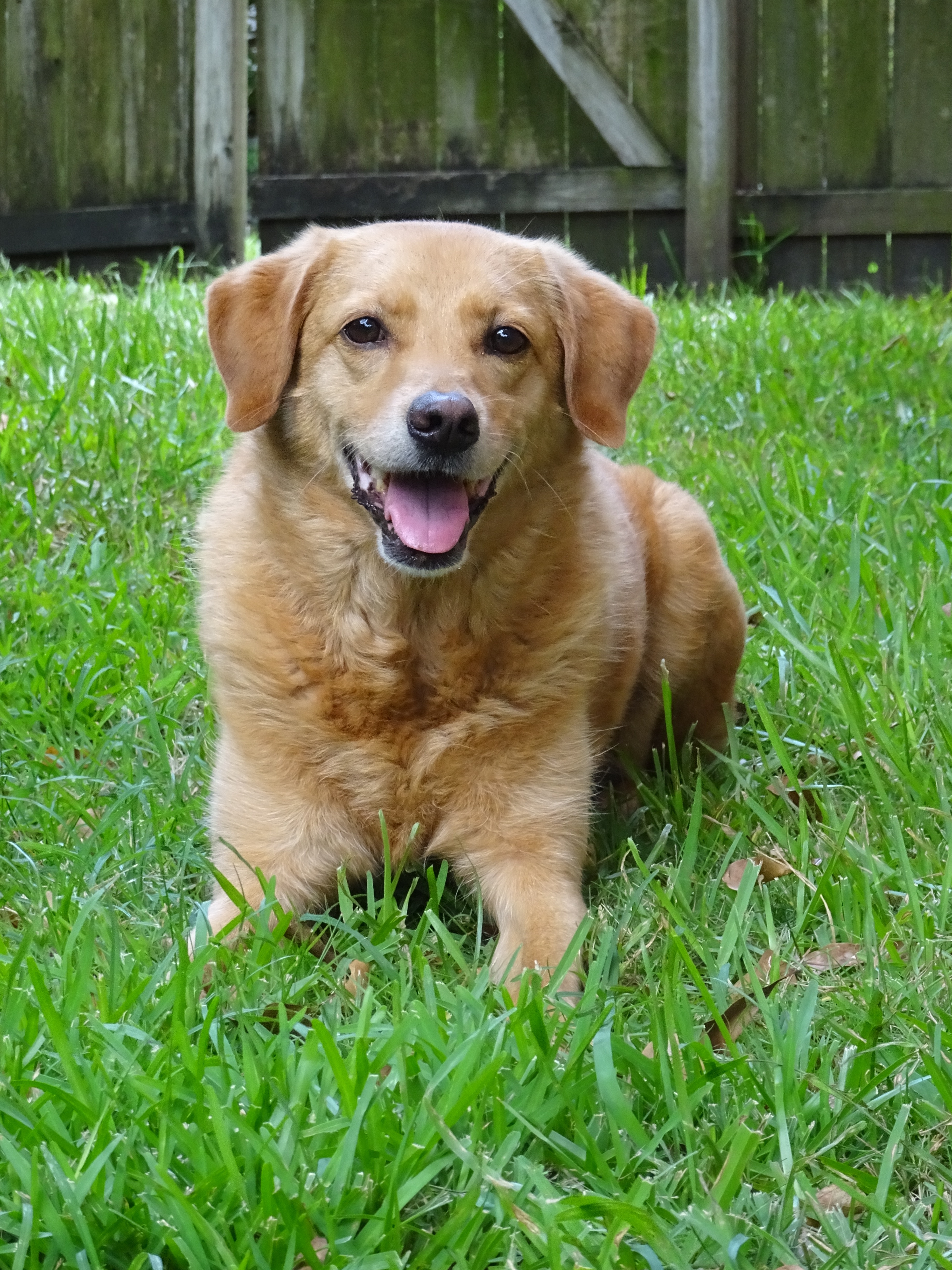
I once wrote that I fell in love with my dog, Juno, while we were practicing “stay.” We were across the room from each other at a busy training class. She was a good 20-feet away, but we were so very close, watching each other intently, fully in the moment. It was magical and I’ll never forget it.

Humanistic Psychologist Carl Rogers said this presence, this connection, is key to all healing and learning relationships. It’s not just about physically being there, going to class, pulling out the clicker and treat bag and doing the session. Instead, it’s about making genuine contact. Rogers (who didn’t have dogs) referred to it as psychological contact.  Some trainers say it’s like being in sync or in the zone with their dog. For me it’s about showing up in a very real and committed way. Stop, step away from the rest of the world, make eye contact and share a moment (or several moments) with your dog.

DSC00626For those of us who are clicker trainers, this sweet spot of connectedness is very accessible. So much of how we teach our dogs is about noticing them, what they are doing, how they are moving, even what they are looking at. We have to step away from the cacophony of everyday life to experience this. How else could we adequately capture and shape behavior? We’re providing feedback to our dog who, quite literally, is figuring out a training puzzle. We’d better show up, pay attention, be present. This is communication at its best, both actors fully aware (dare I say mindful), and in contact – psychological contact. How cool that so often not a single word is spoken.

These intense learning moments are a great and necessary joy. But, for me, they are not enough. The days are busy and the outside forces on our lives are relentless. We get into our routines and the work of training can sometimes feel done. We get swept up in jobs and traffic and email and the comings and goings of friends – let’s meet here – so good to see you – we must do this more often. We feed the dogs, take them out, maybe for a walk while we check social media on our phones. They seem fine, these easy-going noble creatures. The dogs are fine. So patient. So forgiving. But it’s not enough – not for them – not for us either.

Have you every felt a rush of joy when you look directly at your dog and see him looking back? Does the room seem to quiet down? Does your breathing slow a bit? These moments actually cause a release of the hormone Oxytocin. The love we feel is physical – measurable. Our dogs have oxytocin too and it’s a two way street, this hormone induced warm-fuzzy feeling. I can feel it when I train, but that’s not the only time. Oxytocin helps us bond with each other, other humans, and apparently with our dogs too. By all accounts, it’s good for us. It keeps us sane and psychologically connected. But, once the training ebbs and eventually fades away, how to we recreate these important moments, and the powerful  feelings of wholeness and relationship that come with them?

Stop, just for a moment or two. Step off and away from the world.

Every day (usually several times a day) I get on the floor with my dogs. It’s easy and I like easy. I put the phone away, leave the TV off, and set human conversation aside. Stella and Stewie and I just hang out. We show up and hang out. Sometimes Stella brings me a ball. More often now she sidles up for some petting while Stewie cuddles in my lap. We stay this way for as long as we can, with a nod to Dr. Rogers, while we soak in all that our shared biochemistry is designed to provide.

It’s amazing and good for us and I can’t get enough. Stewie and I play. Stella tugs and retrieves. Sometimes the dogs and I swim together. We all act silly together. So, Maybe it’s my age or the fact that so much of my life is about dogs, but these moments give me pause (and paws). I’ll look at Stella or Stewie and think to myself I don’t ever want to forget this. This is what life with dogs should be about. Stop and step into what is happening, what you are feeling, and seeing and experiencing – right now.

That’s the way it was in the big training room in Kirkwood, Missouri all those years ago. Just me and a golden retriever named Juno a couple dozen steps away. This moment. That dog. Everything else slipping loose just for a moment, maybe two. Never forgetting. Even now, I remember it so well.

Michael Baugh teaches dog training in Sedona, Arizona. He specializes in dogs with behavior related to fearfulness, including aggressive behavior.


.


Dogs and New Babies

Boy-and-DogMichael Baugh CDBC CPDT-KSA

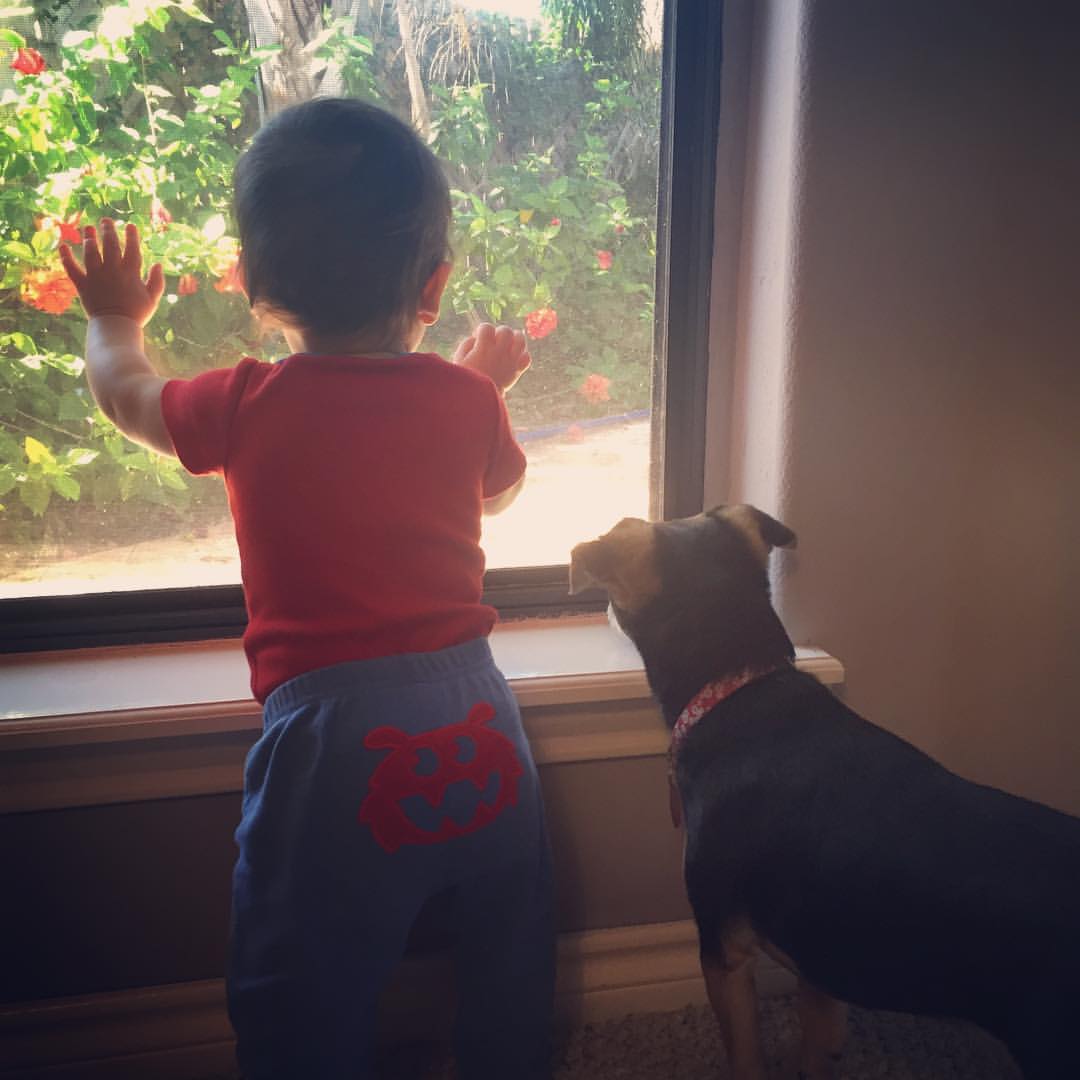
Which dogs are best for families with small children? While there may be some breeds that are a better fit for your lifestyle than others, the answer to the question of kids and dogs usually isn’t about breed. The dogs who are best with children are the ones we’ve taught to behave well around kids. No less important, these are also dogs who live with kids who have learned to behave well around dogs.

The best time to train your dog for a life with children is before you have your first child. I recommend folks start about 3-4 months into their pregnancy, or about the 6-months prior to bringing their child home if they are adopting. Starting early allows us to troubleshoot any problems that may arise long before we have the actual child.

For most families, the goal is simple: maintain a healthy and peaceful lifestyle for everyone involved (most especially the dog) as the family grows. Jennifer Shryock CDBC (familypaws.com) teaches a philosophy of inclusion, training the dog how to mind his manners around the baby while keeping him fully included in the family.

Most dogs will still need time away from the baby. This is as much for the dog as it is for the rest of the family. Kids are sometimes loud and require a lot of attention. I recommend crate training dogs to teach them they have a safe place to settle down on their own.

We may also decide that some places in the house, like the nursery, will be off-limits to the dog. Best to start teaching those limits now as well.

Many dogs will also need to brush up on their manners, especially how they’ve become accustomed to soliciting our attention. Barking, nuzzling, or pawing at us may not be the best choice anymore when we’re holding a newborn or interacting with a toddler. And we certainly don’t want even a small dog jumping up next to the baby uninvited. It’s easy for dogs to learn appropriate ways to get our attention.

Practice reinforcement-based training. Expecting parents should focus on teaching simple, useful skills to their dogs, like coming when called or calmly lying down on a bed or mat.

In some respects, everything is about to change. There will be new skills to learn and perhaps some new limits. There will also be lots of unfamiliar sights, sounds, and smells for our dog. We should begin introducing some of the baby’s gear (strollers, infant seats, swings, and bouncers) by associating them with praise and treats. Even better, we can associate these new items with calm behavior on the mat, which itself is associated with praise and treats. We can also prepare our dog for the sounds a baby makes in the same way. Search “baby crying” on YouTube and see all the offerings that pop up. Associate that too with good behavior, praise, and treats. While we’re at it, we could introduce him to the smells of baby wipes and lotions. All of this preparation will make the transition less stressful when the baby actually comes home.

Most dogs will accept a new family member with few or no issues at all. Dogs who have a history of fear, anxiety, or aggressive behavior will need extra help. Contact a dog behavior professional with the education and experience necessary to help you with these issues.

Michael Baugh CDBC CPDT-KSA is a dog behavior consultant specializing in aggressive behavior in dogs. He helps families prepare their dogs for new babies and other life changes.