Dog Training – It’s About the Relationship, Silly


Michael Baugh CDBC  

We’ve come full circle. Good dog trainers have always known that teaching is about relationships. It’s not so much “leadership,” (Do it or else). It’s more about cooperation (Let’s work on this together). We’ve known this even though for a while it looked like we forgot.

To some extent or another, too many of us became fix-it trainers. Dogs became a list of problems to solve. Our business coaches told us that’s what clients wanted–results, nothing more. We knew they were wrong, but we changed our business plans and turned our web sites over to them (at no small cost). And fix-it we did. We stopped the crummy behavior from happening and taught the shiny new behavior instead. We packaged it up as solutions and modifications, like we were tricking out cars. All the while, we still knew. This is about the relationship, silly. The human, the dog, the team.

It’s all come full circle. Relationships are the thing again, and rightly so. Maybe it was Covid. I learned a whole new way of living with my dogs, as you probably did too. It drew us closer. It taught us new lessons. Deeper ones, I think.

Take notice. The world slowed down, at least a little, at least for a little while. I could (and did) spend hours just watching my dogs. There was time to notice what they paid attention to. I saw what they did more often and in greater detail. I even watched them sleep. And here’s the other thing. I noticed them noticing me. They watch us, follow us, and listen to us far more than we give them credit for.

Communicate. There have been several studies that suggest dogs understand our meaning far better than we understand theirs. They read our facial expressions, our voices, and even our casual gestures and accurately interpret our intent. We know this, if we are paying attention, because of how they respond. They have their own gestures and expressions. It’s been called a language of sorts, and we can learn it. This is the bedrock of training, mastering the give and take, the quid pro quo, the rap-and-riff of our interactions with dogs. It’s like good improv. A little something from me, a little something from you. A conversation.

Turn towards, not away. All we have to do is to lean into this truth. Dog training is not a top-down endeavor. It’s a back-and-forth. Our dogs have intention. They are thinking and feeling. Psychologist John Gottman taught this concept in marriage. When our partner reaches out (Gottman calls this a “bid”), the more we turn toward them to engage and exchange, the richer our marriage will become. There is a parallel here for all relationships, including the learning relationship we have with our non-human friends. Your dog, I guarantee it, is always bidding. He’s exploring his agency in the world, gambling, engaging, experimenting. Turn towards that behavior, towards your dog, not away from it. Connect. Collaborate. Build shared understanding. Add fluidity to learning. Create trust.
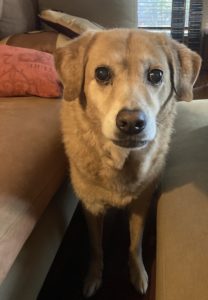
This is not ethereal pie-in-the-sky thinking. It’s foundational. There is certainly a time and a place for fixing problem behaviors. There’s a place for teaching cool skills and even tricks (tricking out your dog). If you’re focused on the results alone, though, you will struggle. In fact, often the struggle is all you will see. I wonder sometimes why it all feels so difficult. What if we saw our dog instead of the struggle, this other life in the room? What if we were open to the conversation? I see you and I smile and I know you know what that means. I see your bid–for attention, for engagement, for a chance to choose this or that. How could I miss it? You’re here, breathing and thinking and real.

I turn toward you. How could I not, you delightful, crazy, adorable, sometimes problematic, dog?


Michael Baugh teaches dog training and behavior in Houston, TX. He specializes in aggressive dog behavior.
 

Anticipatory Grief: The Sadness Before Losing a Beloved Dog


There is sorrow enough in the natural way
From men and women to fill our day;
And when we are certain of sorrow in store,
Why do we always arrange for more?
Brothers and sisters, I bid you beware
Of giving your heart to a dog to tear. 

–  Rudyard Kipling, The Power of a Dog


Michael Baugh  CDBC

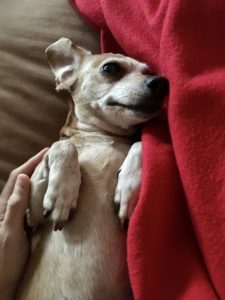
I heard crying in the other room. There was Tim, my husband, clutching our dog Stewie. “What’s wrong?” I asked. “I don’t want him to die,” he answered. I could barely make out the words through the sobbing. “He’s growing old.” Stewie, very much alive, 13 and white-faced (but healthy), did not know what was going on. But I did. I knew because I’d been here before.

My late dog, Juno, was 11 1/2 when she died. The cancer started 18 months earlier. And really, that’s when the grieving started too. Mast cell. The words meant little to me, but the look on my vet’s face said all I needed to know, all that I already knew.

We all know. We die. Those we love die. Our dogs eventually die. The thing is, we work so hard every day to forget. We distract ourselves, keep busy, fill the time, or let it pass. It’s woven into being human, this knowing and not wanting to know. There are books about it. It’s the stuff of our best stories. Philosophy. Religion. This angst. Living and dying.

We forget until we can’t. Death just shows up, sometimes when we don’t expect it. Early. Shockingly. But it’s never really a surprise, not if we’re being honest with ourselves. Or it comes with a prelude, a diagnosis, a slowing body, more birthdays past than ahead. It’s a white-faced dog with dewy eyes looking up at our tear-wet face, with 13-years dragging behind us both.

Anticipatory GrieStewief. It sounds clean and clinical.  Experiencing it, though, is something different. Mourning a living dog can feel morbid. It can be messy and confusing. For me it felt isolating. The truth is I thought I was the rare one who would suffer such an odd thing upon myself. But, I was not.

Anticipatory Grief is normal. “Google it.” That’s what my friend Dr. Risë VanFleet said when I asked her about it. She’s a Psychologist and a Certified Dog Behavior Consultant. I did Google it. The screen filled with heartbreaking normal. This is what we do. We mourn illnesses (our own and others’). We mourn the loss we know is coming. Normal doesn’t mean easy, though. Grief hurts. And, the hurting sometimes starts long before the loss.

Anticipatory Grief can feel different. Nearly all the articles on that Google search mentioned what I had experienced myself. Sometimes Anticipatory Grief is more intense than so-called simple grief after the death. When I lost Juno I was devastated. I sobbed. But, the feelings I had before were different. The crying came on faster and unexpectedly. I’d double over and hold on to her as if my tears and my grip could save her from the cancer. As if they could somehow slow time. I felt guilt because I imagined her death over and over. I felt shame because Juno was still alive (how could I do this to her?). Dr. VanFleet warns of a dark side to Anticipatory Grief. Feel the feelings but stay aware. There is the danger of letting our thoughts spiral into depression.

Anticipatory Grief can also be a good thing. I’m not a silver lining kind of guy. Dr. VanFleet doesn’t seem to be the Pollyanna type either. But, I had to wonder. If Anticipatory grief is so common (normal, in fact) does it serve a purpose? It turns out the answer is yes. Certainly it can prepare us for the loss. Don’t mistake that for getting it all out of your system (sorry, grief don’t work that way). Anticipatory Grief can, however, help us get ready for what life will be like without our dog. This is especially true if we are talking about a service dog or even an emotional support dog. In my case Juno was a dog I’d built a business with. She was my co-worker as much as a friend. Stewie is too.

“Think about what that animal has meant to you.” That’s Dr. Van Fleet’s advice. But, do it now while he’s still alive. “Don’t save it for later.” Maybe the greatest gift of Anticipatory Grief is this. Even while it’s casting us into the future of our dogs death, it’s also pulling us right back into the present moment. Because our dog is still with us. And, we are right here with him. Right now. “This is not a eulogy or an obituary. She is still alive. Under the desk, just inches away….” That’s the first line of a blog piece I wrote months before Juno died. I called it For Juno, but really it’s the best gift I ever gave myself. I was grieving a future that was yet to come. And I was so present with her, because every moment mattered that much more. That’s the gift of this oddly intense early grief.

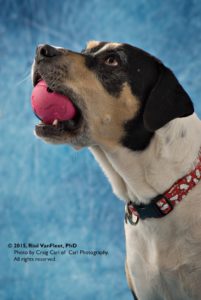
Risë VanFleet specializes in Animal Assisted Play Therapy®. Her dog Kirrie has been her partner in that work for the better part of 16 years. Kirrie is dying. It’s cancer. Months remain. Maybe weeks. They don’t know. In younger years Kirrie would sometimes disturb VanFleet while she was working, a simple ask for attention, a ball in her mouth and a plaintive look. “I’d say just a minute.” VanFleet tells the story like she’s told it before, like she loves telling it because Kirrie is her favorite subject. “I’d say it two or three times, putting her off, until I finally thought ‘is this the relationship I want to have?'” It was years ago but it feels like she’s asking again. Asking herself. Asking Kirrie. “Now I only say ‘just a minute once.’ Then I stop what I’m doing and spend a little time with her.”

Time. We measure it in years or months or weeks. But we tell it in moments. Moments with our dogs. This moment, the one we have now, the one we will hold on to when we can’t hold our dogs anymore. “We still have them.” Dr. VanFleet interrupts my wandering thoughts. We do still have them. For now. Right now.

“He’s growing old.” Tim says again, one more time, more quietly. Stewie rests his head and curls his front legs in that melt-your-heart way he has about him. Tim quiets and the tears stop. I watch for a moment, these two, pressed one to the other, breathing in the same rhythm.

Michael Baugh teaches dog training in Sedona, AZ.


My Last Dog Syndrome

Michael Baugh CDBC CPDT-KSA

I’ve known about “My Last Dog Syndrome” (MLD) for many years. I didn’t know the name, though, until recently. Lisa Mullinax CDBC coined the name on her Facebook page, 4 Paws University.

MLD is a funny name and it’s kind of  serious, too. It’s not actually something a dog gets. MLD is something we humans suffer from. It is the idea that our last dog – the one who we still think about and pine for – was somehow better, less flawed, more perfect than the dog we live with now.

Lisa writes on her Facebook post that people often complain that: “My last dog was never this destructive.  My last dog stayed in the front yard and never went past the driveway. My last dog loved kids.” Fill in the blank. The dogs of yore seem to have been magical in so  many ways. And, the dogs of today – imperfect and unruly or worse – pale in comparison.

Juno

The real danger of MLD is that it can get in the way of training. My Last Dog was perfect and this one is broken. The reality is very likely that neither of those statements is completely true. I know of what I speak. I will tell you stories for hours of the enchanting (dare I say mythical) brilliance of My Last Dog, Juno. She was Dinseyesque, “practically perfect in every way.” But of course she was also not perfect, not at all.  She chewed woodwork, ate clothing, and pulled on leash like a demon in her early days. But, we forget all that don’t we? And that is the gift of dogs. We remember the joy and their soulful eyes and the nights they stayed with us when everyone else had walked away. My Last Dog stole my heart and saved my life.

How can today’s dog compete with that? The heart is often so generous. It remembers the love and comfort of a dear gentle dog on a cold night. And oh yeah, the training and struggle? Forget about that. And, we do forget. Even if you don’t think you trained your last dog – of course you did. Maybe you didn’t go to a class or hire a trainer. But, you still taught him. One way or another you and that dog learned to be perfect together. It was luck and chance and some skill. You made it work and the skies opened and the sun shone and you figured it out, both of you. It happens. I know. It feels like magic. And, it’s not.

I remember the day Juno died, the end of our long story together that was not long enough. Not nearly. Our vet carried her body so carefully to his car. She would be cremated. The vet hospital staff would send her final paw print on a little painted plaque a few days later. The house was so quiet. Every so often I’d think I saw her from the corner of my eye walking in the room or jumping up on the bed. But, no.

Stella at 4 1/2 months.

Those of us who love dogs know we can’t replace them. We also know we can’t live without them for long. Stella, who came after Juno, was a puppy. She was sick in the early days, terrible in the typical ways (though, honestly less-so than Juno), and terribly quirky in unexpected ways. I remember the first time I called for her and said Juno’s name by mistake. “Juno, come!” I caught my breath and felt my knees give way. I sunk to the ground and sobbed. When I looked up I saw that she had come to me, barely 5-months old with that weird look she gives even now almost 10 years later. She came to the wrong name but, without question, to the right person. I needed her then more than ever and there she was.

I love the way Lisa put it in her Facebook post. “Your dog may not naturally take to the things your last dog did, but I promise that he has a truly amazing and unique quality that your last dog didn’t. You just have to find it!” And the magic is in the finding, learning with each other, communicating with each other, playing and training with abandon that leads to delightful exhaustion at the end of day with each other – a cuddle on the sofa in the glow of the television sharing that last little bit of pizza crust.

There are no magical dogs. Maybe not. And yet, all dogs are imbued with the magic of their kind. I think that’s the real joy of loving dogs. Each is so different. And at the core, each is so beautifully –  dog.

Michael Baugh teaches dog training in Sedona, AZ. He lives with two amazing dogs, Stella and Stewie, and the perfect memory of his last dog, Juno.