
Growing Older With Dogs: How Our Best Dog Choices Change With Age.

Michael Baugh CDBC

Sixty crept up on me. I’m not saying forty feels like yesterday, but it certainly doesn’t feel like three dogs ago (Stella and Stewie were concurrent). We are getting older, have been since the day we were born. The choices we make about living with dogs need to be different from the choices we made thirty, twenty, even ten years ago.

Choose a puppy? At my age? Probably not. A lot of things change in our later decades. Many of us become happier and more emotionally stable — yay. On the other hand, our skin gets thinner. That sure takes a lot of joy out of raising a puppy. All puppies bite; it’s normal; and their teeth are very sharp. If you are on a blood thinner (I’m not), that can make things even more serious. And our knees. Mine remind me often that I don’t want to be chasing a crazy playful puppy around at top speed like I did when I was younger. Maybe a two-year-old or three-year-old dog would be a better choice.
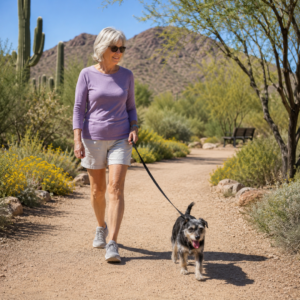
Choose the dog that would be right for you five years from now. I know this is tough to predict, and most of us don’t want to think about it. My dog, Charlie, will probably live another ten years (more, I hope). That means I may start a new life with a new dog at seventy. I hope to be strong and healthy at seventy. The question is, do I want a large, active adult retriever (for example) who needs a lot of exercise and pulls on the leash and jumps on me when I come home at seventy-five? No. Of course I would train him. But training a large dog is still a physical endeavor. Better if I choose a smaller dog, something cute and cuddly, please.

Choose to have the hard conversation. We are used to outliving our dogs. Eventually, one will outlive us. This is difficult to imagine now when we are healthy and enjoying life more than ever. We should think about it, though. If death comes for me at seventy-five, who will take care of my beloved little five-year-old dog? All of us, without exception, need to have a care plan for our dogs, a safety net for them in the event of our passing. Talk to your younger family and friends. Get a commitment and put your wishes in writing.

If you have money — and I know some of you do — consider what one of my clients has done. She set up a trust for her dogs. It’s in her will: money (a considerable sum) for their care after her passing.

I want to have a dog my whole life, she told me one day after our training session.

I smiled. Of course, you should.

Imagine it: graying hair and graying muzzles, slow walks, evenings in your favorite chair. It’s all possible. Choose well for the years you’ll have together. And when the time comes for either of you to say goodbye, know that you planned well, loved deeply, and gave each other a life worth remembering.


Michael Baugh teaches dog training in Sedona Arizona and online everywhere. He specializes in aggressive dog training.
Can Dogs Feel What We are Feeling?


Michael Baugh CDBC

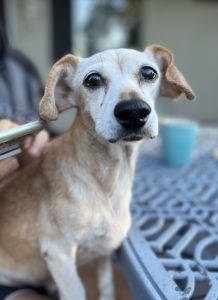
It’s called emotional contagion. The idea is that dogs perceive our emotions and then experience an emotional response themselves. Affective empathy takes it a bit further. Dogs can actually feel our emotional experiences. (Karen London PhD, Bark Magazine). It turns out that there’s plenty of evidence to suggest both of these ideas are true. (Google “emotional contagion dogs.” Use google scholar for more in-depth results).

Of course, a lot of us have suspected this for a long time. Many of us routinely experience it. Dogs just get us. They have feelings with us. They are little mirrors into our emotional lives. It’s an amazing thing to witness as a dog behavior consultant. I meet a ton of people and their dogs every year. Sometimes it’s very clear to me that a dog who is suffering emotionally lives with a human who is also suffering. It’s heartbreaking sometimes. It’s also awe inspiring to see such a powerful bond playing out in real time right in front of me.

Folks ask all the time, “is he (the dog) feeding off my anxiety.” Well, maybe. We certainly know our feelings show up in our dogs’ emotional lives. But, the answer, in my opinion, is not to blame ourselves. Too many trainers do that, as if our anxiety is some form of mystical “energy” that we control. Instead, I think we should all make space to compassionately look at the big picture. How is my dog doing? How am I doing? For me this means regular counseling so I can develop and maintain my own emotional and behavioral flexibility. You probably know how passionate I am about our dogs’ behavioral flexibility. The Magazine Psychology Today has a great online resource for finding a therapist that is right for you. Staying emotionally and behaviorally flexible is good for all of us (like yoga for our feelings).

Does this mean we all have to be in therapy? Um, maybe. Does it mean we all have to have our lives in perfect order before we can have a dog or help the dog we already have? No, of course not. In fact, many dogs have emotional and behavioral problems completely separate from our own human issues. The research suggests that our dogs can experience our feeling. It does not say that every dog’s behavior issue (including fear and aggression) is somehow tied to our own disfunction. It’s not. By far most of the clients I meet are joy-filled and highly functioning. And, some of them have grumpy dogs. Remember? No blame.

What does all of this mean for those of us who have dogs with fear, anxiety, or aggressive behavior? We all like some concise tips and I’m happy to add some information to the mix.

Think well of your dog. The things we tell ourselves about our dog are important. Instead of getting stuck in negative thoughts and frustration, let’s remind ourselves of all that is good about our dog. It will help our training. It will also set us up to notice progress as it comes. How we think about our dog is so important. That’s why I list it first.

Choose joy. It’s not always easy but I think it always helps. When we are training let’s make a decision to smile, say kind things to our dogs, and use food. Even though our bigger behavior goals with our dog might be challenging, individual training session can be light and fun.

Take breaks. If you’re feeling tense or angry during a training session, stop. Take a break.  It’s okay. Your dog will definitely sense that tension and anger and it will affect their learning. Take a long break if you need to. We’ve all been there. No blame. Just circle back later.

Let me help. That’s what our journal is for. I’m not qualified to offer human therapy. At the same time I am a fellow human being. I can definitely help us keep things on track with training and offer coaching along the way. Complicated behavior plans related to fear and aggression can sometime feel overwhelming and isolating. Of course, you’re not alone. And, it’s my job to clarify what seems complicated and ease frustration along the way.

One last story. I’ll keep it brief. I learned a long time ago why I gravitated toward helping fearful and sometimes angry dogs. It’s because it helped me. Some of you have heard me joke aloud with your dog, “I get it honey, people scare me too.” Like all jokes there was some truth in that. So, we break things down for our dog; we set them up to succeed; we let them take on new experiences at their own pace; we provide support and feedback to help them. All that feels very familiar to me personally. In time, almost always, feelings start to change little-by-little. In them. In us. What a joy it is to see that happening. What a beautiful lesson it is to experience through our dogs.

Change. It’s the stuff of life. Human emotions reflected in our beloved dogs. The hard work that softens them, that softens us, a team in transition together. It’s amazing how our feelings affect our dogs. But, oh how our dogs affect our feelings. It’s a gift for which I am ever so grateful.


Michael Baugh is a behavior consultant and dog trainer in Sedona, AZ. He works with clients all over North America and specializes in aggressive dog training.
What is my Dog Thinking?

Michael Baugh CDBC 

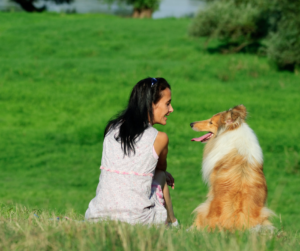
What is my dog thinking? The truth is none of us knows. I don’t even know what my fellow humans are thinking most of the time. And seriously, how many times have we all said to ourselves, what was I thinking?

Here’s where it gets tricky. We think we know. Clients tell me all the time that they know what their dogs are thinking. Why? Because we humans hate an incomplete story. We latch onto one or two bits of information, usually a causal observation of what our dog is doing, and we fill in all the gaps. We create the story of what our dog is thinking. And because the story was born of our own incomplete experience and the experience of our own complete thoughts, we perceive it as fact.

Psychologists Daniel Kahneman and Amos Tversky called this natural human process “fast thinking.” It’s how we all quickly piece together information for decision-making. The process naturally helps us stay safe. A fast response to incomplete information (for example, dodging a stinging insect) can save us a lot of pain (or save our life if we are allergic).

Compare this to “slow thinking,” which literally involves our slowing down, assessing all the information we have and that we don’t have, and making a logical conclusion. We do have that ability. The trouble is we don’t always take the time to use it.

Kahneman and Tversky founded the field of behavioral economics. After Tversky’s death, Kahneman won the Nobel Prize in economics. What they discovered was that “fast thinking,” though useful sometimes, often leads us to make mistakes. The answer to the question what was I thinking becomes I don’t know, but it was fast and it was wrong. Here’s a harmless example from my life. Buzzing insect – wasp! – flail hands and run. It was a June bug. “Fast thinking” because of its early roots in survival is almost always hooked to emotion (think: fear, desire, exhilaration).

Fast thinking over time develops biases, conspiracy theories, bad short-term decisions with long-term consequences, and stories about our dogs.

Disreputable trainers take advantage of fast thinking. They help you fill in the gaps by labeling dogs as stubborn or dominant. Doggie conspiracy theories. Fast-thinking brain shores up the narrative with more non-facts. That’s called confirmation bias. It came from our own brain, and a supposed expert echoed it.

We find it so hard to let go of short, simple, fast-thinking explanations. We might even push back when presented with real, verifiable facts. Psychologists call that cognitive dissonance. Welcome to the most advanced brain on the planet.

We aren’t doomed. At least I don’t think so. We can all to slow down, check and recheck our observations, assess facts, look at alternative explanations. When it comes to our dogs, I suggest this. Focus on what your dog is doing more than what you think he is thinking. Disconnect from the story; connect to the present moment with your dog. You are communicating. Your actions (behavior) influence his actions (behavior) and vice versa. People often ask who’s training whom. My answer is that you and your dog are both teaching and learning. Enjoy this moment, this time to set aside troubling thoughts, explore and learn with your dog.

It may not be the story you thought it was. But it is more profound than most prose and as inspiring as any poem.


Michael Baugh teaches dog training in Sedona, AZ. He specializes in aggressive dog training.