Michael Baugh CDBC,
I once wrote that I fell in love with my dog, Juno, while we were practicing “stay.” We were across the room from each other at a busy training class. She was a good 20-feet away, but we were so very close, watching each other intently, fully in the moment. It was magical and I’ll never forget it.
Humanistic Psychologist Carl Rogers said this presence, this connection, is key to all healing and learning relationships. It’s not just about physically being there, going to class, pulling out the clicker and treat bag and doing the session. Instead, it’s about making genuine contact. Rogers (who didn’t have dogs) referred to it as psychological contact. Some trainers say it’s like being in sync or in the zone with their dog. For me it’s about showing up in a very real and committed way. Stop, step away from the rest of the world, make eye contact and share a moment (or several moments) with your dog.
 For those of us who are clicker trainers, this sweet spot of connectedness is very accessible. So much of how we teach our dogs is about noticing them, what they are doing, how they are moving, even what they are looking at. We have to step away from the cacophony of everyday life to experience this. How else could we adequately capture and shape behavior? We’re providing feedback to our dog who, quite literally, is figuring out a training puzzle. We’d better show up, pay attention, be present. This is communication at its best, both actors fully aware (dare I say mindful), and in contact – psychological contact. How cool that so often not a single word is spoken.
These intense learning moments are a great and necessary joy. But, for me, they are not enough. The days are busy and the outside forces on our lives are relentless. We get into our routines and the work of training can sometimes feel done. We get swept up in jobs and traffic and email and the comings and goings of friends – let’s meet here – so good to see you – we must do this more often. We feed the dogs, take them out, maybe for a walk while we check social media on our phones. They seem fine, these easy-going noble creatures. The dogs are fine. So patient. So forgiving. But it’s not enough – not for them – not for us either.
Have you every felt a rush of joy when you look directly at your dog and see him looking back? Does the room seem to quiet down? Does your breathing slow a bit? These moments actually cause a release of the hormone Oxytocin. The love we feel is physical – measurable. Our dogs have oxytocin too and it’s a two way street, this hormone induced warm-fuzzy feeling. I can feel it when I train, but that’s not the only time. Oxytocin helps us bond with each other, other humans, and apparently with our dogs too. By all accounts, it’s good for us. It keeps us sane and psychologically connected. But, once the training ebbs and eventually fades away, how to we recreate these important moments, and the powerful feelings of wholeness and relationship that come with them?
Stop, just for a moment or two. Step off and away from the world.
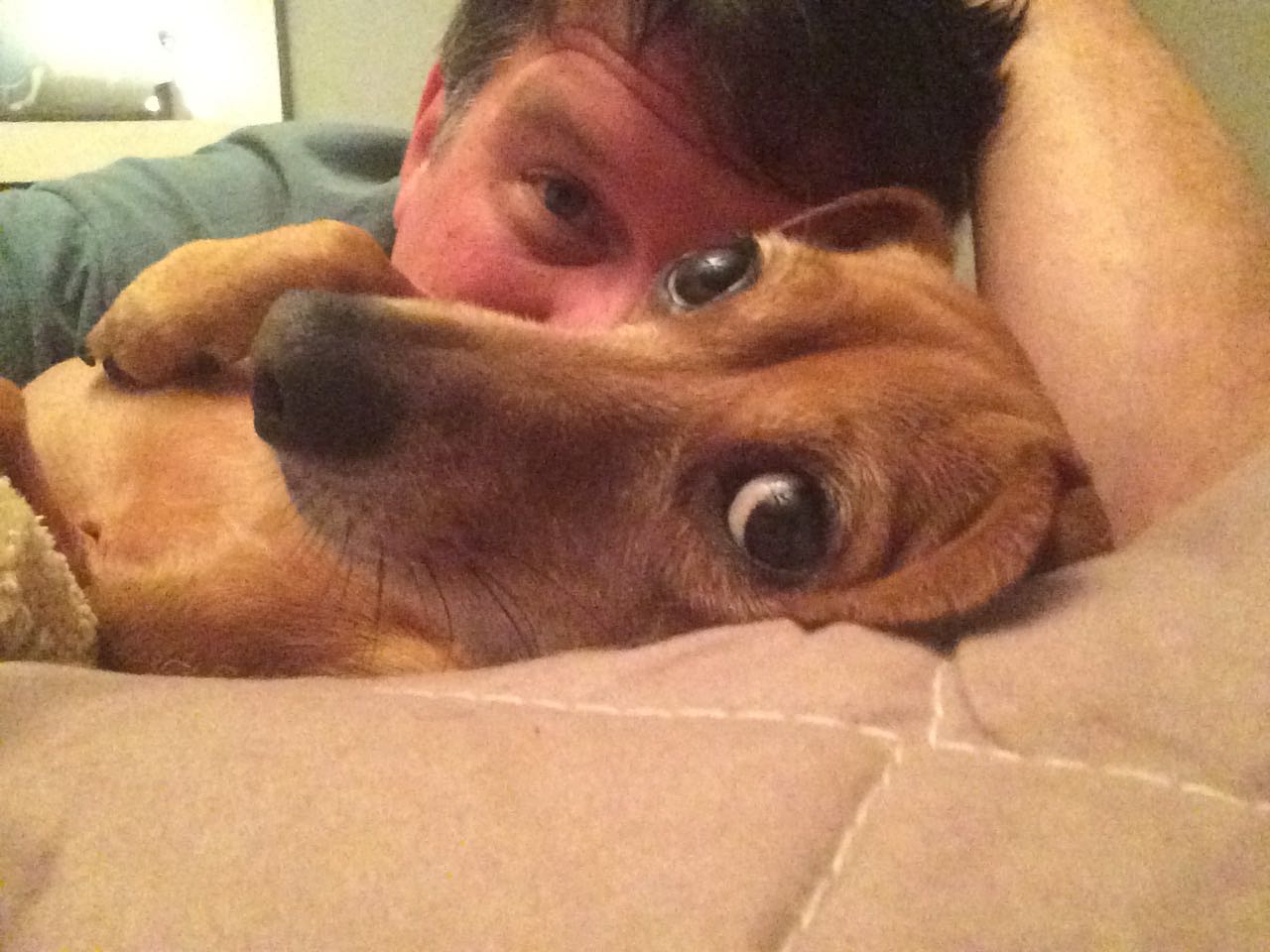
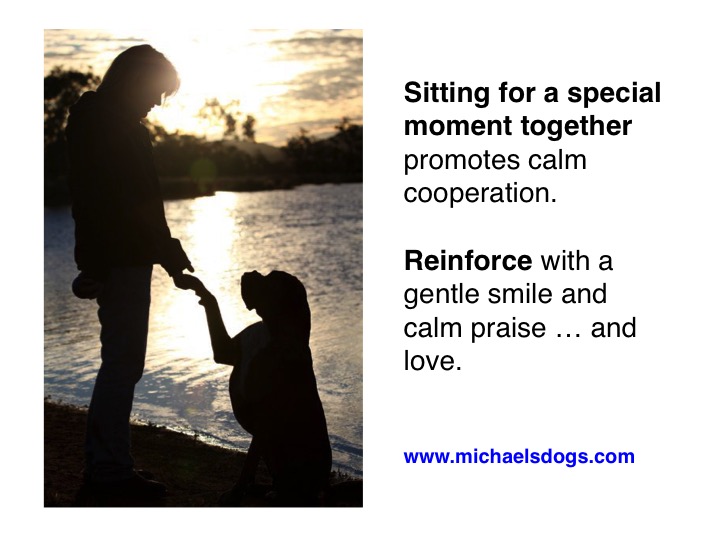
Every day (usually several times a day) I get on the floor with my dogs. It’s easy and I like easy. I put the phone away, leave the TV off, and set human conversation aside. Stella and Stewie and I just hang out. We show up and hang out. Sometimes Stella brings me a ball. More often now she sidles up for some petting while Stewie cuddles in my lap. We stay this way for as long as we can, with a nod to Dr. Rogers, while we soak in all that our shared biochemistry is designed to provide.
It’s amazing and good for us and I can’t get enough. Stewie and I play. Stella tugs and retrieves. Sometimes the dogs and I swim together. We all act silly together. So, Maybe it’s my age or the fact that so much of my life is about dogs, but these moments give me pause (and paws). I’ll look at Stella or Stewie and think to myself I don’t ever want to forget this. This is what life with dogs should be about. Stop and step into what is happening, what you are feeling, and seeing and experiencing – right now.
That’s the way it was in the big training room in Kirkwood, Missouri all those years ago. Just me and a golden retriever named Juno a couple dozen steps away. This moment. That dog. Everything else slipping loose just for a moment, maybe two. Never forgetting. Even now, I remember it so well.
Michael Baugh teaches dog training in Sedona, Arizona. He specializes in dogs with behavior related to fearfulness, including aggressive behavior.
.