
Michael Baugh CDBC
In 2003, Jon Katz published The New Work of Dogs. He was prescient. Humans were becoming more isolated, divided, and lonely. Dogs, he predicted, would fill the void, becoming surrogates for the human connections we couldn’t find or keep. Even then, our athletic hunters and protectors were trading in their physical roles for emotional ones. Heart Dogs saw us through life’s changes, relationships, heartbreak, big wins and losses.
The New Role of Dogs
We humans have a tendency to change our world faster than we can sometimes keep up. Cultural evolution now outpaces biological evolution. Our brains were built for small tribes and slow change, not endless notifications and global crisis feeds. It’s no wonder we are so stressed. And so sick. So, we look to our dogs for a moment of warmth, some playful nonsense, a bit of meaningful connection.
Here’s the problem, and Katz knew it. All these changes in our lives are putting dogs under new pressures. When I first started as a trainer in 1999, therapy dogs were a novelty. Psychiatric service dogs and emotional support dogs were very rare. Now, they are commonplace. Dogs used to herd and protect cattle, to flush and retrieve game, and to guard property. Today we discourage them from doing any of those things. Instead, we want them to take care of us.
We Changed Their Story
Dogs didn’t change. We haven’t changed all that much either. But we rewrote the storyline. Fast. It’s too much for us. It’s too much for our dogs. And here we are, in counseling and on meds — both of us. And somewhere in the quiet moments, we know something just isn’t right.
What Can We Do Now?
- Be with your dog. Your dog is a living, feeling, thinking being. Not a checklist of problems to fix. Spend time with your dog in whatever way makes sense now. We are in this together, changing together, trying to keep up together. Dogs don’t live long. Neither do we. Don’t waste a minute.
- Move. We need motion to stay healthy. So does your herder, your retriever, your terrier (or any of the aforementioned mixed). Play with your dog. Learn with your dog.
- Get outside. Let your dog sniff. Leave your phone at home and let your eyes wander. Get away from other dogs if it’s safer and follow your dog to follow unfamiliar scents. Some of us call these decompression walks.
- Stop outsourcing your dog’s life. Daycare and board-and-trains can be useful. But they are not a substitute for you. That might be a hard line to read. I’m sorry. Humans are clever. We’ve created services to ease ourselves of the burden of having a dog, when all we ever really wanted was … a dog.
Lean into discomfort (together). If we’ve put our social and technological lives on hyper-drive, we’re going to feel it. Our dogs will feel it too. The human and canine brains do not evolve that fast. So, it’s not a matter of keeping up. We have to adapt.
Let your dog turn to you for support. He’s not your therapist or your emotional anchor. You are his. Own that. What about us? We have to turn toward each other. Rekindle an old friendship. Go to book club, or pickleball, or mahjong (whatever your thing is). Be with people. We’re not that bad. And let’s make peace with ourselves. Pray. Meditate. Read inspiring books. See inspiring films. Listen to music.
Take a deep breath. You’re alive.
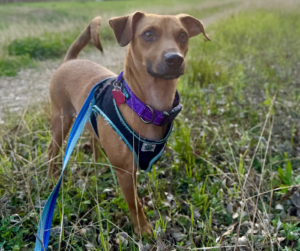
And damn, look at that dog you have. So sweet. And those eyes. I wonder what’s going on behind those eyes.
Michael Baugh teaches dog training in Sedona, Arizona and Houston, Texas. He specializes in aggressive dog training.
