Michael Baugh CDBC CPDT-KSA
Tons of folks have heard of Dr. Lore Haug. Many of you have probably worked with her to help your dog or cat with behavior issues. Dr. Haug is a board certified veterinary behaviorist here in the Houston Area. For those of us at Michael’s Dogs Behavior Group she is a trusted colleague, a mentor, and a friend. Dr. Haug is who we routinely turn to for professional counsel (often with our own pets) as well as personal chats to celebrate or commiserate. We work with lots of her patients. Collaborating with a professional of Dr. Haug’s caliber is a privilege and a joy. I feel particularly lucky to have her in my life.
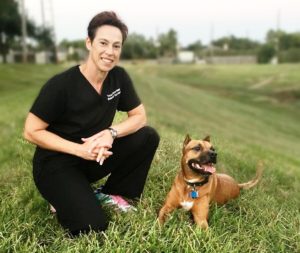 Dr. Haug has been a veterinarian since 1993. She actually started out in general practice with a strong interest in neurology. But, Dr. Haug also had a keen interest in training and behavior that went all the way back to her childhood. “My love of training persisted through college and veterinary school, so when I graduated, it was a logical progression to evolve my love of training with the physiology and neuroscience behind the learning process.”
Dr. Haug became a board certified veterinary behaviorist in 2002. “Veterinary behavioral medicine is one of the only disciplines in our profession where residents receive education in all aspects of veterinary medicine.” Dr. Haug and I chatted about her beginnings and a range of other topics. Here is our brief conversation, mostly unedited.
MB: People often get the various behavior professionals confused. What exactly is a veterinary behaviorist? What is it that you bring to the table that is different from what we do as Certified Dog (and Cat) Behavior Consultants?
LH: The term “veterinary behaviorist” simply refers to a veterinarian that practices behavioral medicine. Technically, there is no legal restriction on the use of this term; however, within the veterinary profession, there are strict guidelines for being able to use the term “specialist”.
While board certified veterinary behaviorists do receive extensive education in learning principles and behavior modification, our program is still centered around medicine and how the animal’s physiology and medical status relates with its behavior issue as well as the treatment modalities that may be utilized. So we are uniquely qualified to evaluate both the animal’s brain (and behavior) and its body.
 MB: You have such excellent training skills that, honesty, some behaviorists lack. How important are solid training techniques to the work you do?
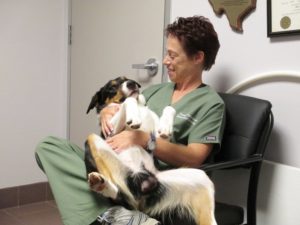
LG: While you can learn quite a bit by reading books, watching videos, and watching other trainers, there are nuances that can only be gleaned by personal training challenges. Decades ago, many veterinary behaviorist did lack hands-on training skills. I feel this was in part because the origin of our discipline focused highly on medicine and ethology. Our newer generation of boarded veterinary behaviorists has an impressive array of hands-on skill and experience.
Other individuals, such as myself, started in this discipline as trainers. This is how our love of behavior melded with our passion for medicine. I love training. While I certainly find solving the puzzle of a medical problem very reinforcing, taking the journey through a learning process with an animal is equally if not more reinforcing to me. So despite the fact that I work with an amazing group of trainers in the city, and have a talented behavior technician myself, I will never want to completely relinquish those hands-on training challenges entirely to those individuals
MB: A lot of folks got dogs during the Covid 19 pandemic. I am sure many have ended up in your office. What do you wish every new dog owner knew that would keep them from having to see you or us for help later down the line?
LH: Bringing an animal into your family is an obligation and there are certain minimal interventions that must be provided to ensure that animal’s mental and physical well-being. Many of my acquaintances and clients are surprised to discover that I have only one dog and one horse, but I realize that spreading my time and financial resources across more animals will only do them all a disservice as none of them will receive the level of attention and care that they deserve to keep them happy and healthy. Educating the animal is one of these obligations; we can’t expect them to be well behaved if it is our fault that they are “illiterate.”
So as the famous Ken Ramirez states, training is an obligation just like feeding and watering your pet. It is not something that you do only if or when you have time.
 MB: The world is changing super fast. There are young trainers coming up the ranks and new technology emerging every day it seems. Look in your crystal ball. When you imagine the future of dog training and behavior care what do you see?
LH: The comment about new technology is interesting. I think technology can fall into categories that are going to make us better trainers, behaviorists, and pet parents – or that are going to remove us from the picture.
Science and technology that provides new knowledge allowing us to improve our relationship with our animals, design training protocols that provide more clarity, and further reduce stress during the learning process will be a boon to our professions.
However, there been a few devices come out over the years that essentially allow owners to care for or train their pets with a device rather than in person. Training is largely about establishing a bond and a relationship with your learner. Removing the owner from the equation, especially for a social species that evolved to live and bond to humans, will not have a good outcome. This type of technology is going to be extremely detrimental to our animals’ behavior and welfare in our relationship with them. What’s the point of having a dog if you don’t want to talk to it, touch it, and take a learning journey together? How sad if we missed seeing the expression on our dogs’ faces when they earn a
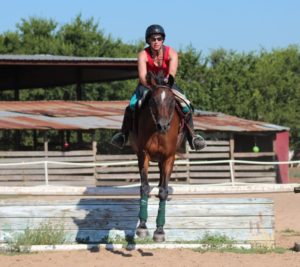
reinforcement or solve a training puzzle? My oxytocin level is probably dropping just thinking about how I would feel if I could not come home to my dog or go out to the barn and see the eagerness and “joy” in my dog’s or horse’s face at the chance to have a training session together.
—
Dr. Lore Haug is a Diplomat of the American College of Veterinary Behaviorists. Her practice, Texas Veterinary Behavior Services is based in Sugar Land, TX.
Michael Baugh leads Michael’s Dogs Behavior Group. He teaches dog training in Houston, TX.

 But, let me also be honest with myself. None of that – none of the dogs and clients that have come before – matter as much as the next dog and the next client. This work is humbling. There is no room for bravado or hubris. No flippant mention of the hundred dogs I’ve seen or the hardest cases I’ve solved will get me through my next consultation if I’m not humble enough to take it on like it’s my first. Bring your A-game, yes. But, as the saying goes, leave your pride at the door. That dog won’t be fooled. He may not bite me on the hand but he will cut me at the knees and bring me fumbling back to basics faster than I can say where I earned my last degree.