
All That Your Dog Does Right

Michael Baugh CDBC CPDT-KSA

I am in the business of dogs who make poor behavior choices. They are the ones who growl and snarl and bite. It’s easy to forget that our dogs are more than a list of problem behaviors to solve. We humans focus on what is threatening or what we perceive as threatening. It’s one of our faults.

You’ve heard the story a million times. You might have even read it in one of my blogs. It’s the one about how ancient humans needed to be on guard for trouble. Our minds and our bodies developed to identify and escape danger. Think: saber-tooth tiger. Now we modern humans struggle with the legacy of our own evolution. Our adrenal glands get fired up over an email. We are constantly on edge. And there isn’t a saber-tooth anything in sight.

Then, one day, for some reason or other, our dog growls. Our ancient brain reacts. He’s the same dog we watched TV with last night. He does the same cute tricks. We love him. But he growled. What if he bites? This is what we humans were built for. Identify a threat. Escape or dispatch it. Our dog isn’t our dog anymore. He is our aggressive dog.

I am in the business of dogs. Our dogs (yes, that includes yours) are more than their occasional frightening misbehavior. We can address the growling, snarling, and biting. And we will, of course. Those behaviors, however, are not who your dog is. Most of the time our dogs behave delightfully. They cuddle up in front of the TV with us. They do tricks. We love them and they love us back. Our bad dogs are truly good in all the ways we’d hoped for — most of the time. They are so much more than a list of problems behaviors to solve — most of the time. And yet, we can’t seem to appreciate that. The problem is us — you guessed it — most of the time.

We humans are not naturally inclined to see what is going well. Our ancestors didn’t ponder the blissful absence of deadly predators (the ones who did got eaten). We don’t come home and tell our spouses about all the cooperative and productive emails we exchanged. No one appreciates how cool it is that a thousand vehicles are barreling down the highway and none of them are hitting each other. And most of us miss how great our dog is on any given day.

Our nature is to look for trouble. We have to learn to look for the good. It’s a learned skill. It takes practice.

Think for the moment about all the non-violent, non-annoying things your dog does. Better yet, think about the cute things. What does your dog to that makes you smile? If you can’t answer that question, you aren’t paying attention. Sit down. Watch your dog. Take note (journal). I promise, your dog is doing a lot of things you are simply missing. Most of your dog’s behavior is neutral, neither good nor bad. Much of it is good. Some is downright adorable.

I’m not forgetting the scary behavior. We’ve discussed it, analyzed it, jotted it down. We are on it. But why am I challenging you to look at the other great stuff about your dog with equal attention? Two reasons:

We solve problem behavior by replacing it with so-called “good” behavior. If we don’t know what our dog’s goo good behavior looks like, it’s hard to imagine and even harder to teach. What do you want your dog to do instead of growl, snarl, and bite? It’s an easier question to answer if you have actually observed what he does when he’s not growling, snarling, and biting. (A lot of dogs lie down and casually take in the world around them. We can train that!)

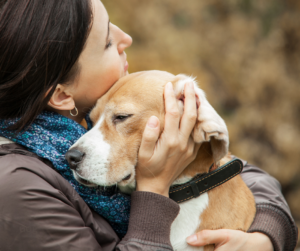
Second reason: The good dog you want is the one you already have. You deserve to see that, to know it, to feel it. None of us learned to look for the good in life. Try it with your dog. No matter what your dog has done, see him for the beautiful creature he is. Train, not just to erase that list of problem behaviors, but to uncover your dog’s true self. Don’t push for perfect. Search for good. It’s there. It’s been there the whole time.


Michael Baugh teaches dog training in Houston TX. He specializes in aggressive dog training. 
Stress Crisis: Dogs and Humans Under Pressure


Michael Baugh CDBC CPDT-KSA

The biggest challenge in dog training these days is us.

We humans are stressed out. Life is coming at us (coming for us) from all directions. Work pressure is endemic. Social media is a constant mirror to our perceived inadequacies. It’s an election year.

This summer the U.S. Surgeon General actually issued a mental health advisory. Let’s not take that lightly. The Surgeon General reserves health advisories for big stuff, like warnings about smoking or AIDS. This advisory sounded the alarm about the mental health of parents. Forty-eight percent of parents say their stress is “completely overwhelming.” They’re worried about money, safety, their children’s future. And they’re worried about time. They’ve maxed out their schedules. They simply don’t have enough time in a day to do everything they need to do.

One of the more popular theories is that our brain’s evolution hasn’t been able to keep up with all of our technological advancements. We’ve made the world too complicated and fast-paced for our own good. That might be true.

We humans crave joy. I think more than that even; we crave peace. We just want some relief from the cacophony of daily life. So, we get a dog to help.

The trouble is (this is my opinion), our dog’s brain evolution hasn’t been able to keep up with all the changes either. Dogs evolved with us. Nature tied their lives inextricably to ours. The joke online these days is “I got a dog for my anxiety and ended up with a dog with anxiety.” It’s not funny, probably because the truth of the matter is so stark. We are under pressure and, inadvertently or otherwise, we put our dogs under a great deal of pressure, too. Dogs who traditionally hunted, guarded, or herded are now our surrogate children (or, worse, our mental health caretakers). Most do well. They walk tethered to us, wait patiently under tables at our favorite ice house, pass the hours with the mob at daycare.

Some, the ones I meet, succumb to the pressure. They growl, snarl, snap, and bite. We balk. Dogs are supposed to be good. We should know better, though. Dogs are doing the best they can, just like we are.

I can’t address the pressure we humans are under. At a minimum, we all need a good friend to talk to. We’d all probably do well with some therapy, or at least a nice group hug. But your dog’s stress, that I can help with.

Here are some ideas you can start today that take very little extra time out of your schedule. I think you’ll enjoy some of them, too.

Notice your dog. Observe. Watch what your dog does when they don’t know you’re looking. It’s fun. I think it’s fascinating and relaxing at the same time. It can also be downright entertaining.

Spend some quiet time with your dog together every day in physical contact, petting, or cuddling. It’s good for you. It’s good for your dog.

Play. This is how social animals bond. It’s how we can bond with our dog. Every human-dog pairing is different. My last dog played fetch. My current dog loves to play tug. Find the interactive game that works best for you and your dog.

Train. Don’t think of dog training as a chore. Think of it as a way of starting a dialogue with your dog. Communication helps us feel less isolated, more connected. I suspect it feels that way to our dogs as well.

There is good news. Again, this is my opinion. It might be true that our legacy brains (and those of our dogs) are struggling to keep up with the world we’ve created. It sure feels like that most days. But here’s what else is true: we humans are amazing learners. We adapt. Humans can tap into ancient wisdom for comfort and insight. We are rich in philosophy and faith. And, there’s more good news. Our dogs are amazing learners alongside us. We’ve co-evolved navigating change and learning together.

There’s hope for us, I think.

If the pressure feels like too much some days (every day?), that’s okay. I feel it. I think we’re normal. Reach out for help. Reach out to a friend, trusted clergy, a therapist. We are social creatures. Human existence was never meant to be a solo endeavor.

If you see your dog is having a hard time, well, that happens too. There’s help for both of y’all. I’m here for you. At the very least, I can connect you to help for your dog.

The romantic in me wants to shout out: “we can get through this together.” The truth is we are already, day by day. Evolution be damned. You, me, our dogs – we’ve got this.


Michael Baugh teaches dog training in Houston, TX. He specializes in aggressive dog training.

Preparing our Dogs for Emergencies – Teaching Emotional Resilience

Michael Baugh CDBC CPDT-KSA

There is a very good chance that we will have to pick up and do somewhere with our dog at a moment’s notice. This is most likely to occur in hurricane season. But life is full of variables. It could happen at any time. We may have to stay with our dog at a family member’s house, a hotel, or even a shelter. There will be new people there, new dogs, unfamiliar smells, sights and sounds. Dogs who have a successful history navigating novel environments and circumstances will do well. Others will need our help.

I define emotional resilience as the ability to stay calm, pro-social, and behaviorally flexible in a variety of circumstances and settings. Dogs who are emotionally resilient seem to go with the flow. Owners recognize their dogs as being their normal selves, behaving in new settings just as they do at home.

Can we teach this? Yes. Some dogs are just more easy-going than others. Teaching a degree of emotional resilience and behavior flexibility varies depending on the individual dog. Many of our dogs have emotional and behavioral challenges. We’ll need to make special considerations for them.

Here are some things you do to help your dog ahead of time:

Charlie at the Houston airport after the derecho

Practice being your dog’s go-to. Yes, this means training. Dogs who have a regular positive reinforcement training routine look to their humans for direction and support. We want this. Practice. When in doubt (e.g., when in a new setting), our dog will look to us for guidance. Having us as a reference point can be very calming to our dogs. Be your dog’s emotional support human. The key here is teaching joyfully with positive reinforcement training. Keep it light and help your dog succeed. No dog wants a person barking commands when they’re already stressed out.

Create safe spaces. No matter where you land in an emergency, set up a safe, quiet space for your dog. It would be great if your dog could meet the novel people and animals where you are staying. Even if that’s the case, your dog will eventually want a place to rest. A crate is fine. A room behind a door or baby gate might be even better. Bring familiar bedding and favorite items. Some dogs can’t tolerate being separated, especially in a new space. That’s okay. Create a safe space near you where people and other animals won’t bother them.

Keep a consistent schedule. Feed. Walk. Play. Cuddle. Do your best to maintain the routine you had at home.

Look for new opportunities. When we headed west during Covid, my dogs discovered a new love of hiking. Regardless of where you are, there are enticing adventures awaiting. Most dogs enjoy exploring with their noses. Some might forge new human or canine friendships. Take advantage of those wins. Nothing relieves stress like fun.

We can’t prepare for everything, of course. Do your best. Have a “go bag” with your dog’s medical records, medications, microchip number. Research veterinary care at your point of destination. Plan. But try not to obsess.

As the philosopher once said, shit happens. Somehow, we persevere. Take care of yourself and your family. Don’t be afraid to comfort your dog. It’s why many of us got a dog. We wanted someone to take care of, a friend, someone to be by our side no matter what life throws at us. You’ll be okay. You’ll get through it together.


Michael Baugh teaches dog training in Houston TX. He specializes in aggressive dog training.