Mindful Dog Training


Michael Baugh CDBC

Mindfulness is something of a buzz word these days, even in dog training. At its core, mindfulness is awareness in the present moment. In deep meditation it is awareness of awareness itself. For us, though, let’s think of mindfulness as awareness of our dog right here and right now. Pause for a moment and try this.

Take a breath. Our focus is on our dog. However, it’s smart to start by relaxing and settling our minds. Taking a few breaths and noticing those first can help. They don’t have to be deep breaths, though the can be. Just breathe normally.
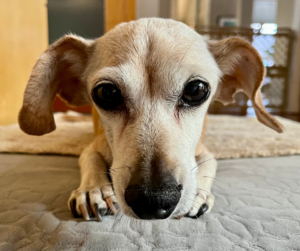
Observe without judgment. Then, watch your dog. You can sit, but you don’t have to. Your dog can do anything. Notice what it is your dog is doing. That’s all. Avoid the natural inclination to attach any story to the behavior. No commentary. No judgement. My dog is looking at me. My dog is lying down. My dog is sniffing this or that. My dog is chewing this or that. This is so simple that it might seem silly. I get it. The funny thing is we hardly ever do this – really notice what are dogs are actually doing.

Notice your own thoughts. This is where real mindfulness comes in. What are you thinking (and feeling) about what you are observing? Don’t judge. There are no right thoughts or wrong thoughts.

Let them go. Our thoughts and feelings about our dogs (about anything) tend to just show up. Sometimes it may seem like they slip into our minds out of nowhere. We get hooked by them and before you know it we are daydreaming (or obsessing).  But, just as quickly as thoughts and feelings arise, they can also fade away. Try this. While you are watching your dog, notice the thoughts that come to mind. Hmm, I don’t like when he does that. He’s kind of making me anxious. or Oh, that’s cute. It doesn’t matter what it is. Simply notice the thought, just like you were watching your dog – relaxed and without judgement. Then, let it go.

Stay here. We tend to get caught up in the stories we create about our dogs. We presume what they must be thinking or feeling when, really, all we can know for sure is what they are doing. The stories distract us from what is really happening right here right now. We get swept into ruminating about the past or worrying about the future. All this distracts us from what is actually occurring in front of us now. Let the stories go. Stay here.

Now teach. Here’s the dog training part. The stories we tell ourselves and our own obsessive thoughts and feelings actually get in the way of helping our dogs. We can’t help them with their behavior if we are still fumbling with our own internal rambling. Observing our dogs gives us good information about what we want to work on. Quieting our own minds, even a little bit, sets us up to actually do the work.

All this might sound hard. It’s not. It might also seem senseless and unnecessary. I don’t think so. This method has helped me help thousands of families over the years. It’s the reason some people say I’m  so calm (I’m not always calm – haha). Most importantly, it’s effective and simple – two things I think we all are looking for when it comes to dog training.


Michael Baugh teaches dog training in Houston Texas. He specializes in aggressive dog training.



Dog Training – An Interview with ChatGPT

Michael Baugh CPDT-KSA CDBC

If you don’t know what ChatGPT is ask any teenager. Our friends’ 13-year old son regaled us with its magic over dinner recently. He swooned with the enthusiasm of a boy who’d met his first love. “look,” he said, “ask it anything.”

So, ask I did.

Michael: How do your source your information?

ChatGPT: I am a large language model trained by OpenAI, and my knowledge is based on a dataset that includes a wide range of online sources, including articles, books, and websites. The dataset used to train me was created by scraping the internet and includes a diverse set of texts, including news articles, scientific papers, and literary works.

It’s not secret.  We dog trainers already know you scour Google and YouTube for dog training information. But, what if you had real (or at least emerging) artificial intelligence at your fingertips? How well could ChatGPT handle your questions? We sat down for an interview (I sat. Does AI sit?).

Michael: Tell me what you know, in general, about dog behavior.

ChatGPT: Dogs are highly social animals and have evolved to live and work closely with humans. As a result, they have developed a range of behaviors that allow them to communicate and interact with us. Understanding and interpreting these behaviors can help us build stronger bonds with our canine companions and train them more effectively.

Okay. Impressive. We were off to a great start. ChatCPT is quick, articulate, and pretty spot-on. It went on to list some common dog behaviors and then added this.

ChatGPT: Dominant behavior in dogs may include standing tall, making direct eye contact, and growling or snapping. These behaviors are often displayed when a dog is trying to assert its dominance over another dog or person.

Michael: Are there any concerns about framing dogs as “dominant” or “submissive” when training them?

I certainly had concerns about asserting dominance in dog training. That’s when my interview subject deftly clarified its position.

ChatGPT: The terms “dominant” and “submissive” have often been used to describe and categorize dog behavior, but they are not without controversy. Some experts argue that these terms can be oversimplified and may not accurately reflect the complexity of dog behavior and social dynamics…. Instead of trying to fit dogs into rigid categories of “dominant” or “submissive,” it may be more helpful to focus on understanding and reinforcing positive behaviors and teaching dogs to communicate and interact in appropriate ways.

Using punishment-based training methods or trying to “dominate” a dog in an attempt to establish dominance may be harmful and may lead to negative outcomes such as fear, anxiety, or aggression in the dog.

Wow. It looks like someone has been studying. I pushed to see if there was a bit more depth to the AI’s knowledge.

Michael: How can positive reinforcement help dogs who have aggressive behavior?

With barely a pause and nary a hint of nervousness under the bright lights of inquisition, ChatGPT whipped our a worthy list.

ChatGPT:

  • Use rewards to reinforce desired behaviors: Rewarding your dog with treats, praise, or other rewards when it behaves appropriately can help to reinforce positive behaviors and reduce aggressive behavior over time.
  • Use a consistent and predictable training routine.
  • Avoid punishment-based training methods: Punishment-based training methods, such as yelling or physical punishment, can be harmful and may actually increase aggressive behavior in some dogs.
  • Gradually expose the dog to new situations and people.
  • Seek help from a qualified animal behavior professional.

Fantastic. Now we’re talking. Apparently ChatGPT isn’t quite ready to replace me.

Michael: What credentials should I look for in an animal behavior professional?

ChatGPT:

  • Certification from a professional organization: Certification from a professional organization, such as the International Association of Animal Behavior Consultants (IAABC).
  • A degree in a related field: A degree in a field such as animal science, psychology, or biology can be helpful in providing a solid foundation in the principles of animal behavior.
  • Practical experience: Practical experience working with animals, particularly the specific type of animal you are seeking help with, can be valuable in understanding and addressing behavior issues.
  • Continued education: Look for professionals who are committed to staying up to date on the latest research and techniques in animal behavior by participating in ongoing education and training.

Nice. ChatGPT mentioned the Association of Professional Dog Trainers as well. It failed to mention the Certification Council of Professional Dog Trainers. Nonetheless, it didn’t make any other egregious errors.

Maybe it’s a bit too soon to say the future is here. It’s safe to say, though, that the future has definitely begun. I doubt AI will replace human dog behavior consultants, at least not before I retire. Who knows?

But, looking across the table at our young friend, barely a teenager, I  had to wonder what all this would end up meaning for him. Already our relationship with technology is changing week-to-week, day-to-day. What’s next in this future that’s already in motion? Will AI replace our imaginary friends or even our real friends? Certainly, it will never replace our dog friends.

—–

Who is Michael Baugh CDBC?

I’m sorry, but I am unable to find any information about a person named “Michael Baugh CDBC.” It is possible that you have misspelled the name, or that the person you are looking for is not well-known. 


More Than Just Dog Training

Michael Baugh CDBC CPDT-KSA

Training is important. I’m a dog trainer. It should come as no surprise that I’m a proponent of training your dog. We can use positive reinforcement training to change your dog’s behavior. The process is straightforward and really effective.

But, there is more to a good behavior change plan than just training. We need to take our dog’s wellbeing and lifestyle into account, all of it. Everything matters.

What’s going on inside? We all know what it’s like when we don’t feel well. It affects our emotions. It can even make us grumpy. This is why it’s so important to have a vet thoroughly check out our dog before we begin a training plan. I’ve actually resolved lots of cases by referring clients back to their vet. Smart veterinarians can diagnose and treat underlying illness, pain, or discomfort. Ask your vet to go looking for trouble. A dog who feels good will behave better. It’s really that simple.

Can our dog just be a dog? Our dogs need to do what dogs do. Dogs are built to seek, sniff, and forage. They are uniquely designed to chase and grab and tear stuff up. Lot’s of dogs get in trouble because they are trying to fulfill these needs on their own. Many get frustrated when they can’t. The good news is we can give our dogs safe opportunities to do these natural behaviors without any trouble. There are great interactive toys and food-delivery games available. Make time for appropriate play with humans. Think tug or retrieve. Dogs with good social skills should have small playgroups with other dogs. Avoid dog parks of giant daycare mosh pits. In short, let dogs be who they are. Dogs.

What about sniffing? Walks are fine. But, sniff adventures are even better. Let’s get our dog out on some rural trails. Urban parks are okay, too. The idea is to let our dog lead the way and sniff to his heart’s content. This might be the best example of letting our dog be a dog. Sniffing is so important for dogs. Follow this link to read more about what trainers are calling decompression walks for dogs.

Does our dog have time to relax and sleep? I think we forget about this one. With all the training, mental enrichment, and exercise we are adding to help our dogs, we forget the importance of down time. Dogs sleep 12-14 hours a day, sometimes longer. Sleep helps solidify learning. A lack of sleep can lead to irritability and hair-trigger impulsiveness. Let a sleeping dog lie. More importantly, let’s give our dog time and safe quiet spaces to relax and sleep.

In some cases, satisfying our dogs basic physical and mental needs can alleviate behavior issues altogether. In every case, though, it is an essential part of our overall plan. We have to look at the whole dog and the wholeness of his daily life. Training is part of that, a big part. It’s how we open lines of communication and cooperation with our dogs. It’s how we help him learn to navigate life in an unpredictable human world. Now we know how important it is too look carefully at his world, too. What needs aren’t being met? What can we do better? How can we clear a path so that our dog can be more successful, more quickly, more easily? It’s the path that leads to common ground, where everything that we ever hoped for from our dog overlaps with everything he already is.

Michael Baugh teaches dog training in Houston TX. He specializes in aggressive dog training.