Change (The Nature of Dog Behavior)

Michael Baugh CDBC CPDT-KSA

Our dogs’ behavior changes. That’s good news, and it is bad news. Behavior changes in ways we want it to. Think: training. Our dogs’ behavior changes in ways we don’t want it to as well. Think: why is he suddenly barking at visitors?

Our dogs are always learning from us, from others, and from their environment. Changing behavior is inevitable. It is part of nature, like gravity and the rising sun.

One of my favorite authors, Octavia Butler, wrote: “The only lasting truth is change. God is change.” (Parable of the Sower). That might not set well with some of my readers. So, think of it metaphorically. Change is the one constant, from animals to plants to the landscape itself. Everything changes. For believers, it would be hard to ignore the hand of God in all that. For nonbelievers, it is awe-inspiring nonetheless.

Change, specifically the promise of changing behavior, inspires my work with you and your dogs. Of course, change is frightening sometimes. (Why is this happening? It hasn’t happened before.) I choose to look at change with wonder. (Look at what is happening now. This is new. How cool.)

“All that you touch, you change. All that you change changes you.” That’s Octavia Butler, too. We influence change because we are part of this living world. We certainly influence changes in our dogs’ behavior. I see that every day in my work and in my own home. It’s a marvel if you think about it.

My dog Charlie is a champ at coming when called and he loves lying on his mat. He’s also taking on air travel, long road trips, and hikes up desert rocks (no small challenge for a three-legged dog).

On the surface, it looks like nothing more than cues and treats. That’s part of dog training, yes. But zoom out. Change begets change. The little ways we set up our dogs’ world can have huge positive effects. How can we change the settings we create for them? What slight changes can we make in our own behavior to make learning easier for our dogs? Where can we change things to ensure our dogs’ success?

Join me this new year in embracing change. Some of it is scary. I get it. Much of it, most certainly the behavior change work we do with our dogs, is waiting with joy and surprise. Teach. Love. Teach again. Love some more. Marvel at the change. Our dogs are changing. We, too, are changing.

“God is Change — Seed to tree, tree to forest; Rain to river, river to sea; Grubs to bees, bees to swarm. From one, many; from many, one; Forever uniting, growing, dissolving — forever changing. The universe is God’s self-portrait.” Octavia Butler.


Michael Baugh specializes in aggressive dog training in Houston, Texas.
Human Centered Dog Training

Michael Baugh CDBC CPDT-KSA

Yes, good dog training is mostly about teaching the human. And, there’s absolutely no shame in that.

All the stuff our dogs do, their behavior, is largely influenced by their external environment. Some would say behavior is driven exclusively by the dog’s external environment. Sure, our dogs have internal experiences, like pain, hunger, illness, etc. and those play a role in behavior.

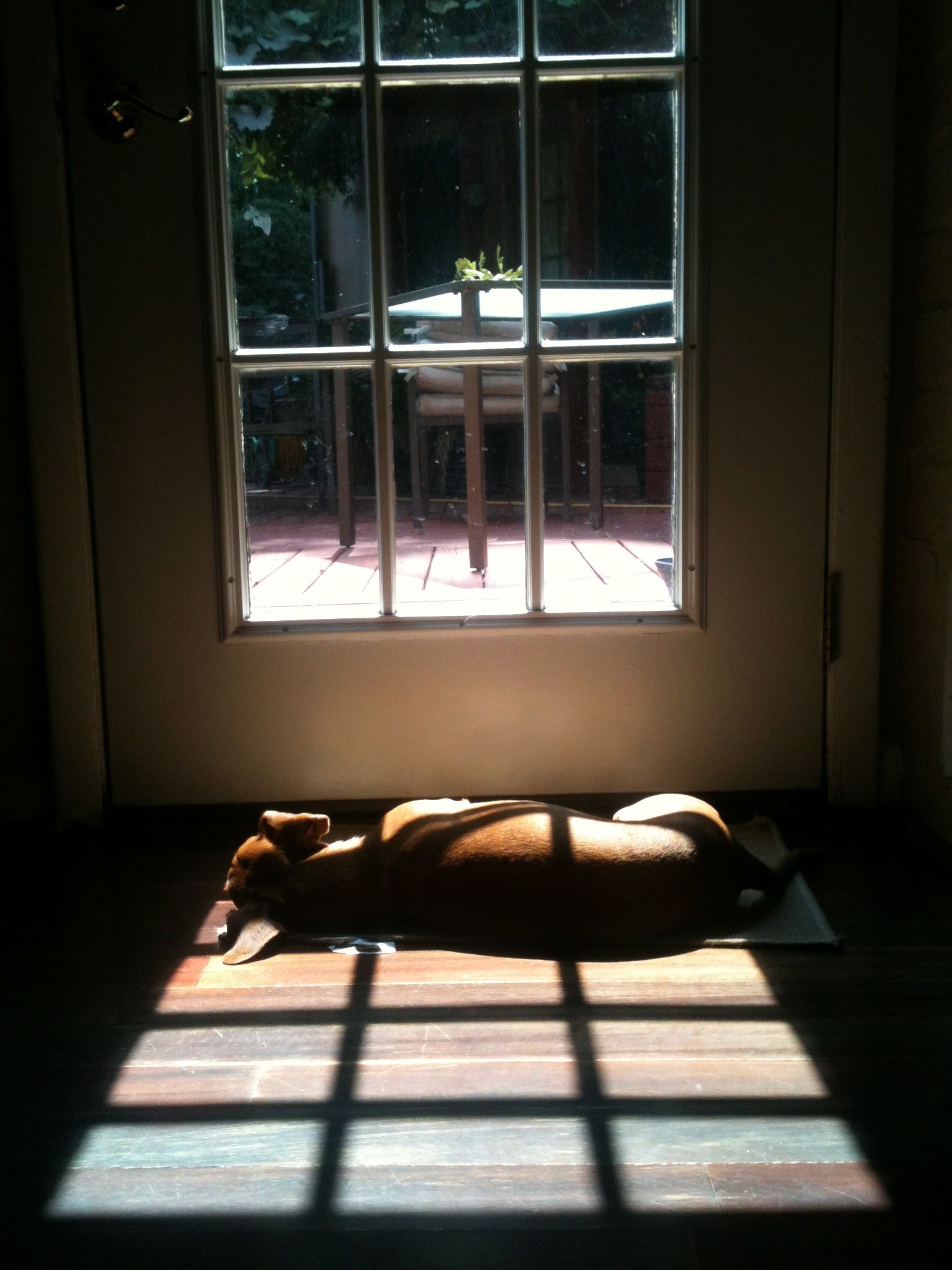
stewie-houston-sun-dogStill, our dog’s external experience is key. Dogs walk, run, lie down, chew, poop, pee, bark, and jump – all in their in the physical world, our homes and neighborhoods. How the environment responds to those behaviors determines if the dog keeps doing that stuff, and if so where, when, and how. Here’s one example. My dog lies down and stretches out. He’s learned over time that areas in which the sun is shining provide him warmth. He seeks those areas out more often. The environment (angle of the sun) has influenced when and where he lies down. The world is always teaching our dogs which behavior is reinforcing and which is punishing. Right?

What does all this have to do with us humans? Everything. No doubt we are the most important players in our dogs’ environment. Every day we determine when they eat, where they sleep, when they are let inside or outside, what opportunities they have for social interaction (with humans and nonhumans), and how they live their physical, mental and emotional lives in general. Nothing influences our dog’s behavior more than we humans do. Nothing.

Of course our dogs think (and feel). They may not muse and contemplate. Those processes involve verbal language. But our dogs are expert observers, constantly assessing the world around them for potential danger or sources of pleasure. Our job is to line up the feedback we give our dogs (when they eat and when they have access to other pleasurable activities) with what they are doing. That’s called reinforcement. Our dogs remember, and memories of reinforcement (and punishment) guide their behavior. We call that learning. Harnessing this process is the most natural way to train dogs. It’s the natural way all animals learn.

We humans are the most important player in our dog’s world. But, there’s a down side to this. Whether we intend it or not our dogs are always learning from us. The only question is are they learning what we want them to or are our actions teaching them the wrong lesson? Here’s my short list of stuff we should avoid doing around our dogs (this is not an exhaustive list).

  • Yelling, Hitting, Choking, Shocking: teaches the dog that we are dangerous – may lead to them avoiding us or aggressing against us.
  • Lying to our dog with our actions (being inconsistent): teaches the dog that we are an unreliable actor in their environment – will lead to unreliable/ inconsistent behavior from the dog.
  • Misusing food / bribing / giving food at the wrong time: teaches the dog that they get food for doing wrong things (like begging at the table) – can lead to the dog only responding to us when we have food.

Noticing the mistakes we’ve made with our dogs is actually a good thing. Don’t ever let anyone shame you about the choices you’ve made. Just use the information to make better choices from here on out. Our dogs can learn. But, so can we. We learn which of our actions work and don’t work just like our dogs (learning by doing). We also learn by watching others model behavior (imitation), by listening, and by reading. So we’re actually in really good shape. We can learn to:

  • Be better observers of our dogs – notice when our dog gets stuff right and how to reinforce behavior we want him to do more.
  • Set our dogs up to succeed – creating opportunities to do the things we want them to do more and then providing reinforcement that strengthen those good choices.
  • Put those great behaviors “on cue” – teaching our dogs to do what we want when we ask it.
  • Be consistent – making training a lifestyle of good behavior and reinforcing experiences throughout the day and not just when we have a treat bag on.

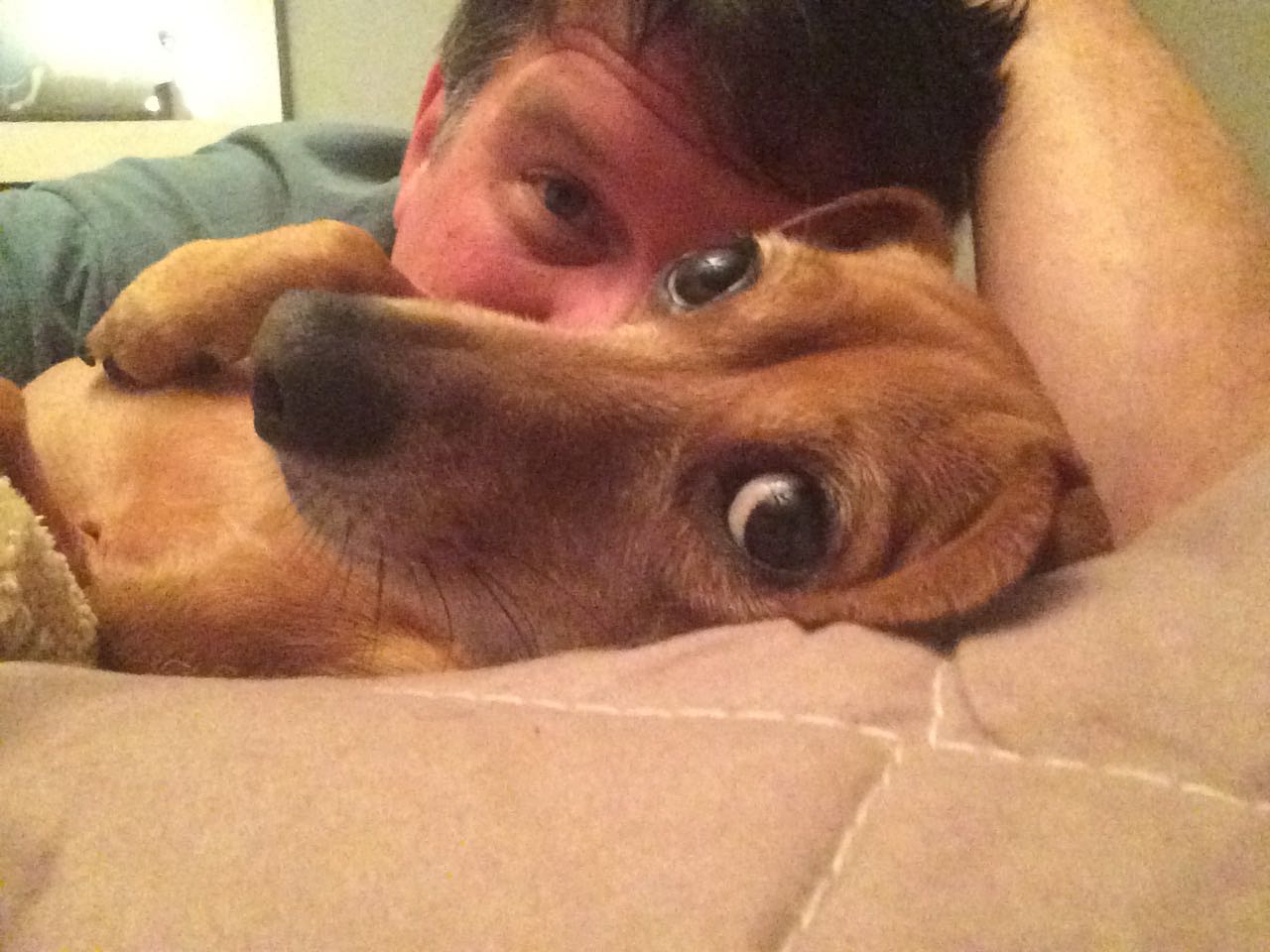
Houston-Dog-Trainer-Stewie-CuddleSuccessful dog training hinges on our human behavior. That’s big, maybe even a little scary. But it’s empowering too. I call it human-centered dog training – teaching humans how to teach their dogs. It’s a two species process – always. That’s a lot of brainpower and lots of heart working toward changing behavior, even reversing the most troubling behavior problems. We are learning together with our dogs, learning cooperation – humans and dogs not in conflict but on the same team – making choices with each other – finding better ways to live with each other – looking together for that warm spot in the sun.

Dog Trainer Michael Baugh specializes in behavior related to fear and aggressive dog behavior in Houston, TX.

Something to Chew On

Michael Baugh CPDT-KA, CDBC

Dogs chew.  It’s not just a puppy thing either.  Dogs actually chew throughout their lifetime.  It helps pass the time, keep their teeth clean and diffuse stress.  More than that, it appears to be fun and satisfying for most dogs.

A lot of folks ask, “How do I get my dog to stop chewing?”  We should probably ask a different question.  Perhaps, “can I teach my dog to chew something else other than my stuff?”  Now we’re on to something.  The idea is to teach your dog to chew this and not that.  Here’s a straightforward two-step process.

Step one:  limit choices.  Make it more difficult, if not impossible, for our dog to make the wrong choice.  If your dog is chewing furniture, keep him away from his target.  If he’s tearing up clothes, make sure all the clothes are out of reach.  Woodwork?  Safely confine and carefully supervise your dog.  Some trainers call this management.  I call it good common sense.  Don’t set your dog up to lose time and time again.  The truth is your dog doesn’t live by a moral compass.  There is no right or wrong; there is only available or non-available.  Make the wrong choices hard to find.

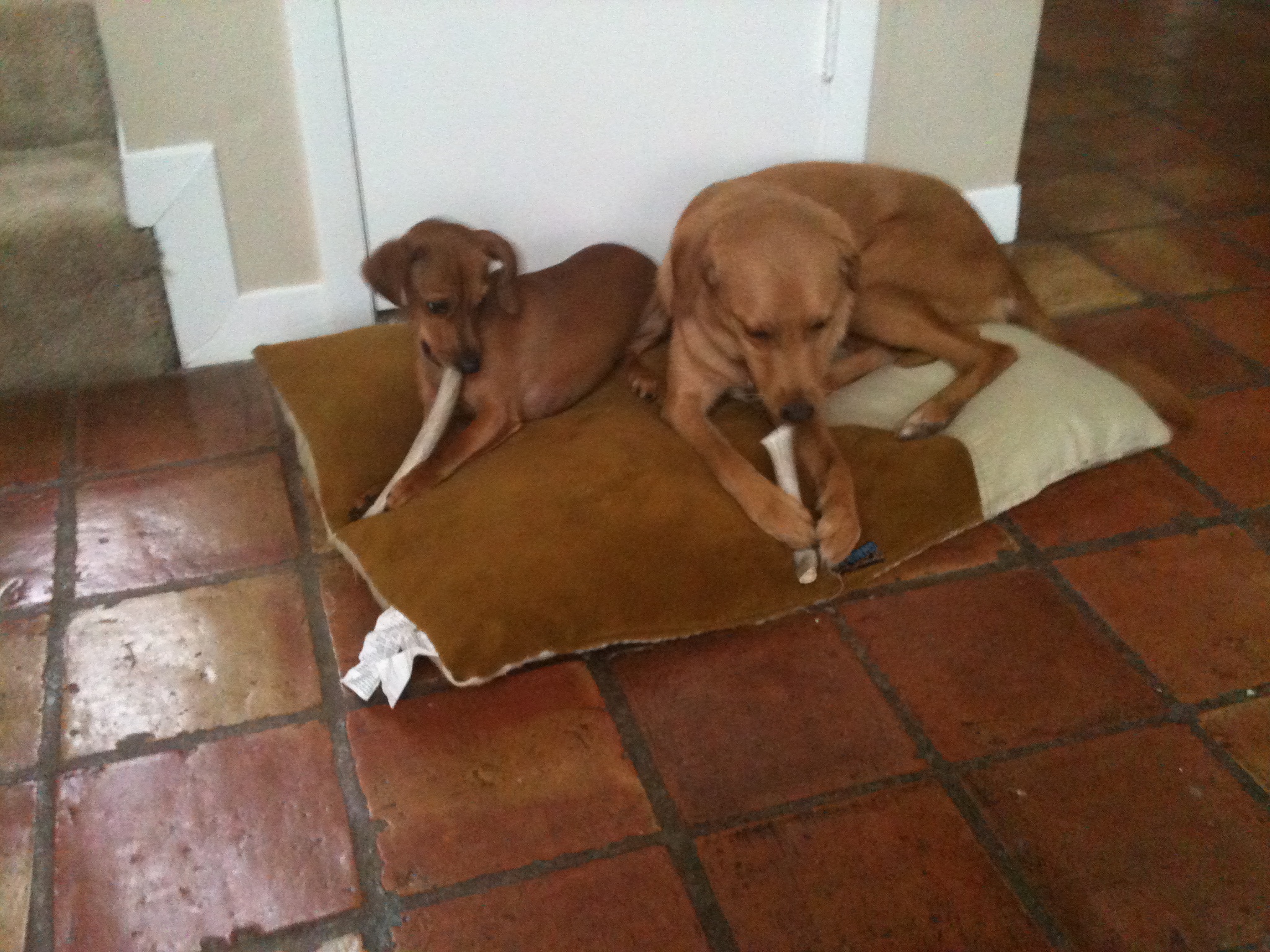
Stewie and Stella enjoying elk antlers

Step two: make it easy to make right choices.  Give your dog chewing options which are both allowed and better than the other options (like furniture).  I’m a huge fan of fully packed Kong Toys.  Don’t just smear peanut butter in there with a measly treat.  Load that bad boy up with a meal.  Then revel in watching your dog solve the puzzle of unpacking it.  Of course, there are tons of other chewing options.  My dogs love elk antlers.  Stella, in particular, really enjoys cardboard paper towel rolls.  Of course, I give these to her and we always supervise chewing.  Avoid putting out too many choices for chewing.  Remember, we want to make the choices easy.  A room full of toys and chew sticks doesn’t make for easy choosing.  Everything looks like a chew toy in that setting, and then we’re back to square one.

Changing your dog’s behavior is all about making smart changes in the environment.  Left to their own devices dogs will do the best they can, but they won’t always make the right choices.  With just a little help from us, they can win every time.  Make it harder for them to chew on the stuff we don’t want them to chew on.  Make it easy and rewarding to chew on the right stuff.  Keep that up for a few months and watch what happens.  You’ll be so happy watching your dog chew up something you gave him that you’ll wonder why you ever wanted to make him stop.

Originally published on the Houston Pet Talk blog.