
What Dogs Teach Us That Could Save Humanity

Michael Baugh CDBC

I’ll cut to the chase; it’s empathy. Empathy is a relatively young word in the English language. Psychologists in the early twentieth century needed a translation for the German word, Einfühlung. which literally means “in-feeling.”

When we are learning with our dogs, we can lose touch with our empathy. Our work becomes mechanical, like a list of problems to solve. At worst, we find ourselves in conflict with our dogs. We don’t understand their motivations. We aren’t able to “feel into” their experience. The human mind hates gaps, so we fill the gaps with stories we create about our dogs. Stories about a perceived opponent are never nice. They are always problematic. We cast our dogs as stubborn, dominant, malicious, defective — less than the fictional idealization of what a dog should be. Empathy flies out the window, and we all end up suffering for it.
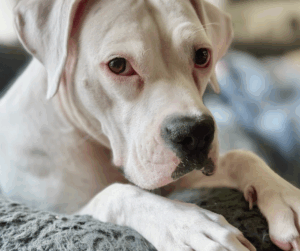
If all this feels familiar, it’s because humans are devolving into a species bereft of empathy. That’s a pretty stark statement of opinion. Hear me out. If we go with the earliest definition, empathy is existing “in feeling” with another being, “feeling into” their experience. It’s not “I know how you feel.” It’s certainly not feeling sorry for them. It’s about taking the time to be present and aware of another living being. Empathy is about sharing a feeling together, even if we don’t experience it in exactly the same way.

Learning each other’s stories nourishes empathy. Interestingly, humans as a species became less violent after the invention of the printing press. The hypothesis is that we became able to share our stories and empathy grew. People in faraway places read and learned about other people, their tales and fables, their fears and fantasies. We connected. That was the early dream of the internet, too — that it would connect us and feed our empathetic souls.

That didn’t happen. We are even more divided. And we read less. We chatter with our ingroup and demonize the outgroups, whoever they are. Empathy suffers. We suffer.

Sit. Down, Stay. Touch. We teach and learn with our dogs. Most of us by now know we can each even teach our dogs to relax on cue (we can learn to relax ourselves, as well). Why not empathy? Empathy is a learned skill. Our dogs can help us. They can teach us; we know this. They can save humanity (that may be bold, or not).

How do we feel about our dog? How do we feel with our dog? Now, feel into your dog. I love that phrase. Sit with your dog — feel. They’re angry sometimes. That concerns us. How does it feel to our dog? Feel in. Our dog is silly, cuddly and playful. They tremble at storms and loud voices. Can we feel that with them? Empathy is hard. It’s daring — risky. Grief is the price we pay for love. Queen Elizabeth said that. Empathy is our love in action, for our dogs, for our loved ones, for strangers from faraway places.

Here in Texas when the floodwaters come, and they come often, we all seem to embody empathy. We feel together. People help each other. No one asks who voted for whom. We are all just people. Empathy seems to recede, though, when the land dries.

How do we keep empathy, grow it, nourish it?

Practice. Practice with your dog. Cal me crazy, but practice. We learn empathy through experience. Feel it. Feel into it. Your dog will think it’s cool, trust me. Sit quietly with your dog’s being. Play, teach, and learn. Ride the emotions and pay attention. Be present. I dare you.

Then, take what you’ve gained and share it with a fellow human. Open your heart and feel deeply with a loved one. And then (breathe) think well of others — even ones you may not know. Move into the feeling. Listen presently. Trust your open heart. Like me, this is a human being. It’s okay to be afraid. Sit with that feeling together.

I double-dog dare you.


Michael Baugh teaches aggressive dog training in Houston, Tx.

Dog Training – How We Show Up Matters

Michael Baugh CDBC

Let’s think about how we begin our dog training sessions. Are we scrambling around looking for that plastic bag of treats? Are we distracted by our phones, our spouses, our kids? Maybe we’re just caught up in our own heads, thinking about other stuff.

It is a disservice to both our dogs and ourselves to show up like a maniac on the run. Be honest, we wouldn’t tolerate that level of inattention from our dogs. We should do better.

And yes, I get it. We live in a fast-paced, everything all at once world. Life is hard. Things are changing, getting worse, rarely better. It’s a lot. Sometimes it’s too much.

That’s all the more reason to give yourself (and your dog) a nice, thoughtful time to learn together. Take a moment. Think it through. You deserve something good right now.

Here’s how I like to approach a structured training session with my dog.

Begin with wonder. You’ve heard me say this before. Our dogs are fantastic creatures. They are intelligent, emotional, athletic, and social. Begin training in awe of that. This is a sacred moment.

Come prepared. Have a proper treat bag — a fabric one that you can wear or attach to your clothing. Use healthful food. If you are training with props (e.g., a mat), have them neatly set to the side.

Be curious. Ask questions? Is now the right time to train? How does my dog look? Is he hungry, tired, excited? Should we burn off energy with active training? Do we need to play or take a walk first because we want to train relaxation? Your curiosity is a sign of awareness and your open mind.

Arrive. Take a few deep breaths. Let your shoulders drop. Smile. Look at your dog. We are here right now. Be present and joyful and relaxed. This is what our dog deserves: our full intelligence, our sharp attention, and our kind guidance.

Training is a conversation with a dear friend who will never speak a word to us. Consider that for a moment. Dog training is not a menu of commands. It’s not a list of problems to solve. It is a connection. Training is how we communicate with our dogs.

This is a gift — these morsels of time in a day or a week or a life that sometimes feels like it’s devouring us. How wonderful that we’ve set this time aside to teach and learn with our dog. How do we approach such a gift if not with humility and sincere joy? Show up. Time is slipping away. Show up like you wish everything else would stop and this one moment would last forever.


Michael Baugh specializes in aggressive dog training in Sedona, Arizona and Houston.

Change (The Nature of Dog Behavior)

Michael Baugh CDBC CPDT-KSA

Our dogs’ behavior changes. That’s good news, and it is bad news. Behavior changes in ways we want it to. Think: training. Our dogs’ behavior changes in ways we don’t want it to as well. Think: why is he suddenly barking at visitors?

Our dogs are always learning from us, from others, and from their environment. Changing behavior is inevitable. It is part of nature, like gravity and the rising sun.

One of my favorite authors, Octavia Butler, wrote: “The only lasting truth is change. God is change.” (Parable of the Sower). That might not set well with some of my readers. So, think of it metaphorically. Change is the one constant, from animals to plants to the landscape itself. Everything changes. For believers, it would be hard to ignore the hand of God in all that. For nonbelievers, it is awe-inspiring nonetheless.

Change, specifically the promise of changing behavior, inspires my work with you and your dogs. Of course, change is frightening sometimes. (Why is this happening? It hasn’t happened before.) I choose to look at change with wonder. (Look at what is happening now. This is new. How cool.)

“All that you touch, you change. All that you change changes you.” That’s Octavia Butler, too. We influence change because we are part of this living world. We certainly influence changes in our dogs’ behavior. I see that every day in my work and in my own home. It’s a marvel if you think about it.

My dog Charlie is a champ at coming when called and he loves lying on his mat. He’s also taking on air travel, long road trips, and hikes up desert rocks (no small challenge for a three-legged dog).

On the surface, it looks like nothing more than cues and treats. That’s part of dog training, yes. But zoom out. Change begets change. The little ways we set up our dogs’ world can have huge positive effects. How can we change the settings we create for them? What slight changes can we make in our own behavior to make learning easier for our dogs? Where can we change things to ensure our dogs’ success?

Join me this new year in embracing change. Some of it is scary. I get it. Much of it, most certainly the behavior change work we do with our dogs, is waiting with joy and surprise. Teach. Love. Teach again. Love some more. Marvel at the change. Our dogs are changing. We, too, are changing.

“God is Change — Seed to tree, tree to forest; Rain to river, river to sea; Grubs to bees, bees to swarm. From one, many; from many, one; Forever uniting, growing, dissolving — forever changing. The universe is God’s self-portrait.” Octavia Butler.


Michael Baugh specializes in aggressive dog training in Houston, Texas.