Training Your Dog to be Calm and His Emotional Regulation


Michael Baugh CDBC

It is okay to teach your dog to lie down on cue, to experience calm behavior, and to just chill out. Training a relaxed body posture is not contrary to supporting your dog’s emotional regulation. It’s part of it. Your training isn’t a replacement for considering your dog’s overall well-being. It’s an essential element of that well-being.
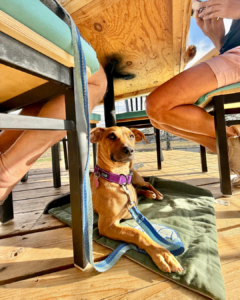
Some folks bristle at training a down-stay as an alternative behavior to our dog’s barking, lunging, or biting. They have a point. A vigilant, aroused dog lying down is not the same as a dog who has learned to handle life’s stressors with grace and poise. Teaching lie down for relaxation and calm, however, is an important part of our overall plan.

Our dogs’ emotional well-being requires a lot of elements, just as our own emotional health does.

  • Great medical care to prevent and treat illness and pain.
  • Excellent nutrition.
  • Movement and exercise appropriate for our dog’s stage of life.
  • Social interaction with preferred humans and non-humans (our dogs get to choose who they like).
  • Enjoyable and enriching activities: play, sniffing, exploring, engaging with toys, and chewing (look for what interests your dog).
  • Sleep (dogs sleep upwards of 14 hours a day).
  • Learning, including learning how to be chill (even in situations that used to be angst-provoking).

I had to learn how to meditate. It’s not just something I practice; it is a practice. Meditation is not my complete mental health and wellness plan. It is part of my plan. You may practice breathing or yoga. Some folks soak in a Jacuzzi and let their minds fall silent. The goal is the same. Only the approach is different.

I lift weights and hike. You might play a sport and do Pilates.

Dinner parties and deep conversations are my thing. Someone else may prefer dancing or book clubs for their social time.

I read. You may prefer taking classes or listening to podcasts.

Sleep seems to be universal.

But there are still more variations on the theme of emotional regulation and mental health wellness than there are rigid rules. I like to think of it as a series of daily decisions I make for my dog’s benefit (and for myself, too). Our dogs learning emotional regulation, our teaching of it, supporting it, nurturing it — these are continuous choices we make every day. Keep at it. Strive to get better. See how it feels, how your dog seems to change, to blossom.

And.

Make room for bad days. Life is hard. I don’t have to tell you that. Offer yourself a little grace even as you strive for poise. Give your dog a little forgiveness as well. As another trainer reminded me, puppies get zoomies. Our dogs’ best choices are not always what we’d hoped for. They get overtired, irritated, and angry. Me too, honey. Me too.

Emotions are essential to our emotional well-being. Our dogs get to have feelings. We get to have feelings. No one wants a cold, little automaton. That’s not why we have dogs. We love our dogs because they are real. They are goofy and flawed. We want all that for them, and from them. We also want our dogs to bounce back from those big highs and the hard lows. Being silly is fun, but extreme emotional ups and downs can also feel like crap.

Emotional self-regulation. Mental health. Wellness and well-being. Aren’t we really just trying to say we want our dogs to be happy? Don’t we really just want to be happy with our dogs?

How about we go for that? Happy dog. Happy human. As many days as we can.

And if you want to teach your dog to lie down and relax, go for that too. A lot goes into being happy. Don’t miss any of it.

Michael Baugh teaches dog training in Sedona AZ, Houston TX, and online everywhere. He specializes in aggressive dog training.
When Your Dog’s Behavior Suddenly Changes


Michael Baugh CDBC

Our dogs’ behavior is always changing. They find new interests and interact with the environment in ways we’ve never seen before. That is a sign of a behaviorally healthy dog.

New phobias or aggressive dog behavior are not so healthy. Those kinds of behavior changes can crop up throughout our dogs’ lives for various reasons.

Puppyhood and Adolescence (the first two years)

These are developmental changes. New fears and first-time aggressive behavior are fairly common. Common does not mean they are acceptable or that we should ignore them. On the contrary. We need to intervene and help our dogs at the first sign of fear or aggression. Causes include socialization deficits (our dog’s lack of positive experiences), emotional trauma (including before birth), and genetic predisposition (not always permanent). Early positive reinforcement training can turn this kind of unwanted behavior around when our dog is still young. It’s also a great way to prevent fear and aggression problems.

Adulthood

If our dog begins behaving fearfully or aggressively as an adult, we still need to take action. This is especially true for dogs who have otherwise been joyful and pro-social for the first several years of their life. A sudden change in behavior in our adult dog is a red flag. Our first step is to take the dog to the vet to rule out pain (that’s a big one) or other medical causation. Be thorough. Ask lots of questions. Make note of environmental changes, like a move to a new home, a new partner or roommate, or a baby growing into toddlerhood. Those can all affect our dogs’ behavior. We still recommend positive reinforcement training for adult dogs.

Senior Dogs

When a senior dog’s behavior changes, we look for the same causes we’d consider in a younger adult dog. In addition, we can ask our vet to begin regular senior blood work and test for any cognitive decline. Yes, old dogs benefit from positive reinforcement behavior change training. Age does not impede this. But, a late-in-life development of fear and aggression almost always involves vet care as well.

It’s Not All Bad

Behavior is always changing, from birth all the way until our dogs’ last days. Most of the changes we see are benign, delightful, even cute. Many dogs learn to play in new ways, make new friends (human and dog), discover new toys, or learn to enjoy new favorite sleeping spots (mine loves to sunbathe). Cherish these moments. Remember them. They will become part of the stories you tell long after your sweet dog has passed.

I’ll help with the unwanted behavior. The good behavior changes: those are yours to keep in the most treasured parts of your memory.


Michael Baugh teaches dog training in Sedona AZ . He specializes in fear and aggressive dog training .

Teach Your Dog to Relax on Cue

Michael Baugh CDBC CPDT-KSA

Anything our dogs can physically do, we can put on cue. Our dogs can run towards us, walk beside us, lie down, stand still, and do a ton of other things. We can train all of those, put them on cue, turn them into polite behavior or tricks.

Think about that for a minute. What are the things your dog does, or could do, that you really like? We focus on the bad stuff, the misbehavior, things we want our dog to stop doing. Think for a minute about the good stuff you’ve observed. Most of my clients tell me their dogs are good ninety percent of the time. What does good look like?

Street dog “loafing” in Sri Lanka

Here’s a fun fact: it turns out dogs spend about a third of their waking hours just chilling and casually watching the world go by. That’s good. Some researchers call this behavior “loafing.” I prefer what certified dog behavior consultant Sarah Fraser calls it: “relaxed observation.” Street dogs do it. Our pet dogs do it. It’s natural. And guess what? We can put it on cue.

Trainers learned long ago that the best way to stop misbehavior (think: biting, for example) is to replace that behavior with something different. When we ask folks what they’d like their dogs to do, the question stumps them. They just want their dog to stop (insert unwanted behavior). When pressed, some simply say they want their dog to do nothing at all. That frustrated trainers until we realized that doing nothing is actually doing something. Lying down and observing are both behaviors and we could teach dogs to do them in a slow and relaxed manner. We can teach relaxed observation.

It gets even better. When we train a dog to relax the body, the mind follows. There’s research behind this. It’s like when we humans do our breathing exercises. It’s a simple behavior that calms our bodies and our minds. Lots of behaviors affect our feelings. The simple act of intentionally smiling can put us in a good mood. Try it. It’s fun.

Like humans, our dogs do best learning to relax in a calm and nondistracting setting. Always set your dog up to succeed. I teach Dr. Lore Haug’s conditioning relaxation protocol. We begin by teaching down in a relaxed posture – the dog lounging on their hips rather that lying tense facing forward. We add the visual cue of a mat to direct where they lie down and how deeply they relax.

Charlie chilling in the front yard

We don’t put the behavior under any social pressure until it’s well engrained. When we take our time and train it right, though, this simple exercise is very versatile and durable. Training your dog to do nothing is really something!

I teach relaxed observation to almost all of my clients’ dogs. Many clients tell me it calms their dog, not just in training, but in everyday life. It’s as if they’ve adjusted their dog’s baseline for relaxation and they are just calmer over all.

I’ve seen that with my dog, Charlie. Relaxed observation is his default behavior at outdoor restaurants, coffee shops, at the airport and even the vet clinic. This is natural behavior, and it’s learned behavior.

Charlie’s not special. Any dog can learn to relax on cue. We can too, of course. In fact, we can model calm behavior for our dogs and see them reflect it back. How cool is that? We can hang out and chill out together. Just doing nothing with our dog has never been so much fun.


Inspired by Sarah Fraser’s post The Non-Activity we Should All do More Often with Our Dogs

Michael Baugh teaches dog training in Sedona, AZ. He specializes in aggressive dog training.